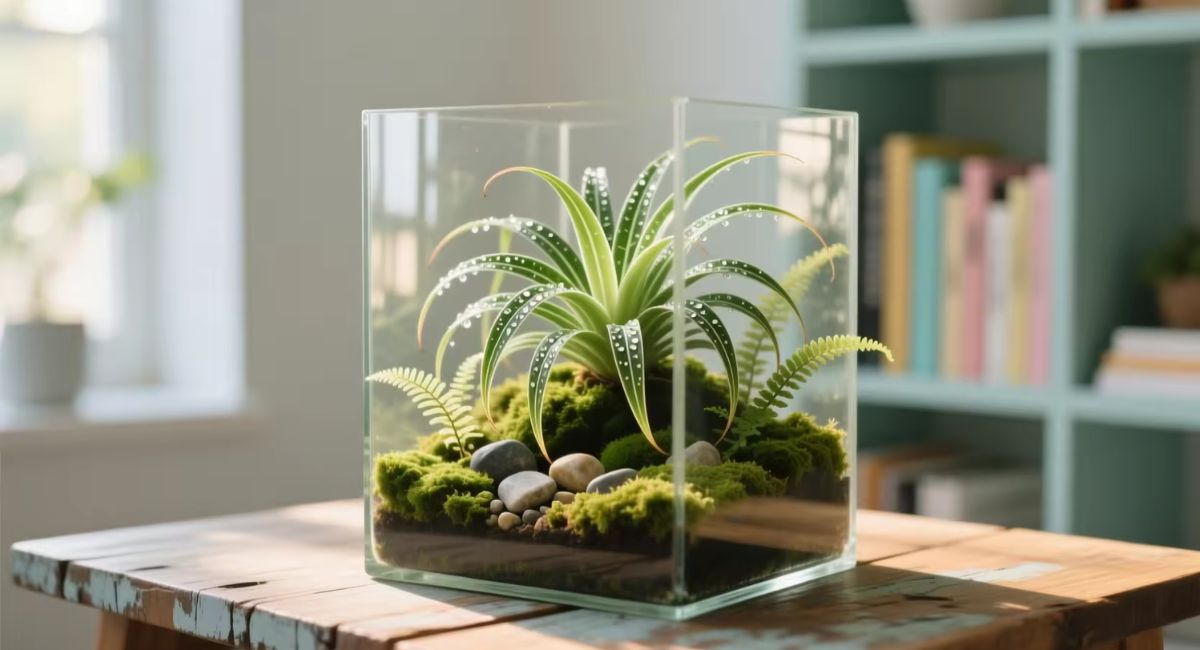
I stumbled into building my first terrarium completely by accident after seeing one on a shelf at a coffee shop and becoming a little obsessed with how magical it looked. I had no idea which plants inside a terrarium actually thrive versus which ones just slowly die and my first attempt was honestly a beautiful disaster. Plants inside a terrarium need the right humidity and light balance and once I figured that out my little glass garden finally started thriving in the most satisfying way.
This guide covers everything that actually matters for keeping plants inside a terrarium genuinely healthy long-term: from choosing compatible species and building the right substrate layers, to diagnosing the fungal infections, bacterial rot, and disease symptoms that terrarium plants are specifically vulnerable to — explained practically, not theoretically.
Discover the best plants inside a terrarium that thrive beautifully and turn any glass container into a stunning living masterpiece.
Plants Inside a Terrarium Create Stunning Living Glass Art:
There’s something genuinely captivating about plants inside a terrarium that no other decorating format quite replicates. A well-designed glass container planted with compatible miniature species becomes a self-contained living landscape — a tiny forest, a desert scene, a mossy woodland floor — that evolves and grows over time while sitting on a bookshelf or coffee table. It brings a depth of nature into a space that a single potted plant simply cannot achieve, and when it’s thriving, it looks effortless in a way that took real knowledge to create.
But plants inside a terrarium are not as forgiving as a potted plant on a windowsill. The enclosed glass environment amplifies everything — warmth, humidity, moisture — which accelerates healthy growth when conditions are right and accelerates disease and rot when they’re wrong. A fungal infection that might take weeks to seriously affect a standard houseplant can destroy terrarium plants in days inside a warm, humid glass container where spores spread rapidly and there’s nowhere for excess moisture to escape. Understanding this from the beginning changes every decision you make when building and maintaining one.
Plants Inside a Terrarium Quick Species Selection Guide:
Choosing the right species is the most important decision you make for plants inside a terrarium. This table covers ten of the most commonly used plants with what they actually need and what problems to watch for with each.
| Plant Species | Terrarium Type | Key Care Need | Disease / Problem Risk |
| Fittonia (Nerve Plant) | Closed tropical | High humidity, no direct sun | Botrytis mold, bacterial stem rot |
| Moss (various species) | Closed tropical or woodland | Consistent moisture, indirect light | Fungal yellowing, drying out fast |
| Miniature Fern | Closed tropical | High humidity, no waterlogging | Root rot, Pythium, scale insects |
| Haworthia | Open desert | Low water, bright indirect light | Root rot, fungal crown rot |
| Echeveria | Open desert | Gritty mix, excellent drainage | Botrytis on damp leaves, mealybugs |
| Peperomia (miniature) | Closed or semi-open tropical | Moderate humidity, good airflow | Phytophthora root rot, bacterial spot |
| Selaginella (Club Moss) | Closed tropical | Constant moisture, shade | Fungal blight, overheating damage |
| Tillandsia (Air Plant) | Open, no soil needed | Good airflow, weekly misting | Bacterial rot at base, fungal spots |
| Miniature Orchid | Semi-open tropical | Bright indirect, airflow critical | Fusarium root rot, virus mosaic |
| Cryptanthus (Earth Star) | Closed or semi-open tropical | High humidity, bright indirect | Scale, bacterial leaf spot |
Plants Inside a Terrarium Substrate Layers That Prevent Disease:
The layered substrate beneath plants inside a terrarium does most of the disease-prevention work invisibly, and skipping any layer — or using the wrong materials — creates the conditions where root rot, fungal pathogens, and harmful bacteria establish themselves quickly in a confined glass environment with limited airflow.
1. Drainage Layer First:
Below the soil, things start to matter more than most notice. A pocket of space forms when small stones settle into the base – gravel, smooth peasized rocks, or baked clay beads work just fine. This gap holds extra moisture away from tender roots. Without it, dampness creeps upward, causing trouble before you even see it coming. Three inches deep should do, maybe two if space runs tight.
2. Separation and Substrate:
Right below the planting area, something like landscape fabric or a sprinkle of peat keeps dirt out of the stones beneath – stops clogs before they start. A loose blend sits on top: coconut fiber, shredded bark, and airy perlite join here in balance. Packed-down garden soil has no place in these closed worlds. Too dense. Traps are too damp. Jungle-loving greenery reacts badly. This setup breathes. Let roots move freely. Hold just enough wet without drowning the base.
3. Activated Charcoal Benefits:
Inside a terrarium, placing a half-inch bed of activated horticultural charcoal beneath the soil helps more than you might think. Not far above the gravel but below the fabric liner, this black powder quietly pulls in breakdown byproducts. Thanks to tiny pores, it traps gases and leftover bits from microbes feasting on old leaves. Sealed worlds tend to get stale – this bit keeps air cleaner through quiet chemical clinging.
Plants Inside a Terrarium Disease and Fungal Infection Fixes:
Disease moves fast inside glass. Plants inside a terrarium are in a warm, humid, enclosed environment where fungal spores spread easily through condensation droplets and direct contact between neighboring plants — which means identifying problems at their earliest stage and acting immediately is the only approach that actually works before the entire container is compromised.
1. White Mold Problems:
White fuzzy mold on the soil surface or plant stems is one of the most common problems in plants inside a terrarium, and it nearly always appears when moisture levels are too high and airflow is essentially zero. This surface mold is usually Botrytis cinerea or one of several common saprophytic fungal species — they start breaking down organic matter in the substrate and quickly spread to stressed or damaged plant tissue from there.
2. Bacterial Rot Symptoms:
Waterlogged spots show up on stems and leaves when bacteria take hold, turning see-through before shifting to dark brown or black patches. These areas give way under light pressure, nothing like the crisp texture seen in fungus-related damage. A sour odor fills the air around the enclosure, far from the mild scent of moist potting mix. Instead of clean garden freshness, it reeks of decay tucked deep within the glass walls. Tiny breaks in plant surfaces let microbes slip inside – cuts from trimming, injuries from handling, or softening caused by too much drink.
3. Yellow Leaves Decoded:
Spotted leaves in a glass container? Happens all the time – hard to pin down though. When bottom leaves of warm-climate greens such as fittonia fade evenly, odds are the soil just never dries out – peek under and scale back watering. If leaf edges turn tan while centers stay green, air moisture might be too low – typical when indoor heat runs strong in cold seasons. Blotchy yellow patterns jumping between different plants at once often trace back to sickness introduced through contaminated cuttings during setup.
Plants Inside a Terrarium Moisture and Humidity Balance Explained:
Getting moisture balance right is the central ongoing challenge of keeping healthy plants inside a terrarium. Too little and the plants dry out in ways they show through leaves. Too much and fungal pathogens, bacterial infections, and root rot become almost inevitable in the enclosed glass environment.
1. Closed vs Open Moisture:
How wet things get inside a bottle garden hinges on one thing – lid or no lid. When sealed tight, the space turns into a loop – the air holds plant sweat that clings to walls as droplets, then drips down like tiny comebacks to feed roots again. Once started, these shut systems wait long before thirst shows, sometimes never asking for more during their whole stay. Popping the top now and then lets fog escape, which does far more good than pouring in fresh drops would.
2. Condensation Warning Signs:
The glass walls of your terrarium are a live diagnostic tool for the health of closed terrarium greenery . Light, fine condensation on the glass during cooler morning hours that clears as the room warms is ideal — it means humidity is cycling normally. Heavy, persistent condensation that never fully clears and makes the glass difficult to see through means humidity is dangerously high and fungal disease risk is elevated. Zero condensation even in the cooler morning means the container is too dry.
3. Watering Closed Terrariums:
Overwatering a closed terrarium with plants inside a terrarium is extremely easy to do and extremely difficult to reverse without essentially dismantling the whole setup. The correct technique is to water very sparingly at build time — just enough to moisten the substrate throughout — and then watch the condensation pattern for several weeks before adding any more. If condensation is heavy and persistent, open the lid and leave the terrarium uncovered until moisture levels drop visibly.
Plants Inside a Terrarium Design Tips for Maximum Visual Beauty:
The plants you choose and where you put them within the glass determine how stunning plants inside a terrarium look long-term — not just on day one, but six months and two years in when everything has grown and filled in.
- Create height variation immediately by planting your tallest species at the back or center and ground covers like miniature moss at the front edges, because plants inside a terrarium look far more natural and three-dimensional when there’s a clear visual layering from the front of the glass to the back.
- Use only species with genuinely compatible humidity and light requirements in the same container — mixing a moisture-loving fern with a drought-tolerant succulent is the single most common reason plants inside a terrarium fail, because one species will inevitably be in conditions that compromise its health within weeks.
- Add natural hardscape elements — small stones, pieces of driftwood, cork bark — before planting, because these structural elements create the most visually compelling scenes for closed terrarium greenery and also provide beneficial surface area for the substrate’s microbial community to establish on.
- Plant in odd numbers — groups of three or five of the same small species — rather than one of everything, because odd-numbered plant clusters look more natural and organic than evenly distributed single specimens, and plants inside a terrarium always read as more intentionally designed when species groupings mimic how plants actually grow in nature.
- Leave meaningful empty space between plants at the time of planting, accounting for the growth of the next six to twelve months, because overcrowded closed terrarium greenery compete for light and airflow in ways that increase disease pressure dramatically and make every specimen look cramped and unhealthy rather than lush and deliberately composed.
Plants Inside a Terrarium Maintenance Routine for Long-Term Health
A well-built terrarium with the right plants inside a terrarium doesn’t need much ongoing work — but it does need consistent, observant attention. These five habits cover most of what long-term terrarium health actually requires.
- Inspect the glass walls and soil surface weekly for early signs of white surface mold, yellowing leaves, and condensation imbalance — plants inside a terrarium give you clear visual signals through the glass, and catching a mold outbreak or moisture problem in its first days costs minutes to fix versus hours of intervention after a week’s neglect.
- Remove dead leaves and plant material immediately using long terrarium tweezers before they decompose and provide the organic matter that fungal pathogens use as a launching pad to infect healthy closed terrarium greenery — a single decomposing leaf in a sealed container can trigger a Botrytis outbreak that spreads to multiple plants within days.
- Trim fast-growing species like selaginella and fittonia regularly to prevent them from smothering slower-growing neighbors, because shaded, compressed plants are consistently more vulnerable to the fungal infections and bacterial rots that plague overcrowded plants inside a terrarium when airflow between stems and leaves is essentially eliminated.
- Fertilize sparingly — once every three to four months with a very diluted quarter-strength liquid fertilizer — because the closed ecosystem of a terrarium recycles nutrients through plant decomposition more efficiently than an open pot does, and overfeeding closed terrarium greenery causes the rapid leggy growth that quickly outgrows the container and disrupts the entire visual composition.
- Quarantine any new plant in a separate container for two weeks before introducing it to an established terrarium — new plants can carry fungal spores, bacterial pathogens, scale insects, and fungus gnat eggs on their foliage and roots that spread rapidly and are extremely difficult to eliminate from an enclosed container with closed terrarium greenery already established within it.
Conclusion
Building a healthy, lasting terrarium comes down to understanding the glass environment you’re creating before you put the first plant in. Plants inside a terrarium need compatible species, the right substrate layers, careful moisture management, and consistent weekly observation. Get those foundations right and a terrarium becomes one of the most low-maintenance, genuinely beautiful things you can have in your home — evolving and deepening for years.
FAQ’s
Q1. Why is mold appearing on the soil surface around my terrarium plants?
White surface mold around plants inside a terrarium almost always means humidity is too high and airflow is insufficient. Open the lid to ventilate, remove molded material with sterile tweezers, and apply a diluted hydrogen peroxide solution to the soil surface to eliminate fungal spores without harming plant roots.
Q2. How often should I water the plants inside a terrarium?
Closed terrariums with plants inside a terrarium rarely need additional watering after the initial setup — monitor the condensation pattern on the glass instead. Open terrariums need light misting when the substrate surface feels dry, roughly every seven to fourteen days depending on container size and room humidity.
Q3. Can plants inside a terrarium really get serious fungal diseases?
Yes, and faster than in open containers. The warm, humid, enclosed environment accelerates fungal spread dramatically. Plants inside a terrarium are particularly vulnerable to Botrytis gray mold and Pythium root rot — both thrive in exactly the high-moisture, low-airflow conditions that a sealed glass container naturally creates.
Q4. Why are the leaves turning yellow on my terrarium plants?
Yellow leaves on plants inside a terrarium typically signal overwatering or substrate saturation. Check the drainage layer — if it’s fully submerged in standing water, the roots are effectively waterlogged. Open the container, reduce moisture input, and allow the substrate to partially dry before closing it again and reassessing.
Q5. Which plants should never go inside a terrarium together?
Never mix desert succulents and cacti with tropical moisture-loving species as plants inside a terrarium — their humidity and watering needs are fundamentally incompatible. One group will always be in conditions that compromise its health, and the resulting stress increases susceptibility to fungal infections and bacterial rot for both.
Q6. How do I stop root rot from killing my terrarium plants?
Root rot in plants inside a terrarium is prevented through proper drainage layer construction, appropriate substrate mix, and avoiding overwatering from the start. Once root rot appears — shown by soft collapsing stems and foul smell — remove the affected plant immediately before pathogens like Pythium spread to neighboring plants through the shared substrate.
Q7. Do I need to fertilize the plants inside a terrarium regularly?
Very sparingly. Plants inside a terrarium in a functioning closed ecosystem recycle nutrients through microbial decomposition more efficiently than open containers. Fertilize at quarter-strength liquid formula once every three to four months maximum — overfeeding drives rapid leggy growth that quickly overwhelms the container and disrupts the entire balanced ecosystem.
Q8. What is the best substrate mix for plants inside a terrarium?
For tropical plants inside a terrarium, equal parts coco coir, orchid bark, and perlite creates the ideal airy, moisture-retentive but well-draining structure. For desert terrariums, replace coco coir with coarse sand and increase perlite to fifty percent. Never use standard potting mix alone — it compacts in enclosed glass and stays too wet.
Summary
Getting plants inside a terrarium to thrive long-term is all about understanding the enclosed glass environment you’re creating rather than treating the container like a regular pot. This guide covered the substrate layers that prevent root rot before it starts, how to identify and respond to fungal infections like Botrytis and bacterial rot from Erwinia species before they spread through the whole container, what yellow leaves and white mold are actually communicating about moisture balance, and the species selection and design principles that make a terrarium look genuinely beautiful for years.