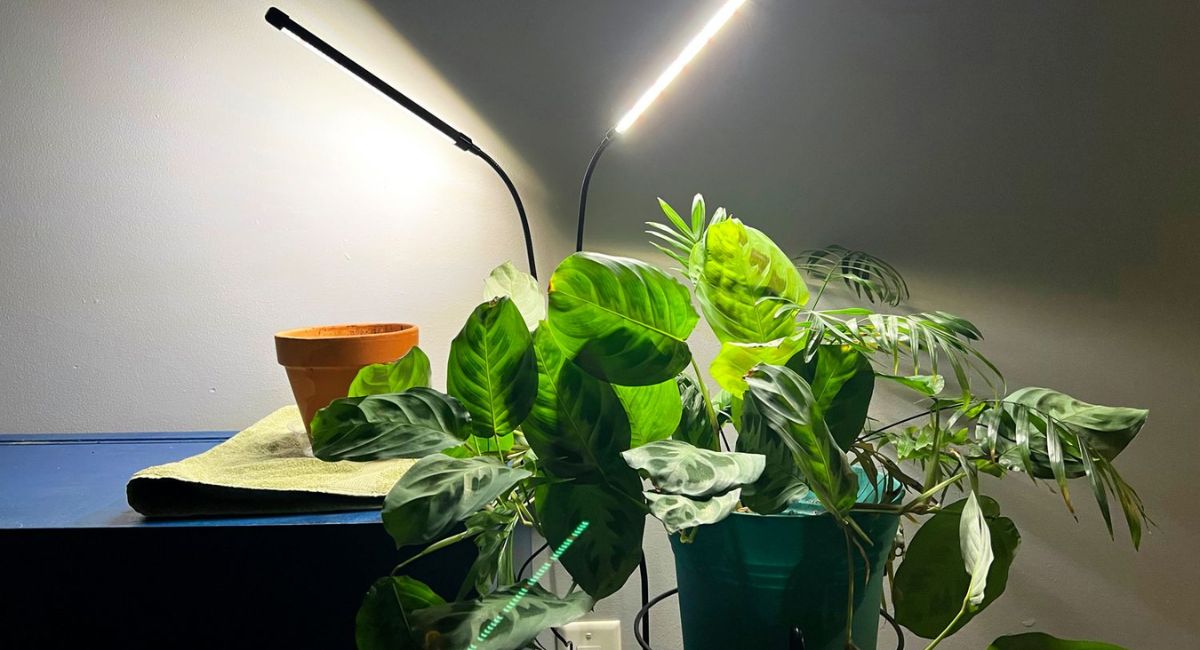
My first attempt at growing lights for indoor plants was a disaster in slow motion. I bought a cheap purple LED strip from a discount site, hung it about eighteen inches above my pothos and peace lily, set it on a timer for sixteen hours a day, and congratulated myself on solving a dim apartment problem.
Whether you’re trying to keep tropical houseplants alive through a dark northern winter, propagate cuttings in a basement, grow herbs on a windowless kitchen counter, or just supplement weak natural light in a beautiful but dim room, this guide covers everything you actually need to know about grow lights for indoor plants — the types, the specs, the placement, the schedules, and the plant health issues that lighting directly influences for better or worse throughout the year.
The right Grow Lights for Indoor Plants don’t just keep plants alive — they help them thrive where natural light fails.
Grow Lights for Indoor Plants Why Light Quality Matters Most:
Before choosing any product, it helps to understand what grow lights for indoor plants are actually trying to replicate — because the answer isn’t just “sunlight” in a general sense. Plants use specific wavelengths of the light spectrum for specific biological processes, and not all artificial light sources deliver those wavelengths in the ratios that plant photosynthesis and development actually require. Blue light in the 400–500 nanometer range drives vegetative growth, compact leaf development, and root formation.
Red light in the 600–700 nanometer range triggers flowering, fruiting, and the stem elongation responses that tell a plant whether it’s receiving enough light intensity to stay compact rather than stretching toward the source. The ratio of blue to red light in Indoor Plant Grow Lights therefore determines not just whether your plant photosynthesizes, but how it grows — whether it stays bushy and healthy or stretches into the thin, pale, leggy form that signals chronic light deprivation in every species from ferns to succulents.
This is why the old-style purple LED strips that I started with — the kind that emit only narrow red and blue wavelengths in high intensity — produce such mixed results compared to modern full-spectrum Indoor Plant Grow Lights that include the full range from UV through far-red. Plants evolved under the full spectrum of solar radiation, not just two narrow peaks of it, and the additional wavelengths contribute to processes beyond basic photosynthesis: regulating stomatal opening, triggering circadian rhythms, influencing chlorophyll production ratios, and activating the phytochrome signaling that controls responses to day length and season.
A full-spectrum grow light provides all of these inputs simultaneously, producing growth that’s genuinely comparable to natural light placement — and critically, producing plants with stronger immune systems and more robust cell walls that resist the fungal infections, bacterial diseases, and the microorganism-related root rot issues that consistently plague plants kept in chronically inadequate light conditions throughout the indoor growing environment.
Grow Lights for Indoor Plants Complete Buyer Reference Table:
Use this comparison table when evaluating options — the key specifications that actually matter for successful grow lights for indoor plants selection are here in one place.
| Light Type | Best For | Coverage Area | Key Consideration |
| Full-spectrum LED panel | Most indoor plants, general use | 2×2 ft to 4×4 ft per unit | Best efficiency, least heat |
| T5 fluorescent tube | Seedlings, low-light houseplants | Long rows of plants | Affordable, good for shelving |
| LED grow bulb | Single plants, small spaces | 1–2 plants per bulb | Fits standard fixtures easily |
| High-output T8 tube | Herbs, foliage plants, propagation | Standard shelf width | Replaces old fluorescent cheaply |
| CMH / LEC light | Flowering and fruiting plants | 3×3 ft per 315W unit | Excellent spectrum, runs warm |
| HID / HPS light | Large-scale indoor growing | 4×4 ft per 600W unit | High heat output, high energy |
| Quantum board LED | Serious indoor gardens, herbs | Up to 5×5 ft per unit | Best PPF per watt available |
| Spider LED bar | Low-ceiling spaces, shelves | 2–4 plants per bar | Even canopy coverage, cool running |
| Clip-on grow bulb | Individual houseplants, desks | 1 plant per unit | Flexible, portable, low cost |
| UV supplemental light | Adding to existing grow light setup | Supplement only | Triggers terpene and resin production |
Grow Lights for Indoor Plants LED vs Fluorescent vs HID Options:
The three main technology categories in grow lights for indoor plants each have distinct advantages, limitations, and ideal use cases — and matching technology to your specific situation makes more difference to plant outcomes than spending more on the wrong type of light for the plants and space you’re actually working with every day.
1. LED advantages explained:
Modern full-spectrum LEDs are the best all-around choice for most grow lights for indoor plants applications — they run cool, consume less electricity per unit of usable plant light than any competing technology, last fifty thousand hours or more, and can be tailored to deliver precise spectral ratios that maximize photosynthetic efficiency. Cooler operation matters beyond energy bills: hot lights in enclosed spaces raise temperature and humidity around foliage to levels that encourage Botrytis cinerea gray mold and other fungal infections that exploit the stressed, heat-affected tissue of plants grown too close to hot light sources.
2. Fluorescent tube uses:
T5 and T8 fluorescent tubes remain genuinely useful for specific Indoor Plant Grow Lights applications — particularly propagation shelves, seedling trays, and low-light foliage plants that don’t need the photon intensity of a high-power LED panel. They produce even, consistent light across a wide footprint, fit standard shop-light fixtures, and cost far less upfront than quality LED panels. The limitation is spectral quality — standard fluorescent tubes don’t deliver the red wavelengths that support flowering and fruiting, so they’re better suited to maintaining vegetative foliage plants than pushing any plant through a full growth cycle indoors.
3. HID light considerations:
High-intensity discharge lights — HPS, MH, and CMH types — produce intense, high-quality light that genuinely drives flowering and fruiting in demanding plants. But for most home Indoor Plant Grow Lights situations they’re overkill: they run very hot, require ballasts and heat management, consume significant electricity, and generate the warm humid microclimates that encourage the bacterial and fungal diseases — particularly Pythium root rot and powdery mildew — that thrive in warm, poorly ventilated growing spaces with inadequate air circulation around plant canopies and root zones.
Grow Lights for Indoor Plants Placement Height Affects Plant Health:
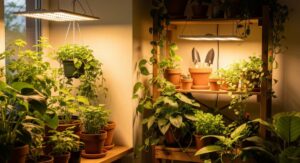
Getting the placement right to grow lights for indoor plants is one of the most practically impactful decisions you make after choosing the light itself — and it’s something most beginners get wrong in one direction or the other, often without realizing the placement is the source of the problems they’re seeing in their plants. Too close and you burn or bleach foliage, stress the plant, and create conditions that accelerate fungal disease development on heat-affected tissue.
Too far and the plant doesn’t receive enough light intensity, stretches toward the source, produces weak stems and pale leaves, and develops a low-vigor state that makes it disproportionately vulnerable to the bacterial infections and root rot pathogens that opportunistically colonize stressed, under-lit plant tissue.
1. Distance guidelines:
Placement distance for grow lights for indoor plants depends primarily on the light type and wattage. High-power LEDs and HID lights need to be positioned further away — typically twelve to twenty-four inches — while lower-output T5 fluorescents and LED bulbs can sit six to twelve inches above the plant canopy. Start at the manufacturer’s recommended distance and observe plant response over one to two weeks: bleaching or drying at leaf tips means the light is too close; stretching and pale coloration means it’s too far. Adjust in two-inch increments and give the plant a week to respond before making further adjustments to the positioning.
2. Light intensity measurement:
If you want to take the guesswork out of positioning Indoor Plant Grow Lights entirely, a PAR meter or a smartphone lux meter app measures photosynthetically active radiation at canopy level. Most foliage houseplants need 1,000–5,000 lux at leaf level. Flowering and fruiting plants want 5,000–10,000 lux or more. These measurements let you position lights precisely rather than estimating, and they help you identify uneven coverage across a larger plant collection where some specimens may be receiving far less light than others positioned at the edges of the light footprint rather than directly beneath the center of its beam pattern.
3. Multiple plant positioning:
When using Indoor Plant Grow Lights across a collection of multiple species with different light requirements, position the most light-hungry plants — succulents, herbs, fruiting plants — directly beneath the center of the light where intensity peaks, and place shade-tolerant foliage species at the periphery where intensity naturally drops off.
Rotate plants weekly for even coverage if your collection is larger than the light’s optimal footprint, and check regularly that no plant’s foliage is close enough to the light source to heat up noticeably, which creates the warm humid micro-conditions that Botrytis and bacterial leaf spot pathogens need to establish infections on vulnerable plant tissue throughout the growing season.
Grow Lights for Indoor Plants Schedules and Photoperiod Requirements:
How long you run grow lights for indoor plants each day matters as much as the light quality and intensity — get the photoperiod wrong and even the best light in the ideal position won’t produce the results you’re expecting from your plants. Plants use day length as a seasonal timing signal, and artificial lighting can either replicate the natural cycles they evolved to follow or disrupt them entirely, leading to failure to flower, premature bolting, confused dormancy cycles, and the kind of chronic low-grade stress that reduces plant immunity and increases vulnerability to the disease organisms always present in any indoor growing environment.
- Most foliage houseplants grow well under twelve to fourteen hours of grow light daily without any seasonal adjustment needed throughout the year.
- Short-day flowering plants like chrysanthemums need fewer than twelve hours of light to trigger bud formation and bloom on schedule.
- Long-day plants including most herbs and leafy vegetables need sixteen hours of growth to maintain vigorous non-bolting vegetative growth consistently.
- Always use a timer for Indoor Plant Grow Lights — consistent daily cycles matter more than total hours in any given week overall.
- Always provide at least six to eight hours of complete darkness daily — plants need that dark period for metabolic rest and healthy hormone regulation.
Grow Lights for Indoor Plants and Plant Disease Prevention Connections:
The relationship between grow lights for indoor plants and plant disease is more direct than most growers realize. Light quality, intensity, and duration all influence a plant’s immune status, its structural integrity, and the microenvironment around its foliage and roots — three factors that collectively determine how resistant or vulnerable the plant is to the full spectrum of fungal, bacterial, and viral diseases that circulate in any indoor growing space. Understanding these connections helps you use your lighting setup not just to support growth but to actively reduce the disease pressure that even well-chosen and properly placed plants face throughout their lives in an indoor environment.
- Under-lit plants develop thin weak cell walls that bacterial pathogens penetrate more easily than those of well-lit, structurally robust specimens.
- Excess heat from poorly positioned grow lights creates the warm humid microclimate where gray mold and powdery mildew establish and spread rapidly.
- Full-spectrum lighting supports the production of plant defense compounds including phytoalexins that actively suppress fungal and bacterial disease pressure.
- Pale etiolated growth produced by insufficient growth light hours is disproportionately attractive to aphids and thrips that transmit viral disease between plants.
- Good growth light coverage reduces the need for overwatering stressed plants, directly preventing the root rot caused by Pythium and Phytophthora species.
Grow Lights for Indoor Plants for Specific Plant Types and Needs:
Different plant categories have meaningfully different light requirements, and matching grow lights for indoor plants to the specific needs of your plant collection rather than buying one setup for everything produces far better results across your whole indoor garden. The gap between what a cactus needs and what a fern needs in terms of light intensity is enormous — roughly the gap between full desert sun and deep forest shade — and no single light setting bridges that divide without compromising one or the other category entirely.
1. Tropical foliage plants:
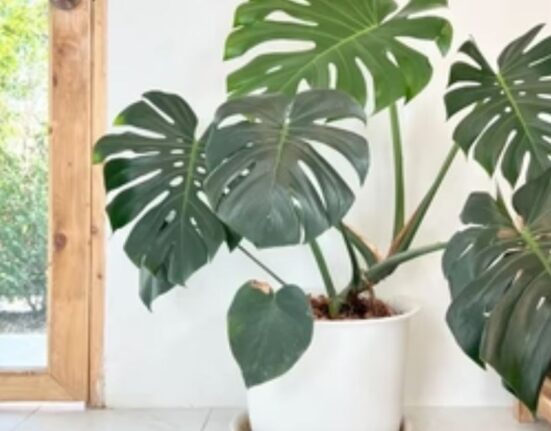
Most popular tropical foliage houseplants — pothos, philodendrons, monsteras, peace lilies, calatheas — evolved in forest understory conditions and perform well under moderate-intensity Indoor Plant Grow Lights delivering 2,000–5,000 lux at canopy level. Full-spectrum LED panels or T5 tubes at twelve to sixteen inches provide the right combination of spectral quality and intensity for these species without the light stress that triggers the bleaching, yellowing, and bacterial disease susceptibility that comes from either excessive light intensity or the chronic under-lighting that leaves these otherwise low-demand plants looking consistently pale and struggling despite otherwise correct care.
2. Herbs and vegetables:
Herbs and leafy vegetables are the most demanding category in terms of light intensity requirements for indoor growing, and they benefit most clearly from high-quality Indoor Plant Grow Lights running sixteen hours daily. Basil, cilantro, parsley, spinach, and lettuce all need 5,000–10,000 lux at leaf level to grow at the compact, flavorful pace that makes indoor growing worthwhile. Under-lit herbs produce the thin, pale, stretched growth with diluted flavor compounds that makes homegrown basil taste like the plastic-wrapped supermarket kind rather than the genuinely aromatic herb you were hoping to harvest regularly from a countertop growing setup.
3. Succulents and cacti:
Succulents and cacti are the category most often mismatched with inadequate Indoor Plant Grow Lights — they look perfectly fine for months under weak light before suddenly etiolating dramatically, producing stretched, pale, structurally weak growth that topples over and becomes severely vulnerable to the fungal crown rot and bacterial soft rot diseases that invade the compromised tissue of succulents grown in chronically insufficient light conditions indoors. These plants need the highest light intensity of any common houseplant category — 10,000 lux or more — which typically means high-output full-spectrum LEDs positioned much closer to the canopy than most growers instinctively place them.
Conclusion
Getting grow lights for indoor plants right makes a genuine difference to everything downstream — plant health, disease resistance, growth rate, and how much enjoyment you actually get from indoor growing. Choose full-spectrum LED for most situations, position at the correct distance, set consistent photoperiod timers, and match light intensity to your specific plant categories. Avoid the mistakes that create disease conditions — too much heat, too little light, inconsistent schedules — and your plants will reward you with the kind of growth that makes indoor gardening genuinely satisfying across every season.
FAQ’s
Q1. How many hours a day should light grow lights for indoor plants run?
Most grow lights for indoor plants should run twelve to sixteen hours daily — always use a timer for consistent photoperiod cycles your plants can rely on.
Q2. How far should grow lights for indoor plants be from leaves?
Positions Indoor Plant Grow Lights six to twenty-four inches above the canopy depending on wattage — bleaching means too close, stretching means too far.
Q3. Do grow lights for indoor plants cause yellow leaves on houseplants?
Yes — incorrectly positioned grow lights for indoor plants can cause bleaching or heat stress that produces yellowing, browning, and leaf drop in affected plants.
Q4. What is the best type of grow lights for indoor plants generally?
Full-spectrum LED panels are the best all-round grow lights for indoor plants — efficient, low heat, long-lasting, and suitable for virtually every common indoor species.
Q5. Can grow lights for indoor plants cause or prevent root rot?
Indirectly both — good Indoor Plant Grow Lights reduce overwatering temptation while poor placement creates heat and humidity that encourage root rot pathogens.
Q6. Do succulents and cacti need special grow lights for indoor plants?
Yes — succulents need high-intensity grow lights for indoor plants at 10,000 lux or more to prevent the etiolation and disease vulnerability that dim light causes.
Q7. How do grow lights for indoor plants affect plant disease resistance?
Proper Indoor Plant Grow Lights strengthen plant immunity by supporting robust cell wall development and the defense compound production that resists fungal pathogens effectively.
Q8. Can I leave grow lights for indoor plants on for twenty-four hours?
No — grow lights for indoor plants should never run continuously; plants need six to eight hours of complete darkness daily for healthy hormonal and metabolic function.
9. Are cheap purple LED strips effective grow lights for indoor plants?
Generally no — cheap purple LEDs lack the full spectrum that quality Indoor Plant Grow Lights provide, producing inferior growth compared to modern full-spectrum alternatives.
Summary
Choosing and using grow lights for indoor plants correctly transforms what’s possible in any indoor growing space — from barely-surviving plants in dim rooms to genuinely thriving collections that grow, flower, and produce with the same vigor they’d show in ideal natural light conditions outside. Full-spectrum LEDs lead the market for good reason: efficiency, spectral quality, low heat, and long lifespan all combine to make them the practical choice for most home growers.
Match intensity to your plant category, position at the correct distance, run consistent photoperiod cycles on a timer, and understand how lighting decisions directly influence disease resistance, root health, and the susceptibility to fungal and bacterial infections that affect under-lit or heat-stressed plants. Get those fundamentals right and Indoor Plant Grow Lights stop being a technical challenge and become one of the most effective tools in your entire indoor gardening practice — opening up growing possibilities that no window, however well-positioned, can match through a dark winter season.