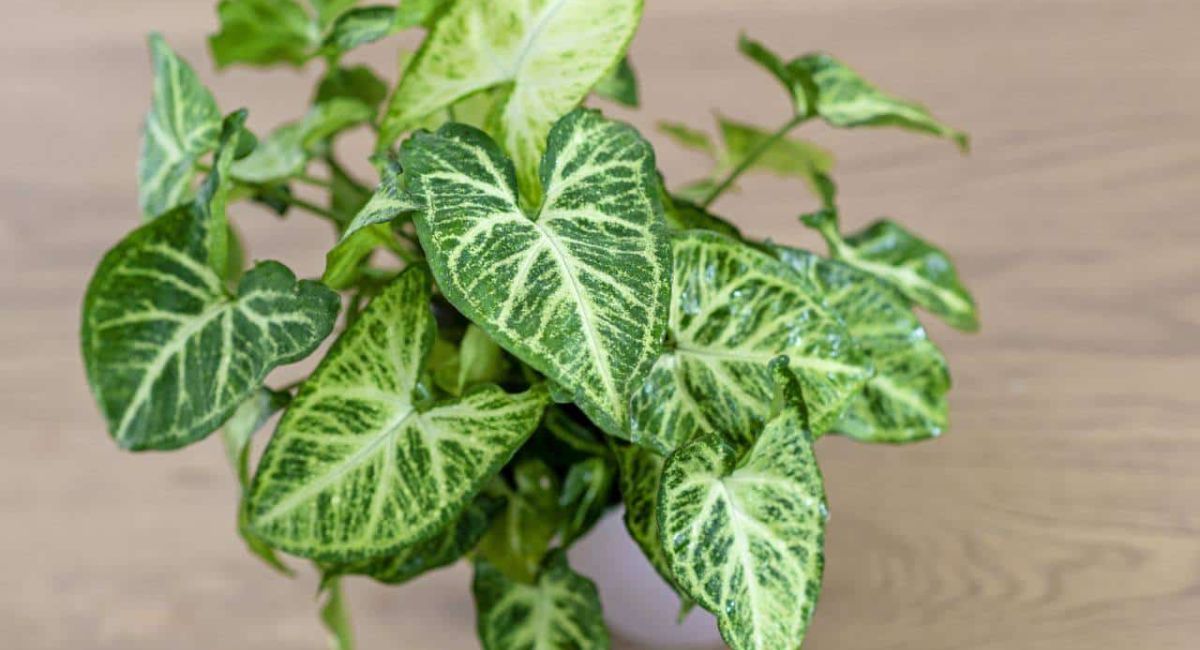
I brought home my first arrowhead plant thinking it would be easy — it had this gorgeous, glossy leaf and looked completely healthy at the nursery. Two weeks later, half the leaves had gone soft and yellowish, and I had absolutely no idea why.I spent a genuinely embarrassing amount of time on forums, reading about fungal infections, bacterial rot, and mystery viruses before I pieced together what this plant was actually asking me for.
The arrowhead plant is one of those species that sits right in the middle: not quite as bulletproof as a pothos, not quite as demanding as an orchid. Get the basics right and it’s genuinely beautiful, low-maintenance, and fast-growing. Get them wrong and it starts showing you every single mistake through its leaves.This guide walks through everything — watering, light, humidity, common diseases, root rot, fungal and bacterial infections, yellow leaves, and the soil mixes that actually prevent problems before they start — all written from real experience rather than textbook theory.
Everything needed to grow a healthy arrowhead plant, from first pot to trailing growth, explained clearly for real plant owners.
Arrowhead Plant Beauty That Transforms Any Indoor Space:

Walk into any plant shop these days and the arrowhead plant is almost always near the front — and for good reason. Those bold, arrow-shaped leaves in shades ranging from deep forest green to creamy white-and-green variegation have a way of making any corner of a room feel intentionally designed rather than just furnished. They climb, they trail, they bush out depending on how you train them. Few houseplants offer that kind of versatility.
What a lot of people don’t realize when they first bring home an arrowhead plant is that the way it looks after six months depends almost entirely on decisions made in the first six weeks. Pot size, soil mix, watering rhythm, light placement — those early choices set the trajectory. Get them right and the plant rewards you with rapid growth, dramatic leaves, and almost no drama. Get them wrong and the problems compound quietly until the whole thing looks like a mess.
Arrowhead Plant Quick Care Reference for Every Grower:
Here’s a practical snapshot covering ten of the most useful things to know about keeping an arrowhead plant healthy. Bookmark this — it’s useful when you’re troubleshooting a problem at eleven at night and need answers fast.
| Care Factor | Ideal Condition | Common Mistake | Disease / Problem Risk |
| Watering frequency | Every 7–10 days in summer | Watering on schedule, not by soil feel | Root rot, Pythium infection |
| Light level | Bright indirect light | Direct sun through glass | Leaf scorch, bleaching |
| Humidity | 50–70% | Dry heating vents nearby | Spider mites, brown tips |
| Soil type | Well-draining with perlite | Dense heavy potting mix alone | Fungal crown rot, bacterial rot |
| Fertilizing | Half-strength, every 3–4 weeks | Full-strength in winter | Salt burn, root damage |
| Temperature | 60–85°F (15–29°C) | Cold drafts near windows | Leaf yellowing, virus stress |
| Pot material | Terracotta or draining plastic | Sealed decorative pots with no holes | Root rot, anaerobic soil |
| Leaf symptoms | Deep green, firm, glossy | Ignoring early yellowing signs | Bacterial blight, mosaic virus |
| Propagation method | Stem cuttings in water or soil | Cutting too low, spreading disease | Fungal infection at cut nodes |
| Repotting schedule | Every 1–2 years in spring | Repotting in autumn or winter | Root stress, delayed disease recovery |
Arrowhead Plant Watering Errors That Cause Root Damage:
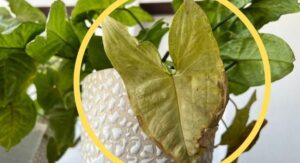
Watering mistakes account for probably seventy percent of the problems I hear people describe with their arrowhead plant. And the frustrating part is that both overwatering and underwatering can produce almost identical symptoms on the surface — limp leaves, yellowing, sadness — so the wrong diagnosis leads to the exact opposite treatment, which makes things worse fast.
1. Check Before Watering:
The only reliable watering rule for an arrowhead plant is to check the soil before adding any water, every single time. Push a finger an inch into the mix. Damp and cool means wait two or three more days. Dry and crumbly means it’s time. This one habit eliminates the chronic overwatering that creates the wet, oxygen-depleted soil where microorganisms like Pythium — the main culprit behind root rot — get their foothold. They don’t need much. A few days of consistently soggy soil is enough for them to colonize and begin breaking down root tissue. Prevention through checking is so much simpler than treating the aftermath.
2. Diagnosing Root Rot:
Most times, signs of root rot start quiet. A bit later, stems might droop even though the ground stays wet. Smells near the base could carry something off, like old laundry left damp too long. Once color fades toward yellow and tips flop sideways, harm often runs deep already. Check underneath by lifting it free from the container. Normal inside parts show light cream shades, sometimes beige, holding shape under gentle touch.
3. Drainage Soil Mixes:
Most advice underestimates how crucial dirt is for an arrowhead plant. Fresh potting mix right out of its packaging often settles too tightly, trapping water beyond what this plant prefers. A blend of two scoops of regular soil, matched with one scoop perlite and another of orchid bark, opens up space inside the pot. Water slips through fast when it rains indoors. Tiny gaps stay open, letting roots breathe. Stagnant dampness rarely builds up – this keeps bad microbes from settling in.
Arrowhead Plant Disease Symptoms and Treatment Methods:
The arrowhead plant can get sick — and it will at some point if you keep plants long enough. The difference between a plant that recovers quickly and one that slowly deteriorates is almost always how fast you spot the problem and how accurately you identify what it actually is before reaching for a treatment.
1. Fungal Leaf Spots:
Dark brown circles with a dip in the middle often signal fungus on an arrowhead vine growth occasionally edged in yellow. When temperatures drop and air barely moves, soft gray fuzz may spread across leaves or stems – this is gray mold caused by Botrytis cinerea. Instead of fuzz, powdery mildew takes form as a pale crust resembling powdered flour stuck to upper leaf areas. Spotting either issue quickly makes handling them far more doable.
2. Bacterial Versus Viral:
One reason folks mix these up? The fix isn’t the same at all. When bacteria strike an arrowhead vine growth – usually Xanthomonas or Erwinia – you’ll spot soggy spots that grow quickly, shifting to dark brown or black, sometimes edged with a damp, glistening rim. Humidity fuels their spread, particularly if leaves stay wet overnight. Prevent by directing moisture away from stems and branches, snip any sick parts, then open up space between plants. On the flip side, viruses show another face entirely – a patchy blend of light and green appears unevenly on blades, while fresh shoots curl or twist oddly.
3. Yellow Leaves Decoded:
Yellow leaves on an arrowhead plant are not a diagnosis — they’re a symptom with about five different possible causes, and treating the wrong one makes things worse. Uniform yellowing across older lower leaves almost always means overwatering or the early stage of root rot. Yellowing at the edges with green centers suggests nitrogen deficiency. Yellow patches between the leaf veins while the veins stay green is a classic magnesium or iron deficiency sign. Pale irregular blotches with no clear pattern — especially on newer growth — points toward a virus.
Arrowhead Plant Light and Humidity Needs Simply Explained:

Light and humidity are the invisible levers that control how fast your arrowhead plant grows, how big its leaves get, and how resilient it is to pests and diseases. Most people set the plant somewhere and never adjust it — but where it sits genuinely matters.
1. Getting Light Right:
Sunlight bouncing off walls suits the arrowhead best – not the harsh beam that slices through windows at noon. Try this: stretch your palm one foot above a pale countertop where you plan to place it. If the outline looks crisp like a drawing, that is straight sun – strong enough to fade and burn leaves fast when summer hits. A hazy, feathered shape around the edges? That is what the plant thrives on. When barely any shade appears, the space runs dim; growth slows, yet the plant holds on longer than most jungle types would.
2. Humidity and Air:
Deep in the jungles of Central and South America, arrowhead vine growth grows where moisture hangs thick – rarely dipping under sixty percent. Most living rooms feel drier, particularly when heaters hum through cold months, holding levels at thirty to forty-five. Though it survives these conditions, signs show: leaf edges darken, growth slows, pests like spider mites take hold more easily in warmth stripped of dampness. When placed near other greenery, shared breath rises – the collective release of water vapor lifts what surrounds them.
3. Seasonal Adjustments:
People are often caught off guard by how dramatically arrowhead vine growth changes its behavior from summer to winter. In the growing season, it drinks regularly, pushes out new leaves every couple of weeks, and responds visibly to fertilizing. Come October, everything slows. The plant needs significantly less water, no fertilizer, and actually prefers to be left mostly alone.
Arrowhead Plant Styling Tips for Dramatic Indoor Display:
An arrowhead plant in good health is genuinely striking — bold leaves, vigorous trailing growth, and that rich green color that photographs beautifully and looks even better in person. Here’s how to make the most of what it naturally offers.
- Upward movement changes how an arrowhead plant grows. When guided along a moss pole, its leaves often grow much bigger – some even reach twice their usual width. Instead of hanging down, climbing triggers expansion. Moist moss gives aerial roots something to hold onto. With that grip comes room for fuller development. Size jumps happen because the plant acts like it is rising through a forest. Support from damp surfaces makes a difference.
- Close to windows, try light-toned striped leaves – they catch the sun well. Away from glass, dark full-green kinds manage fine in dimmer corners. Each grows better when matched to its own needs instead of waiting too long in a poor fit.
- Those clay pots? They work well for arrowhead vine growth in steamy spots such as kitchens or bathrooms. Their breathable sides pull out extra water from the dirt. That staying-damp problem near roots fades a bit. Fungus likes wet corners, but not so much here.
- Grow longer stems on purpose for a flowing look. Yet trim the tips now and then so side shoots form. This creates thick growth over time instead of thin, wandering vines. A shaped plant feels alive without seeming messy.
- Start with an arrowhead vine growth , then add one bearing slender fronds nearby – their delicate lines mix well against wide, pointed foliage. Instead of grouping similar types together, try mixing in a species with ribbon like leaves. That contrast pulls attention deeper into the arrangement. Each plant stands out more when surrounded by different forms. Opposites here do attract, quietly enhancing what each brings to sight.
Arrowhead Plant Fertilizing Routine for Maximum Leaf Growth:
Feeding your arrowhead plant consistently through the growing season makes a visible difference — leaves come in larger, the color deepens, and new growth appears more frequently. Here’s a practical, low-stress feeding approach that works.
- Apply a balanced liquid fertilizer at half the recommended strength every three to four weeks from March through September — full-strength feeding in a container causes salt buildup that burns root tips and leaves the arrowhead vine growth more vulnerable to opportunistic fungal and bacterial infections over time.
- Switch to a fertilizer with slightly higher potassium in late summer to help the plant harden its newest growth before the slower winter season arrives, which measurably improves the plant’s resilience to the cold stress and low-humidity conditions that indoor heating creates.
- Stop fertilizing entirely from October through February — the arrowhead plant is essentially dormant, and nutrients added to dormant soil just accumulate as mineral salts without being absorbed, eventually reaching concentrations that damage the very roots you’re trying to support.
- Flush the potting soil thoroughly every two to three months by running plain water slowly through until it drains freely from the bottom several times over — this removes accumulated fertilizer salts before they concentrate to damaging levels and cause the crispy brown leaf tips that get wrongly blamed on underwatering.
- Slow-release fertilizer granules pressed into the top layer of soil every four to six months work surprisingly well for an arrowhead vine growth if liquid feeding feels like too much to track — they release nutrients steadily and gently with almost zero risk of the overfeeding that causes more harm than good in small containers.
Conclusion
An arrowhead plant is one of those plants that genuinely grows with you as a plant owner. It shows you what it needs through its leaves, responds quickly when you fix a problem, and rewards consistency with some of the most dramatic foliage a tropical houseplant can produce indoors. Watch the yellowing, respect the drainage, feed it through summer, leave it alone in winter, and you’ll have a plant that looks better every single year.
FAQ’s
Q1. Why does my arrowhead plant keep getting yellow leaves even when I’m careful?
Yellow leaves on an arrowhead plant usually trace to inconsistent soil moisture — either staying wet too long or drying out too fast. Check drainage first, then look at the root zone for early rot signs before adjusting anything else in the care routine.
Q2. How often should I actually water an arrowhead plant at home?
Your arrowhead plant doesn’t care about your schedule — it cares about the soil. Water only when the top inch feels dry, which lands around every seven to ten days in summer and every twelve to sixteen days in winter when growth slows dramatically.
Q3. What causes root rot in an arrowhead plant and can I save it?
Root rot in an arrowhead plant comes from persistently wet soil where microorganisms like Pythium destroy root tissue. Catch it early, trim rotted roots, treat remaining ones with diluted hydrogen peroxide, repot in fresh draining soil — it’s very recoverable when you act quickly.
Q4. Can an arrowhead plant really get fungal infections indoors?
Yes, more commonly than most people realize. An indoor arrowhead plant in humid, poorly ventilated spaces is genuinely susceptible to botrytis gray mold and powdery mildew. Improve airflow, keep water off the leaves, and treat early outbreaks with weekly neem oil spray.
Q5. What’s the best light placement for an arrowhead plant in my home?
Bright indirect light is the sweet spot for an arrowhead plant — close to a window but never in direct sun, which scorches leaves fast. Variegated varieties need slightly more brightness than solid green ones to keep their white and cream leaf markings vivid.
Q6. How do I know if my arrowhead plant has a virus or a fungal infection?
Fungal infections on an arrowhead plant show as defined spots, gray mold patches, or powdery coatings — they’re localized. Virus infections create irregular yellow mottling and distorted growth across the whole plant. Viruses have no cure; fungal infections respond to neem oil treatment within weeks.
Q7. Does an arrowhead plant actually need fertilizer or is it optional?
Fertilizer isn’t optional if you want your arrowhead plant to grow properly. Container soil depletes fast. Half-strength balanced fertilizer every three to four weeks through spring and summer produces visibly larger leaves, deeper color, and significantly faster growth than unfed plants in the same conditions.
Q8. What soil mix genuinely prevents disease problems in an arrowhead plant?
Two parts potting mix, one part perlite, one part orchid bark is genuinely the best blend for an arrowhead plant. It drains fast enough to prevent the wet stagnant conditions where root rot fungi and pathogenic bacteria establish themselves and quietly destroy root systems before you even notice.
Summary
The arrowhead plant is a genuinely rewarding houseplant once you understand what it’s actually asking for — and most of those asks are pretty reasonable. This guide covered the watering habits that prevent root rot before it starts, how to identify and respond to fungal infections, bacterial leaf diseases, and the viral problems that only insects can spread.
Yellow leaves got a proper breakdown by cause rather than a single vague answer, and the light, humidity, soil, and fertilizing guidance throughout reflects what actually works in real homes rather than ideal lab conditions. Keep your arrowhead vine growth in bright indirect light, water by feel rather than schedule, feed it through summer and leave it alone in winter, and give it the airy draining soil it needs to stay healthy.