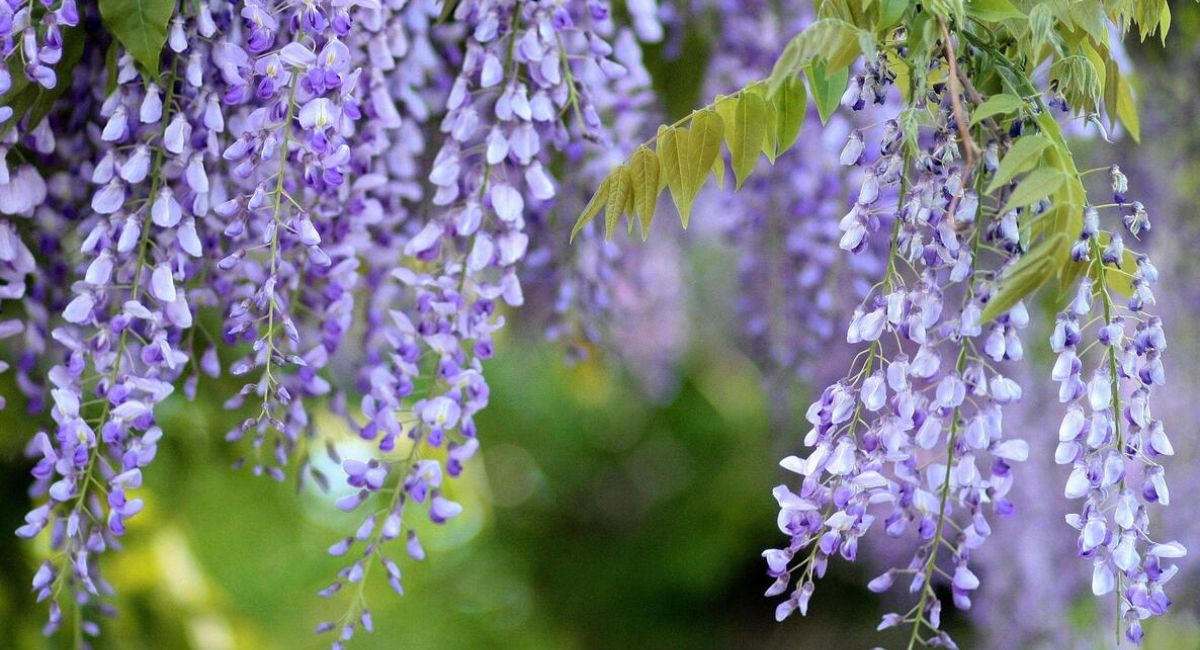
My first serious attempt at wisteria tree planting went sideways in a way I didn’t see coming at all. I chose a gorgeous spot along the south garden fence, dug what I thought was a perfectly adequate hole, firmed the root ball in, watered it thoroughly, and stood back feeling genuinely pleased with myself. Within three weeks the leaves started going pale and yellow at the margins. By week six, entire sections of new growth were dying back from the tips inward, and the whole thing looked exhausted before it had ever really started.
The soil drainage was poor. I’d planted too deep. The location had more root competition from a nearby established tree than I’d bothered to assess. And then, because the plant was already stressed from those foundational errors, fungal pathogens established in the root zone and bacterial problems moved in through pruning wounds I’d made without sterilizing my tools. Wisteria tree planting sounds simple. The reality is that these plants reward real knowledge and punish the casual approach pretty consistently.
Successful wisteria tree planting isn’t about luck or talent — it’s about understanding what this vine truly needs before planting it.
Wisteria Tree Planting Site Selection Determines Everything Downstream Always:
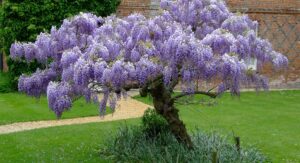
The single most consequential decision in any wisteria tree planting project is where you put the plant — and most people make it based almost entirely on aesthetics. They want it growing up that particular pergola, or draping over that specific fence, and the structural and soil questions come second if they come at all. I understand the impulse, genuinely. But the location determines sun exposure, drainage, root competition, airflow, and ultimately disease vulnerability in ways that cascade through the plant’s entire life.
Good wisteria tree planting site selection means six to eight hours of direct sun daily — not dappled, not filtered, actual direct sun. It means well-draining soil that doesn’t hold water after rain. It means genuine clearance from structures the vine could eventually damage and from other established plants whose root systems will compete aggressively for moisture and nutrients. And it means thinking about airflow..
| Wisteria Species | Blooming Season | Common Problem | Key Planting Note |
| Wisteria sinensis | Spring (before leaves) | Root rot in heavy clay soil | Amend clay with grit and organic matter |
| Wisteria floribunda | Late spring | Powdery mildew in low airflow | Plant with full south or west exposure |
| Wisteria brachybotrys | Mid-spring | Fungal dieback on old wood | Prune twice yearly; sterilize blades always |
| Wisteria frutescens | Late spring to summer | Scale insects on main stems | Inspect trunk annually; treat early infestations |
| Wisteria macrostachya | Summer | Bacterial crown gall | Never wound the root crown during planting |
| Wisteria formosa | Spring | Vine borer damage | Wrap trunk base in young plants first year |
| Blue Moon Wisteria | Spring + reblooms | Chlorosis from high soil pH | Test and amend soil before any planting |
| Amethyst Falls | Late spring | Aphid colonies on new growth | Inspect all new growth tips weekly in spring |
| Prolific Wisteria | Spring | Botrytis blight in wet springs | Ensure excellent drainage at planting site |
| Alba Wisteria | Spring | Root competition from nearby trees | Leave 3–4m clearance from established trees |
Wisteria Tree Planting Soil Preparation Prevents Most Disease Problems:

The soil work you do before wisteria tree planting determines the plant’s disease resistance, vigor, and longevity more than almost any other single factor. Wisteria isn’t particularly fussy about soil fertility — it actually performs better in moderately lean conditions than in heavily enriched garden beds — but it is completely unforgiving about drainage. Heavy clay that puddles after rain and stays saturated for days creates the exact anaerobic soil conditions that fungal root pathogens like Pythium and Phytophthora require to establish and spread. Once those pathogens are in the root zone of an established wisteria, managing them becomes genuinely difficult..
The preparation process for proper wisteria planting guide in heavy soil means digging the planting hole at least twice the root ball’s diameter and half again as deep. Mix the excavated soil with coarse horticultural grit in a roughly 2:1 ratio, along with a modest amount of well-composted organic matter.In genuinely difficult clay, consider raising the planting area by building a low mound — even 15 centimetres of elevation dramatically reduces the risk of water pooling around the root crown, which is where bacterial crown rot and fungal girdling infections tend to establish themselves first.
Wisteria Tree Planting Disease Prevention Habits Every Grower Needs:
- Sterilize every cutting tool with 70% isopropyl alcohol before and after any pruning session on your wisteria tree planting — bacterial canker, fungal dieback, and Botrytis blight all enter through fresh pruning wounds, and a contaminated blade carries pathogens directly into healthy tissue you intended to preserve.
- Never plant wisteria into soil that has recently grown another plant with known crown gall or root rot history — those soils harbor Agrobacterium tumefaciens and Pythium spores that will immediately threaten any new wisteria planting guide you attempt in that same location without thorough soil replacement or chemical soil treatment.
- Inspect the main trunk, primary branches, and new growth tips of your wisteria planting guide thoroughly at the start of every growing season — scale insects, vine borers, and aphid colonies establish themselves in these areas first and create the feeding wounds that give bacterial and fungal pathogens their primary entry points into the plant.
- Water at the root zone only, directing the flow away from the trunk base and main stem of any wisteria planting guide — moisture consistently sitting against bark tissue in warm conditions promotes bacterial soft rot, fungal crown rot, and the scab-like actinobacterial lesions that crack protective bark and invite secondary infection from multiple pathogens simultaneously.
- Apply a preventive copper-based fungicide spray to your wisteria planting guide in early spring before new growth hardens, and again in autumn after leaf drop — these applications target the overwintering fungal spore populations that cause Botrytis blight, powdery mildew, and cane dieback to recur season after season in affected gardens.
Wisteria Tree Planting Root Rot Recovery That Genuinely Works Well:
- If root rot is suspected in an established wisteria tree planting, carefully excavate the root crown area and examine the larger lateral roots — healthy roots are firm and show pale cream to tan bark, while rot-damaged roots are dark, soft, and may carry the characteristic sour smell of anaerobic bacterial and fungal activity.
- Using sterilized loppers and secateurs, remove every section of visibly rotted root tissue until you reach only firm, healthy material — leaving compromised root sections in the soil of any wisteria tree planting is leaving active Pythium and Fusarium mycelium with continued access to the living root system it was already consuming.
- Dust all cut root surfaces with powdered sulfur immediately after trimming — this creates a hostile surface environment for fungal reestablishment — then allow the exposed root surfaces on yourwisteria planting guide to air-dry for several hours in open conditions before backfilling with amended, well-draining soil around the cleaned root zone.
- Backfill with a fresh mixture of the original soil combined with horticultural grit and a biological fungicide product containing Trichoderma species, which colonize the root zone as beneficial fungi and actively compete with pathogenic Pythium and Fusarium populations that may remain in the surrounding soil of your recovering wisteria planting guide
- Withhold irrigation for ten to fourteen days after the root treatment to allow the root crown area to dry thoroughly and reduce the moisture levels that pathogenic microorganisms need to sustain their populations — then resume watering deeply but infrequently to keep your wisteria planting guide establishing without recreating the waterlogged conditions that caused the original rot.
Wisteria Tree Planting Fungal Disease Types That Need Immediate Action:
Fungal infections are the most frequently encountered disease category in any mature wisteria tree planting, and they are almost always traceable back to specific environmental conditions — excess moisture, poor airflow, or physical wounds that went untreated. Identifying them correctly determines whether your response actually works.
1. Botrytis Blight:
Botrytis cinerea causes a grey, fuzzy mold growth on the flowers, young shoots, and tender new leaf growth of a wisteria tree planting, typically during cool, wet spring weather when new growth is at its most vulnerable. The infected tissue browns rapidly and collapses. Removing all affected material immediately, improving airflow by thinning congested growth, and applying a copper-based fungicide to the remaining healthy tissue gives the best recovery outcome when Botrytis is caught before it reaches the older woody stems.
2. Powdery Mildew:
Powdery mildew appears as a white, chalky coating on the leaf surface and young stems of a wisteria planting guide — most commonly in late summer when warm days combine with cool nights and stagnant air. Caused by Erysiphe species, it spreads through airborne spores. A diluted neem oil or potassium bicarbonate spray applied every five to seven days manages surface infections effectively. But the real fix is environmental — improving airflow through summer pruning of congested interior growth removes the conditions mildew needs to keep recurring.
3. Crown Gall Fungus:
Though technically caused by the bacterium Agrobacterium tumefaciens, crown gall on a wisteria planting guide produces tumour-like woody growths at the root crown and lower stem that disrupt the plant’s vascular tissue and reduce overall vigour progressively. Infected plants cannot be fully cured. The strategy is preventing introduction through clean tools, careful planting technique that avoids wounding the root crown, and never using soil from a previously affected planting site without thorough treatment.
Wisteria Tree Planting Bacterial Infections That Appear Deceptively Harmless:
Bacterial disease in a wisteria planting guide context tends to move faster than most gardeners expect, especially in warm, wet seasons when plant tissue is actively growing and natural wound-healing is temporarily outpaced by pathogen activity. The damage is usually internal before any surface symptom gives you a clear signal to act.
1. Bacterial Canker:
Bacterial canker — caused primarily by Pseudomonas syringae — creates sunken, discoloured lesions on the bark and stems of a wisteria tree planting, often weeping gum or amber-coloured sap from the infected areas. It enters through pruning cuts, frost damage, or insect feeding wounds. Cut well below all visible canker tissue using sterilized tools, dispose of the material away from the garden, and seal larger wounds with a copper-based wound paint to prevent immediate reinfection.
2. Soft Rot:
Soft rot bacteria — Erwinia species primarily — liquefy the internal tissue of stems on a wisteria planting guide g from within, producing the characteristic foul-smelling, waterlogged collapse that goes from firm to destroyed within 24 to 48 hours of visible onset. There is no chemical treatment that reverses this process. Cutting aggressively into clean tissue below the entire infected zone and then drying the wound surface completely in open air is the only reliable management approach available to any affected gardener.
3. Leaf Scorch:
Bacterial leaf scorch causes brown, crispy margins on the foliage of a wisteria planting guide that progresses even when irrigation is entirely adequate. Xylella fastidiosa colonizes the xylem vessels and blocks water transport progressively upward through the plant. Leafhopper insects carry it between plants during feeding. Confirmed infected specimens must be isolated immediately to prevent further spread, and leafhopper populations in the surrounding garden need to be brought under control through a combination of physical barriers and appropriate insecticide applications.
Wisteria Tree Planting Virus Problems Travel Through Insects and Equipment:
Viral infections affecting a wisteria tree planting are the least dramatic-looking and the most permanently damaging disease category in this plant’s pathology. No treatment reverses a viral infection once it’s inside the plant’s tissue — everything has to be focused on preventing introduction through pest management and propagation hygiene.
1. Mosaic Virus:
Bean yellow mosaic virus and related potyvirus strains cause irregular yellow and pale green patterning across the leaves of a wisteria tree planting, reducing photosynthetic capacity season after season while the plant’s overall vigor quietly declines. Aphids are the primary transmission vector, picking up viral particles during brief feeding events and depositing them in every subsequent plant they visit. Maintaining aphid populations at near zero through regular inspection and insecticidal soap is the only reliable prevention strategy for any grower.
2. Necrotic Ringspot:
Necrotic ringspot viruses produce brown, circular lesions and irregular necrotic patches on the foliage and stems of a wisteria planting guide that resemble bacterial or fungal damage until the pattern of distribution — scattered across the whole plant without environmental correlation — makes viral infection the more likely diagnosis. Thrip and aphid control is essential. Once confirmed, the infected plant should be removed from proximity to all other susceptible garden species to prevent insect-mediated spread during the growing season.
3. Cucumber Mosaic:
Cucumber mosaic virus infects a remarkably wide range of ornamental plant genera, and a mature wisteria planting guide is not immune. CMV causes mosaic patterning, mild leaf distortion, and progressively stunted new growth that worsens with each consecutive flush through the season. Aphid populations transmit it efficiently during even brief probing feeding events. Weekly inspection of all new growth tips combined with immediate insecticidal soap treatment at first aphid sighting represents the most practical and effective prevention approach available to home gardeners.
Wisteria Tree Planting Soil Microorganism Threats Operating Completely Underground:
Below the surface of any wisteria tree planting, a complex community of microorganisms occupies the root zone — most of them harmless or beneficial, some of them conditionally pathogenic, and a few genuinely dangerous under the right conditions. Understanding this hidden layer matters more than most gardeners ever learn before problems emerge.
1. Root Nematodes:
Root-knot nematodes create swollen, bead-like galls along the fine feeder roots of a wisteria tree planting, physically disrupting the root’s ability to absorb water and dissolved nutrients from the surrounding soil. Surface symptoms — unexplained decline, yellowing despite adequate feeding, stunted new growth — closely mimic overwatering damage and are frequently misdiagnosed for months. Soil solarization before planting and biological nematicide products containing Steinernema nematodes offer the most garden-safe management options for established infestations.
2. Fusarium Wilt:
Fusarium oxysporum lives passively in background soil populations until a wisteria planting guide experiences root stress from waterlogging, compaction, or physical damage during any cultivation work near the root zone. At that point it activates aggressively, spreading fungal threads through the entire root system and injecting vascular toxins that cause sudden wilting in sections of the plant that appear physically undamaged. Sterile planting mix, excellent drainage, and avoiding cultivation work near established root systems are the three most reliable prevention measures available.
3. Actinobacteria Scab:
Certain actinobacterial strains produce rough, corky scab lesions on the bark surface and root crown of a wisteria planting guide particularly in humid conditions with limited airflow around the lower stem. These lesions aren’t critically dangerous in isolation but each one creates a crack in the plant’s protective bark layer that becomes an entry point for secondary fungal and bacterial pathogens far more damaging than the actinobacteria themselves. Improving ventilation around the base and avoiding soil compaction directly addresses the conditions these organisms require.
Wisteria Tree Planting Pest Problems That Invite Serious Disease Entry:
In any wisteria tree planting context, pests and disease rarely operate independently. Every aphid feeding wound, every scale insect attachment site, every vine borer entry hole is a breach in the plant’s protective bark or leaf surface — and bacterial and fungal pathogens treat every one of those breaches as an open door. Managing pests and disease at the same time is simply realistic.
1. Aphid Colonies:
Aphids colonize the new growth tips of a wisteria planting guide in spring with impressive speed, distorting the tender shoots and excreting honeydew that immediately cultivates sooty mold across the surface below. Beyond the direct feeding damage and secondary mold problem, aphids are the primary vector for mosaic viruses and other potyviruses that cause permanent decline. Insecticidal soap applied directly to infested tips every five days, combined with encouraging natural aphid predators like ladybirds, manages most spring aphid flushes reliably.
2. Scale Insect:
Armored scale species attach to the bark of the main stems and primary branches of an established wisteria tree planting, where their protective shells make contact treatment largely ineffective except during the brief crawler stage. Populations build slowly but consistently, and the sooty mold growing on their honeydew compounds the damage by reducing photosynthetic capacity across large bark and leaf surface areas simultaneously. A winter tar oil wash applied during dormancy, targeting the overwintering egg masses, is the most reliable cultural control method available without systemic insecticide use.
3. Vine Borers:
Clearwing moth larvae bore into the main trunk and primary stems of a wisteria planting guide creating tunnels in the woody tissue that disrupt vascular flow and create entry points for bacterial canker and fungal decay organisms simultaneously. The first indication is often unexplained dieback in a major branch section despite the rest of the plant appearing healthy. Wrapping the lower trunk of young plants in a physical barrier during the adult moth’s laying season and treating active borer holes with a targeted pheromone-based lure reduces infestation rates significantly in affected gardens.
Conclusion
Every problem I’ve encountered in wisteria tree planting — every bout of fungal blight, every bacterial canker, every root rot setback — has traced back to something that could have been prevented at the start. Site selection, soil preparation, clean tools, and consistent observation are not complicated. But they are the entire difference between a wisteria planting guide that becomes a garden landmark and one that spends years struggling in the wrong conditions.
FAQ’s
Q1. When is the best time of year for wisteria tree planting?
Early autumn or early spring are both excellent windows for wisteria tree planting — mild temperatures allow the root system to establish before the demands of summer growth or winter dormancy begin. Avoid planting in frozen ground or during summer heat, when transplant stress is at its highest and most damaging.
Q2. How deep should the hole be for wisteria tree planting?
For wisteria tree planting, dig a hole twice the width of the root ball and the same depth — never deeper. Planting too deep buries the root crown in constantly moist soil, which is the primary trigger for crown rot and the fungal infections that follow from bacterial activity in that zone.
Q3. Why are the leaves on my wisteria turning yellow after planting?
Yellowing leaves after wisteria tree planting usually signal root stress — either waterlogging, transplant shock, or soil pH problems causing iron chlorosis. Check drainage first. If roots smell sour or look dark, root rot has begun. If drainage is fine, test soil pH and apply a sequestered iron treatment if pH is above 7.
Q4. What fungal diseases should I watch for after wisteria tree planting?
Botrytis blight, powdery mildew, and Pythium root rot are the three most common fungal threats following wisteria tree planting. All three are triggered by excess moisture and poor airflow. Fast-draining soil, adequate spacing, and spring copper fungicide applications prevent most fungal outbreaks before they ever establish in a new planting.
Q5. Can wisteria tree planting succeed in heavy clay soil?
Yes — but only with proper preparation. Wisteria tree planting in clay requires mixing the excavated soil with coarse horticultural grit before backfilling, or building a raised planting mound to elevate the root crown above the natural waterline. Unamended clay holds moisture long enough to trigger the root rot pathogens that kill wisteria consistently.
Q6. What bacterial problems affect wisteria tree planting most commonly?
Bacterial canker, crown gall, and soft rot are the three bacterial diseases most likely to affect a wisteria tree planting. All enter through wounds — pruning cuts, pest damage, or frost cracks. Sterilizing tools before every pruning session and avoiding unnecessary damage to the root crown at planting removes the primary infection routes for all three pathogens simultaneously.
Q7. How do viruses spread to wisteria tree planting and can they be treated?
Viruses reach a wisteria tree planting primarily through aphid and thrip feeding and through unsterilized propagation tools. Once inside the plant’s tissue, viral infections cannot be removed or reversed. The only approach is prevention — maintaining pest populations at near zero through regular monitoring and acting on any aphid or thrip sighting immediately with insecticidal soap.
Q8. How do soil microorganisms affect wisteria tree planting differently from other shrubs?
Wisteria develops an extensive, deep root system that makes replacing soil after a microorganism infection extremely difficult compared to potted or shallow-rooted plants. This is why prevention before wisteria tree planting — starting with good drainage, sterile backfill, and biological fungicide inoculants — matters so much more than any treatment applied after problems have already established themselves underground.
Summary
Great wisteria tree planting outcomes come down to four decisions made before the plant goes in the ground: the right site, well-amended draining soil, clean tools, and a commitment to regular observation. Most fungal, bacterial, and viral problems that eventually affect wisteria are preventable. When symptoms do appear in your wisteria planting guide , acting the same day rather than waiting always produces better results. Pay attention to the soil, the root crown, and the bark — that is where the real health story of anywisteria planting guide is being written long before anything visible appears on the leaves or stems above.