

I woke up one morning, and my throat felt like I had swallowed glass which honestly scared me because I had never felt that kind of pain just from swallowing. Strep throat symptoms in adults hit so much harder than I expected and the fever and swollen glands made me feel completely wiped out within hours. I went to urgent care the same day and was glad I did not wait it out.
A sore throat on its own doesn’t sound like an emergency. Most of the time it isn’t. But strep throat symptoms in adults play by completely different rules than the average viral scratch and the two look similar enough at the start that people mix them up constantly.
Spotting strep throat symptoms in adults early gives you the best chance to get treated fast and recover feeling great.
What Strep Throat Symptoms in Adults Actually Mean for Your Health

Strep throat is caused by group Streptococcus bacteria—not a virus. That one difference is what changes everything about how the infection behaves and why it needs to be treated differently. Viral sore throats eventually burn out on their own. This bacteria doesn’t work that way.
When strep throat symptoms in adults go untreated, the bacteria can trigger the immune system to overreact in ways that damage healthy tissue. Rheumatic fever is the most serious of those complications — it scars the heart valves. Post-streptococcal kidney disease is another. Both are entirely preventable with a timely antibiotic prescription. That’s what makes recognition matter so much.
Strep Throat Symptoms in Adults at a Glance — Quick Comparison Table
| Feature | Strep Throat Symptoms in Adults | Regular Viral Sore Throat |
| How fast symptoms arrive | Within hours — hits hard and sudden | Gradual build over 1 to 2 days |
| Throat appearance | Deep red, visible pus on tonsils | Mildly pink, no pus |
| Fever level | Usually 100.4°F or higher | Mild or absent entirely |
| Cough | Rarely shows up | Almost always present |
| Runny nose | Usually absent | Nearly always present |
| Neck glands | Swollen and tender | Occasionally swollen |
| Treatment needed | Antibiotics — always | Rest and fluids only |
| Still contagious until | 24 hours after starting antibiotics | Through the full illness |
| Best way to confirm | Rapid strep swab or throat culture | Symptom observation |
| Recovery time | 2 to 3 days with antibiotics | 7 to 10 days on its own |
How Strep Throat Symptoms in Adults Differ From a Regular Cold
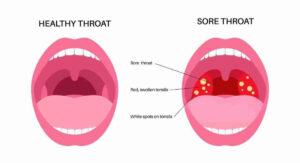
Speed is the biggest giveaway. Colds ease their way in — a little scratchiness one day, some congestion the next, maybe a cough building by day three. Strep throat symptoms in adults don’t ease into anything. They show up in a matter of hours. Completely normal at breakfast. Struggling to swallow by dinner. That kind of sudden flip doesn’t happen with viral infections.
The other tell is what’s missing. Group A strep attacks the throat and tonsils but doesn’t typically inflame the lower airways — so a cough producing mucus, a streaming nose, chest tightness — those point strongly toward a virus. When someone has a completely destroyed throat but no cough and no congestion at all, that combination is a clear signal to get tested rather than reach for the cold medicine.
The Full List of Strep Throat Symptoms in Adults
Not everyone gets every symptom. Most people hit a cluster of them together, and that cluster is what tells the story.
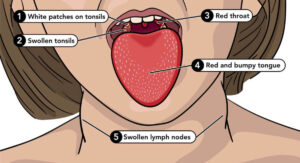
Core strep throat symptoms in adults: severely red and painful throat, swollen tonsils coated in white or yellowish pus, fever at or above 100.4°F, sharp pain when swallowing, tender and swollen lymph nodes along the jaw and neck, headache, body chills, and a fatigue that hits faster and harder than any cold tiredness. Nausea is common early on — some adults vomit in the first 24 to 48 hours.
Less common but worth knowing: petechiae, which are tiny red or purple pinpoint dots on the roof of the mouth, and in more serious cases a rough red rash spreading from the chest outward. That rash means scarlet fever — bacterial toxins in the bloodstream. Rest-and-fluids is not the answer at that point. Same-day medical attention is.
What Strep Throat Symptoms in Adults Look and Feel Like in Detail
What a Doctor Looks for Before the Test Result
When someone comes in with suspected strep, the throat exam does most of the talking before any swab result comes back. Tonsils are enlarged and inflamed. The back of the throat is a deep, raw red — not the mild irritation of a cold. White or yellowish pus streaks on the tonsil surface are a distinctly bacterial sign that viral infections don’t typically produce.
Doctors also look for petechiae on the soft palate. Those pinpoint red spots aren’t present in every case but when they show up alongside pus and fever, the clinical picture is clear long before the four-minute rapid test finishes running.
The Specific Pain That Sets Strep Apart From Anything Else
Normal sore throat pain is dull and annoying — worst in the morning, eases a bit once you’ve had something warm to drink. Strep throat symptoms in adults produce something sharper and more constant. Warm liquids don’t take the edge off. Every swallow is something to brace for — not just uncomfortable but actively painful. People describe it as swallowing around gravel, a hot stone, broken glass. That’s not exaggeration. At peak intensity it’s genuinely that bad.
The fever that rides alongside it amplifies everything else. Full body aching, a head that won’t stop pounding, a deep tiredness that makes staying upright feel like effort. This is not push-through-your-day fatigue. This is flat-on-the-couch-by-noon regardless of how stubborn you are.
When Strep Throat Symptoms in Adults Signal Something More Serious
A red skin rash spreading outward from the chest and neck while other strep symptoms are present means scarlet fever. The texture of the skin turns rough and sandpapery. The tongue may become swollen and bright red. These are signs the infection has escalated beyond the throat. Not a panic situation — but same-day clinic, not tomorrow.
How Strep Throat Symptoms in Adults Spread Through a Household
The Way Bacteria Travel Between People
Strep spreads through the droplets released when an infected person coughs, sneezes, or speaks in close range. Those droplets settle on hands, shared surfaces, and household items. Touch something contaminated, touch your face before washing your hands, and the bacteria have a route in.
Inside a home this plays out constantly without anyone realizing it. Shared cups, shared towels, shared remote controls and door handles. One person carrying strep creates low-level ongoing exposure for everyone else in that space — and most of it happens before anyone knows they’re sick.
The Contagious Window That Catches People Off Guard
Strep throat symptoms in adults take two to five days to appear after exposure. During that entire window the infected person feels normal and is already spreading bacteria. By the time they recognize something is wrong and stay home, two or three contagious days have usually already passed.
Antibiotics cut that window fast. About 24 hours after the first dose, transmission risk drops significantly. Without treatment, contagiousness continues through the full illness.
5 Reasons Strep Throat Symptoms in Adults Get Dismissed and Shouldn’t
- Strep throat symptoms in adults look enough like a cold at the start that people assume rest and fluids will handle it — that delay gives the bacteria time to deepen and makes complications genuinely more likely.
- Without antibiotics, untreated strep can lead to rheumatic fever, which permanently scars heart valves and creates cardiovascular problems that last decades past the original throat infection.
- Staying in circulation while contagious spreads group A strep to coworkers, family members, and anyone else in shared indoor spaces — all because the throat pain didn’t feel serious enough to act on.
- A peritonsillar abscess — a pus-filled pocket beside the tonsil — can develop when strep goes untreated long enough. Having it drained at a clinic is exactly as uncomfortable as it sounds.
- Strep bacteria don’t clear the way viruses do. Waiting without antibiotics puts real stress on kidneys and joints in ways that may not become obvious until weeks after the throat has stopped hurting.
5 Practical Ways to Stop Strep From Spreading at Home
- Wash hands thoroughly for 20 full seconds after coughing, sneezing, or touching your face — this is the single most effective way to stop bacteria from transferring to others in the house.
- Keep plates, cups, utensils, and water bottles completely separate while sick — shared items create easy bacterial transfer even between people who never come into direct close contact.
- Change your toothbrush once you start antibiotics — bacteria survive on bristles and can keep reintroducing the infection into your throat before you’ve actually finished clearing it.
- Stay home from work and public spaces until you’ve been fever-free for 24 hours and had at least 12 to 24 hours of antibiotics — that’s CDC guidance for when spread risk drops enough to return.
- Wipe down door handles, light switches, bathroom taps, and faucets daily — these are the surfaces that quietly carry bacteria between household members who never have any direct contact.
How Strep Throat Symptoms in Adults Get Diagnosed and Treated
Confirming strep starts with a rapid strep test — a quick throat swab, results in under ten minutes. Accurate most of the time. When symptoms point strongly toward strep but the rapid test comes back negative, a throat culture is the follow-up step. It takes 24 to 48 hours but catches infections the rapid test occasionally misses.
A positive result means antibiotics. Amoxicillin and penicillin are the standard options, both effective against group A strep, both generally well tolerated. They do two things at once — stop the infection from spreading or progressing, and pull you out of the worst symptoms faster than your immune system could manage without help.
The mistake people make most often: stopping the prescription early because strep throat symptoms in adults ease up within 48 hours. That improvement is real but the bacteria aren’t fully gone yet. Stopping early hands surviving bacteria a chance to come back harder. Finish every single dose regardless of how much better you feel.
Managing Strep Throat Symptoms in Adults Comfortably While You Recover
Why Real Rest Actually Matters Here
Sleep and genuine downtime is when the immune system does its most effective repair work. Adults who take one or two actual rest days early in the illness come out of strep faster than those who grind through it propped up on ibuprofen. Taking the time off upfront is almost always faster total than getting back to normal a day earlier and then crashing again.
Salt Water Gargling, Warm Liquids, and Cold Relief
Gargling with warm salt water — a quarter teaspoon dissolved in eight ounces of warm water — three times daily pulls some surface inflammation down and offers real temporary pain relief. Warm broths, herbal teas, and soups soothe the throat lining between antibiotic doses and help with hydration when every swallow is an event. Cold options — ice chips, cold water, frozen pops — numb the throat from the other direction and make the worst pain windows easier to get through.
Over-the-Counter Options That Actually Help
Ibuprofen and acetaminophen manage both the throat pain and the fever effectively. They don’t touch the bacterial infection itself — that’s entirely what the antibiotics are for — but they make recovery considerably more comfortable. Take them as directed. Flag any current medications to a pharmacist before stacking them together.
Who Is Most Likely to Get Strep Throat Symptoms in Adults
Strep doesn’t discriminate but some adults genuinely face more exposure than others. Knowing whether you fall into a higher-risk group means you take that sore throat more seriously from the start instead of assuming it’s nothing.
Parents Living With School-Age Kids
Children are extraordinarily efficient at spreading group A strep. They share everything, cover their mouths inconsistently, and are physically close to parents constantly — especially when they’re sick and want comfort. If a child in the house tests positive for strep, a parent developing a sore throat two to four days later is not a coincidence. Get tested.
Teachers, Nurses, and Childcare Staff
Anyone who spends their working day in close proximity to children or sick people faces ongoing exposure to strep. Protective equipment helps but is not a guarantee. Anyone in these roles who develops sudden throat pain and a fever above 100 should head for a rapid test rather than waiting a few days to see how things develop.
Adults With a History of Frequent Strep
Some adults are simply more susceptible to strep infections than others — sometimes due to tonsil size, sometimes immune system factors. If you’ve had strep two or more times in recent years, recognize your own pattern. You probably already know what your strep feels like — trust that knowledge and get tested earlier rather than later.
When Strep Throat Symptoms in Adults Require Urgent Attention
Most strep cases follow a predictable path — test positive, start antibiotics, feel meaningfully better within two days. Some don’t follow that path and need more than a scheduled appointment allows.
Severe Swelling That Affects Breathing or Swallowing
If throat swelling has gotten bad enough that breathing feels labored or swallowing even small sips of water becomes impossible, that is not a situation to manage at home. Deep infection or an abscess forming beside the tonsil can cause this level of swelling. It needs same-day evaluation — not an appointment scheduled for next week.
Fever Still Running High After 48 Hours on Antibiotics
Starting antibiotics and still running a significant fever two full days later signals something isn’t working correctly. The prescribed antibiotic may not be the right match for that particular bacteria strain. A secondary infection may have developed. Either way a call or return visit to the doctor is the right next step — not waiting another few days hoping it turns.
Symptoms Coming Back After Finishing the Full Prescription
Completing a full antibiotic course and then having symptoms return within a week or two is not normal. It usually means either a different strain of strep, reexposure from someone in the household who never got tested, or antibiotic resistance. Go back to the doctor rather than assuming another round of the same prescription will sort it.
Conclusion
Strep throat symptoms in adults follow a recognizable pattern once you know it — sudden severe throat pain, high fever, no meaningful cough, pus on the tonsils, swollen glands along the neck. That combination means get tested, not wait it out. Take the full prescription, actually rest, and don’t go back to normal too fast. It’s a few rough days treated correctly — or something significantly harder ignored
FAQ’s
Q1. How quickly do strep throat symptoms in adults develop after exposure?
Usually two to five days — and you’re already contagious that whole window before feeling anything. That’s the main reason it moves through households so fast before anyone figures out what’s happening.
Q2. Will strep throat symptoms in adults clear without antibiotics?
Symptoms can ease sometimes but the complication risks — rheumatic fever, kidney inflammation — make skipping treatment genuinely dangerous. Strep throat symptoms in adults always need antibiotics, not just rest and fluids.
Q3. How are strep throat symptoms in adults different from tonsillitis?
They look almost identical — swollen red tonsils, fever, throat pain. The difference is the cause. Strep is always bacterial. Tonsillitis can be viral or bacterial. A rapid strep test is the only way to know which one you’re actually dealing with.
Q4. How long are strep throat symptoms in adults contagious?
Until roughly 24 hours after starting antibiotics and once fever has resolved. Without antibiotics the infection stays contagious through the whole illness — sometimes longer than a week.
Q5. What are the serious complications from untreated strep throat symptoms in adults?
Rheumatic fever with permanent heart valve scarring, kidney disease, peritonsillar abscess, and scarlet fever are all real outcomes. Starting antibiotics early reliably prevents every single one of them.
Summary
These signs are fast-moving, recognizable, and completely manageable when you don’t wait too long to act. The pattern sudden severe throat pain, high fever, no real cough, pus on the tonsils, tender neck glands clearly separates strep from a routine cold. Strep throat symptoms in adults won’t clear safely without antibiotics the way viruses do. Get tested when the signs add up, complete the full prescription no matter how quickly you feel better, and give your body genuine rest. Strep throat symptoms in adults caught early is a few uncomfortable days. Ignored, it can become something that follows you for years.