

My daughter is fifteen Last March she came home from school saying her throat was hurting badly I assumed it was strep because many students were sick The rapid test was negative We went home but she became worse By Monday she was exhausted and her lymph nodes were swollen Another test was negative The doctor ordered blood work and by Wednesday we learned it was mono not strep Looking back some signs were obvious but I did not understand the mono throat vs strep throat differences clearly enough This blog shares what I learned and what helped us finally understand what was actually happening to her overall
Mono throat vs strep throat is a comparison that matters because both conditions can look similar early on but need different treatment Strep improves with antibiotics while mono can react badly to certain antibiotics including amoxicillin Mono also brings risks around physical activity because of spleen enlargement which does not happen with strep This blog explains onset throat appearance symptoms beyond the throat progression over time warning signs pointing toward mono why antibiotics can become dangerous and how doctors confirm the correct diagnosis when symptoms stop matching a typical strep infection and begin suggesting something more serious requiring different care and recovery decisions
Mono throat vs strep throat comparison with specific signs helps correct diagnosis reach the right person faster at proper time.
Mono Throat vs Strep Throat How Each One Actually Begins?

The onset difference in mono throat vs strep throat is one of the first things to pay attention to — because the two conditions tend to announce themselves differently even in those very first hours of illness. Out of nowhere, strep throat hits like a wave. Hours after it starts, just trying to swallow might feel sharp, even raw. One moment things are normal – then, before long, everything feels completely off.That rapid escalation is characteristic of the acute bacterial inflammatory response Group A Streptococcus triggers.
It’s unmistakable in its abruptness when you’ve experienced it before — and completely consistent with how my daughter had previously had strep at twelve, which was what made me so confident about what we were dealing with that Wednesday in March.Mono in the mono throat vs strep throat comparison tends to build more slowly.A few weeks after catching the Epstein-Barr virus, usually four to six, signs start showing. Not sudden like lightning – instead they rise slowly across days. First thing I noticed might be a raw throat, true – yet just as soon there’s tiredness so deep it doesn’t match the soreness. This exhaustion tags along early, maybe even sneaks in a step ahead.
Not just being ill- tired. Something heavier. A quality of exhaustion that stops the person in their tracks in a way that typical strep doesn’t. This profound, systemic tiredness is one of the most telling early mono throat vs strep throat differences — because with strep, the throat is the central complaint. With mono, the throat is one of several things going wrong simultaneously, and the fatigue often feels like the bigger problem even when the throat looks worse.
Mono Throat vs Strep Throat Lymph Node Differences That Tell You More:
This is the sign I wish I’d known how to read properly in my daughter’s first week. Lymph node swelling occurs in both strep and mono — but the pattern of that swelling differs in ways that are actually quite observable if you know what to look for. In strep throat, lymph node swelling tends to be concentrated primarily under the jaw and in the upper neck — the nodes that drain the throat and tonsil area specifically.
They’re tender, often noticeably firm, and painful when pressed. But the swelling is largely confined to those anterior cervical nodes closest to the infection site. This is the standard strep throat lymph node picture — localised, predictable, directly related to the primary infection location in the throat.
Mono in the mono throat vs strep throat lymph node comparison does something different and more widespread. The lymph node swelling with mono tends to involve multiple node groups — not just under the jaw but throughout the neck, sometimes in the armpits, sometimes in the groin as well. This generalised lymphadenopathy reflects the systemic nature of the Epstein-Barr virus infection — it’s not just a throat infection, it’s a whole-body viral illness that activates lymph nodes across the system, not just the ones closest to the visibly inflamed throat.
When I look back at my daughter, the swelling running down her neck that the second GP noticed — not just under the jaw but all the way down — was a classic mono vs strep throat lymph node pattern that, with hindsight, was telling us something the strep test had already told us twice in a different way.
Mono Throat vs Strep Throat Systemic Symptoms That Differ Significantly:
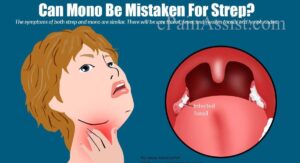
The systemic symptoms beyond the throat are where the mono throat vs strep throat comparison becomes most distinctly different — and most useful for anyone trying to understand which condition they or a family member is actually dealing with in practice.
1. Fatigue Depth Differs Dramatically:
In the mono throat vs strep throat fatigue comparison, both produce tiredness — but the depth and quality differ significantly. Strep produces the tiredness of a bacterial illness — real, uncomfortable, but proportionate to the infection. Mono produces something qualitatively heavier. A fatigue that outlasts the acute throat symptoms by weeks. That makes sitting upright feel like an effort. That doesn’t respond to a good night’s sleep in the way normal illness fatigue does. Parents often describe noticing this quality in their child before the blood test confirms mono — something about the tiredness feels fundamentally different from strep.
2. Spleen Enlargement Is Mono-Specific:
Spleen enlargement — splenomegaly — occurs in a significant proportion of mono cases and is entirely absent from strep throat. In thesore throat mono vs strep picture, this distinction matters enormously for activity restrictions. An enlarged spleen is vulnerable to rupture from physical impact — which is why contact sports, heavy lifting, and vigorous physical activity are restricted for several weeks after mono diagnosis. Strep throat has no such restriction. This difference alone makes the mono vs strep throat diagnosis clinically consequential beyond just what antibiotic to prescribe or not prescribe for the illness.
3. Rash After Amoxicillin Signals Mono:
One of the most distinctive mono throat vs strep throat clinical signals — though unfortunately often discovered after the fact — is the characteristic widespread rash that occurs in roughly 80 to 100 percent of mono patients who are given amoxicillin or ampicillin. This is not a standard antibiotic allergy. A rash like this often follows when certain antibiotics meet Epstein-Barr in the body.
Suddenly spotting red spots after starting treatment? Think again – it might not be strep at all. When symptoms shift fast, earlier guesses about infection type can turn out wrong. Days pass, the skin changes, confusion grows – mono was hiding behind common signs. Misjudged sore throats lead down odd paths; rashes appear where doctors didn’t expect. Antibiotics meant to help sometimes reveal a different problem instead.
Mono Throat vs Strep Throat What You Can See in the Throat:
The appearance of the throat in the mono throat vs strep throat comparison has overlapping features that make visual diagnosis genuinely difficult — but there are specific qualities that help a clinician or an informed parent read what they’re looking at more accurately.
1. White Patches Appear in Both:
White or grey patches on the tonsils appear in both strep and mono — which is one of the reasons mono throat vs strep throat is so frequently confused on visual inspection alone. Both can produce exudative tonsillitis — inflamed tonsils covered in a whitish coating or distinct patches. This overlap is why visual examination alone cannot reliably distinguish mono vs strep throat and why a strep swab is necessary — and why, when that swab returns negative but the throat looks genuinely terrible, further investigation is always the right next step.
2. Tonsil Size Differs:
One visual clue in thesore throat mono vs strep comparison is tonsil size — specifically, mono tends to produce more dramatically enlarged tonsils than strep typically does. Tonsils swollen so significantly in mono that they appear to almost meet in the midline — described clinically as “kissing tonsils” — is a presentation more characteristic of the mono side of the sore throat mono vs strep comparison. This degree of enlargement sometimes causes difficulty breathing through the mouth and can make swallowing liquid genuinely difficult and very painful.
3. Throat Severity Exceeds Strep:
When throat pain and appearance seem disproportionately severe — more than typical strep presentations the patient or parent has seen before — this is a mono throat vs strep throat signal worth taking seriously. Mono frequently produces some of the worst-looking throats in clinical medicine. A throat that looks significantly worse than any previous strep episode, combined with systemic fatigue and widespread lymph node swelling, should push the mono vs strep throat differential firmly toward mono and toward blood testing rather than another strep swab.
Mono Throat vs Strep Throat How the Timeline Unfolds Differently:

The timeline difference between mono and strep is one of the most practically useful mono throat vs strep throat distinguishing factors — particularly when the initial presentation has been ambiguous and the first week of illness hasn’t provided a clear answer.
1. Strep Bacteria React Quickly to Antibiotic Treatment:
Right medicine for proven strep throat usually brings clear relief in a day or two. Temperature goes down. Soreness in the throat slowly fades. Progress shifts – suddenly things look different, move faster. In the mono throat vs strep throat timeline comparison, this rapid antibiotic response is one of the most reliable retrospective confirming signs that strep — not mono — was the correct diagnosis. If the illness is not responding to antibiotics after 48 to 72 hours, mono vs strep throat becomes an urgent reassessment question.
2. Mono Lingers for Weeks:
Mono in the mono throat vs strep throat timeline comparison does not follow the strep recovery arc. The acute throat phase can last two to three weeks. The profound fatigue can persist for four to eight weeks and occasionally longer — sometimes into months. This extended timeline is one of the hallmark features of mono vs strep throat — the illness that keeps going when a strep infection would have cleared. A sore throat illness that hasn’t meaningfully improved after two weeks should always prompt reconsideration of the mono vs strep throat differential diagnosis regardless of earlier test results.
3. Activity Restrictions Apply to Mono:
In the mono throat vs strep throat management comparison, activity restrictions are mono-specific. Contact sports, heavy lifting, strenuous exercise — all restricted for typically four to six weeks after mono diagnosis because of spleen enlargement risk. Strep throat has no such restrictions once antibiotic treatment is underway. This practical difference means sore throat mono vs strep is not just a diagnostic question — it’s a management question with real daily-life implications for the person who is ill and for their return to school, work, and physical activity.
Mono Throat vs Strep Throat Signs That Shift the Diagnosis Toward Mono:
These are the specific signs that — in the mono throat vs strep throat assessment — push the clinical picture away from strep and toward mono as the more likely diagnosis. Any one of these alone is informative. Several together are compelling enough to prompt a blood test without waiting further.
- Negative strep test with a throat that looks genuinely terrible — sore throat mono vs strep diagnostically, a negative swab combined with severe throat appearance and systemic illness should prompt blood testing rather than simply sending the patient home with supportive care advice alone.
- Swollen glands spread across the neck, not only below the chin – this wider pattern shows up more often in mono than strep.A virus often spreads through the entire system, whereas bacterial trouble sticks close to the throat. Swelling that moves past a single spot leans toward mono instead. Strep infections hold their ground, rarely traveling outward. That contrast gives clues about what is happening.
- Falling so deep into tiredness that even small tasks feel impossible – when a sore throat brings on this level of wipeout, especially in someone usually full of energy, it often signals mono. Not just a standard germ-driven sore throat, but a virus spreading through the body, dragging down strength like an invisible weight. The kind of drain that lingers, reshaping days, marks it as more than common infection.
- Rash developing after amoxicillin or ampicillin — this drug-virus interaction in the sore throat mono vs strep clinical picture is a near-definitive mono indicator and should prompt immediate blood testing and discontinuation of the antibiotic responsible for triggering the reaction.
- Illness not improving after two weeks — sore throat mono vs strep timeline comparison makes prolonged illness a clear diagnostic signal, since strep treated correctly resolves within days and any throat illness persisting past two weeks deserves a different investigative approach entirely.
Mono Throat vs Strep Throat What to Tell Your Doctor and When
Walking into a GP appointment about a bad sore throat with specific observations about the mono throat vs strep throat comparison changes what the doctor considers and how fast. These are the things worth communicating clearly and immediately when you arrive for assessment.
- Heavy exhaustion stands out – when tiredness feels deeper than usual, it hints at mono throat rather than strep throat. That kind of weariness tells doctors something distinct right away. Unlike typical sickness fatigue, this weight carries more significance. It’s not just being unwell; it’s a different grade of draining. Such details help separate one condition from the other without delay.
- Here’s something worth mentioning: checking lymph nodes all around the neck can tell you more than just looking near the jaw. A sore throat might be mono or strep – they show swelling in different spots. When one spot swells versus another, it gives clues. Instead of limiting the check to only under the chin, spreading it up toward the ears or down near the collar helps. Doctors often do this already, yet pointing out the need for a thorough scan makes sense. Swelling behind the ear? That could mean more than a common infection. Each area responds differently depending on the cause. Not every node acts the same way when illness hits. Covering more ground increases accuracy. It’s not unusual to ask – better safe than incomplete.
- Should you’ve had a negative strep result before, mention it. When symptoms persist hard despite that earlier negative test, spotting mono instead of strep climbs in priority. Bringing up past results steers the conversation faster toward hidden causes behind how you feel now.
- Request a monospot or EBV blood test if strep is negative —sore throat mono vs strep cannot be reliably distinguished by clinical examination alone, and asking specifically about blood testing when the strep swab is negative is an informed and appropriate request for any patient or parent to make.
- Mention any rash that appeared after antibiotic treatment — mono throat vs strep throat misdiagnosis often reveals itself through the amoxicillin-EBV rash reaction, and reporting this immediately should prompt urgent mono blood testing and stopping the antibiotic that triggered the reaction.
Conclusion
Mono throat vs strep throat is a comparison that genuinely matters — for diagnosis, for treatment, for activity restrictions, and for how long the person who is ill needs to rest and be cared for. The two conditions overlap significantly in the first days, which is why they’re so frequently confused.
But the specific signs — generalised lymph node swelling, disproportionate fatigue, prolonged illness timeline, negative strep test with terrible-looking throat — are real and readable if you know to look for them. My daughter lost three weeks to an illness that might have been identified faster. This blog is for every parent and patient who deserves to understand the sore throat mono vs strep comparison before those three weeks start rather than after they’ve already passed.
FAQ,s
Q1. What is the main mono throat vs strep throat difference?
The main mono throat vs strep throat difference is the systemic nature of mono versus the localised bacterial infection of strep. mono vs strep throat comparison shows that mono produces profound whole-body fatigue, widespread lymph node swelling, and prolonged illness lasting weeks — while strep primarily affects the throat, responds to antibiotics rapidly, and resolves within one to two weeks with appropriate treatment from the start.
Q2. Can mono throat vs strep throat be distinguished without a blood test?
Mono throat vs strep throat cannot be reliably distinguished by visual examination alone. A rapid strep test is the first step — but a negative result doesn’t confirm mono. mono vs strep throat requires a monospot test or EBV antibody blood test for confirmation.mono vs strep throat clinical signs — widespread lymphadenopathy, extreme fatigue, prolonged illness — point toward mono and should prompt blood testing rather than continued watchful waiting alone.
Q3. Why is amoxicillin dangerous in mono throat vs strep throat misdiagnosis?
In mono throat vs strep throat misdiagnosis where amoxicillin is prescribed for what appears to be strep, roughly 80 to 100 percent of mono patients develop a widespread body rash. This mono vs strep throat drug-virus reaction is not a standard antibiotic allergy — it’s immune-mediated and specific to EBV infection combined with amoxicillin or ampicillin. sore throat mono vs strep distinction before prescribing is therefore clinically significant beyond simply choosing the right diagnosis label.
Q4. How long does mono throat vs strep throat illness last in comparison?
Mono throat vs strep throat timeline differs significantly. Strep treated with antibiotics typically resolves within one to two weeks. mono vs strep throat on the mono side lasts considerably longer — the acute throat phase lasts two to three weeks, profound fatigue often lasts four to eight weeks and sometimes longer. Mono vs strep throat illness persisting past two weeks without improvement is a reliable clinical prompt to reconsider the diagnosis and test for mono specifically.
Q5. When should I ask for a mono test in a mono throat vs strep throat situation?
Request a mono test in a mono throat vs strep throat situation when the strep swab is negative but the throat looks severely inflamed, when generalised neck lymph node swelling is present, when fatigue is disproportionate to the throat symptoms, or when illness isn’t improving after two weeks. Mono vs strep throat blood testing after a negative strep swab with these signs is a reasonable and appropriate clinical request for any patient or parent to make at any GP appointment.
Summary
This blog covered mono throat vs strep throat across every dimension that matters practically — onset differences, lymph node patterns, systemic symptoms, throat appearance, timeline, activity restrictions, and the specific signs that shift the diagnosis toward mono. Mono vs strep throat comparison is genuinely difficult in the first days when visual presentation overlaps — but the full clinical picture, taken together, points clearly when you know what to look for. Mono vs strep throat correctly distinguished avoids dangerous amoxicillin reactions, unnecessary antibiotic courses, and three weeks of worsening illness before someone finally orders the blood test that confirms what two negative swabs were already quietly suggesting.