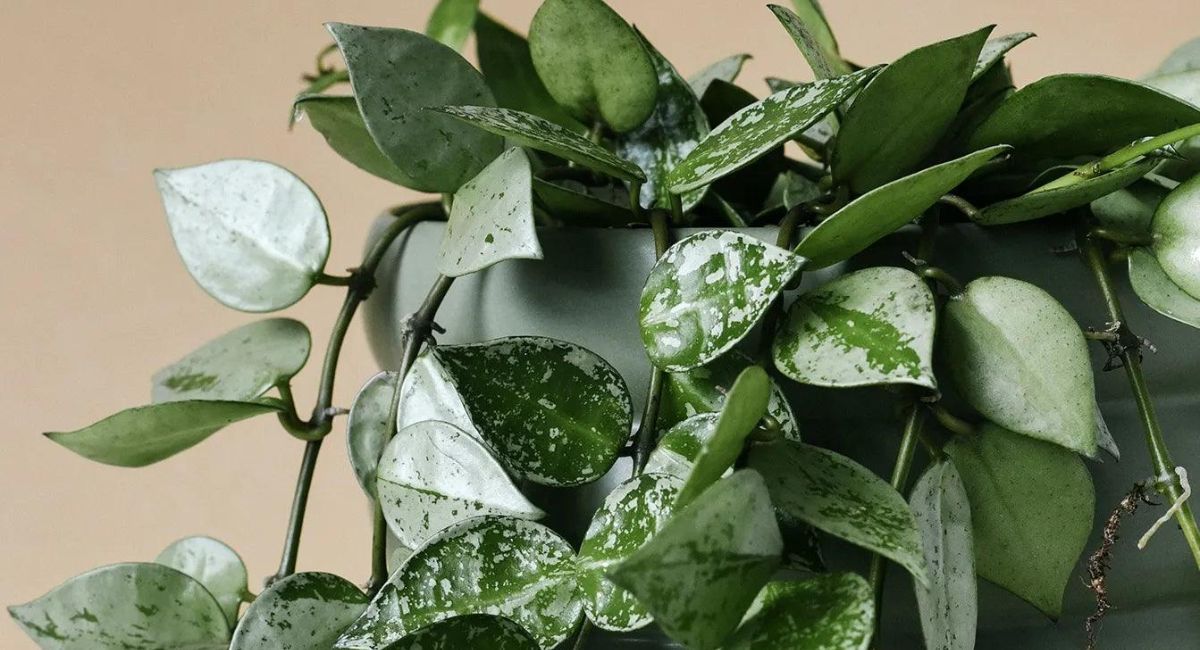
The first time I killed a hoya plant, I didn’t even know I was doing it. It sat in a terracotta pot on my east-facing windowsill, looking genuinely fine for weeks — that thick, waxy foliage gave nothing away. Then one morning the leaves started yellowing from the bottom up, two or three at a time, and by the time I got curious enough to unpot it, the roots had turned into a dark, mushy catastrophe. Root rot, completely self-inflicted, entirely from overwatering with no drainage consideration whatsoever.
That failure sent me down a rabbit hole I’ve never really climbed out of. I’ve grown over thirty species since then and learned through every mistake possible. Fungal infections, bacterial rot, and damaged leaves taught me more than any guide ever could. Every problem forced me to better understand how a Hoya Plant actually grows, survives, and recovers indoors before things get permanently worse.
A healthy hoya plant isn’t about luck — it’s about understanding these vines and consistently giving them proper growing conditions daily.
Hoya Plant Thrives Best With Bright Indirect Light Always:
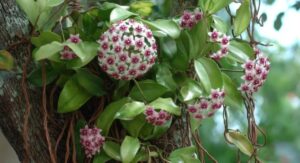
Getting light right is probably the single most misunderstood part of growing a hoya plant indoors. People read “indirect light” and immediately push them into a dim corner three meters from the nearest window, then wonder why the plant sulks, refuses to grow, and eventually starts dropping leaves. Indirect light doesn’t mean low light. It means bright, ambient light that isn’t hitting the leaf surface directly for hours at a time.
What happens when a glossy leaf plant doesn’t get enough light is interesting — and a bit frustrating — because the symptoms don’t show up right away. The plant will keep existing, keep looking roughly okay, for quite a while. But growth slows dramatically. The internodes stretch longer than they should as the vine reaches toward whatever light it can find. Leaves come in smaller and thinner.
| Hoya Species | Watering Frequency | Common Problem | Key Care Note |
| Hoya carnosa | Every 10–14 days | Root rot from overwatering | Allow soil to fully dry between waterings |
| Hoya kerrii | Every 2–3 weeks | Stem rot at soil level | Single-leaf cuttings rarely grow — get a node |
| Hoya pubicalyx | Every 10–12 days | Mealybug colonies in curled leaves | Check leaf axils and vine joints monthly |
| Hoya bella | Every 7–10 days (summer) | Powdery mildew in low airflow | Needs excellent air circulation around stems |
| Hoya linearis | Every 5–7 days | Leaf shriveling from underwatering | Keep slightly more moist than other hoyas |
| Hoya obovata | Every 2 weeks | Yellow leaves from overwatering | Chunky airy potting mix essential |
| Hoya australis | Every 10 days | Spider mite webs on undersides | Increase humidity; check regularly in dry months |
| Hoya lacunosa | Every 8–10 days | Fungal leaf spots | Avoid wetting leaves; water at soil level only |
| Hoya multiflora | Every 7–9 days | Root bound stress, dropping buds | Repot every 2 years; don’t disturb spurs |
| Hoya shepherdii | Every 10–12 days | Bacterial soft rot after wounding | Sterilize tools before pruning or propagating |
Hoya Plant Yellow Leaves Reveal Deeper Hidden Care Issues:
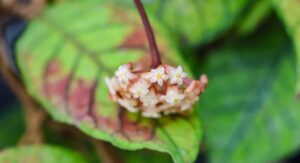
Yellow leaves on a hoya plant have a way of sending people into a spiral of second-guessing. The instinct is almost always to check watering first, and sometimes that’s right — but yellowing is one of those symptoms that shows up across a surprisingly wide range of different problems, and treating the wrong one can make things considerably worse. Overwatering causes yellowing, yes. But so does underwatering, iron deficiency from soil pH drift, viral infection disrupting chlorophyll production, root damage from nematodes, and even sudden cold drafts.
When yellowing starts at the base of a glossy leaf plant and works upward, root rot is usually the first thing to investigate — soggy, anaerobic soil lets Pythium fungi and certain bacteria colonize root tissue and shut down nutrient transport. When yellowing is patchy, irregular, and scattered across the whole plant rather than following a top-to-bottom or bottom-to-top pattern, viral infection becomes a real possibility. Mosaic viruses that affect the glossy leaf plant cause exactly that kind of mottled, irregular discoloration.
Hoya Plant Disease Prevention Habits That Genuinely Make Difference:
- Sterilize every cutting tool with 70% isopropyl alcohol before touching your hoya plant — bacterial and fungal pathogens travel on blade edges just as effectively as they do through shared soil, and a single unclean cut can introduce infection you won’t see until real damage is already done.
- Mix your potting medium with 30–40% perlite or orchid bark to create a chunky, fast-draining environment — a glossy leaf plant left in dense, moisture-retaining soil is living on borrowed time, since saturated roots become oxygen-starved and immediately vulnerable to Pythium and Fusarium fungal rot.
- Quarantine every new glossy leaf plant acquisition for a minimum of two to three weeks in a completely separate area before bringing it near your established collection, since nursery and shipped plants frequently carry hidden mealybug egg masses, spider mite populations, or early fungal infections not yet visible.
- Never mist the leaves of your glossy leaf plant directly — water sitting in the leaf axils and along the waxy surface overnight creates the perfect microclimate for powdery mildew fungi and bacterial leaf scorch to establish, and the wax coating that makes hoyas beautiful also traps moisture against the tissue.
- Inspect the undersides of leaves and the joints where leaves meet stems at least once every three to four weeks — these are the exact spots where mealybugs, scale insects, and spider mites first establish on a glossy leaf plant and catching an infestation early makes the difference between a simple wipe-down and a full-blown crisis.
Hoya Plant Root Rot Recovery Steps That Actually Work Reliably:
- Carefully unpot your hoya plant and spend a real minute examining the roots — healthy root tissue is firm, pale cream to tan in color, and slightly flexible, while rot-damaged roots are dark brown or black, feel mushy or slimy to the touch, and may carry a distinctly sour or sulfurous smell.
- Using clean, sterilized scissors, cut away every bit of damaged root material until you reach only firm, healthy tissue — leaving even a small section of rotted root on your glossy leaf plant is enough for Pythium fungi to re-establish and continue spreading into the fresh root zone within days.
- Dust the trimmed root ends with powdered sulfur or plain ground cinnamon, both of which have genuine antifungal properties, then lay your glossy leaf plant on a clean surface in a warm, bright spot with good airflow and allow the cut ends to callous and dry completely for 12 to 24 hours before repotting.
- Repot into a completely fresh potting mix — the old soil is contaminated with fungal spores and anaerobic bacteria that will immediately re-infect clean root tissue, so starting fresh is non-negotiable; your glossy leaf plant deserves a clean slate, not a recycled problem.
- Hold off watering for 5 to 7 days after repotting to let new root growth establish without pathogen pressure — a light misting around the pot edges after day five is usually enough to keep your recovering hoya plant from stressing while the root system rebuilds itself from scratch.
Hoya Plant Fungal Infections Spread Faster Than Growers Usually Expect:
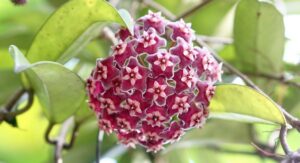
Fungal disease is where I’ve personally lost more plants than I care to count — almost always because I spotted something suspicious and told myself I’d handle it in a day or two. A day or two is often all a fungal infection needs to make that delay unforgivable. The hoya plant is especially vulnerable once fungal pathogens breach its waxy protective surface layer.
1. Stem Rot:
Stem rot in a hoya plant typically enters through a wound — a scratch from repotting, a pruning cut, or even a mealybug feeding site. Botrytis and Fusarium are the most common culprits. The infected area softens and darkens rapidly, often collapsing before you’ve had time to properly assess the situation. Cutting well below the visible rot margin and dusting with copper fungicide gives the best chance of stopping the spread before it reaches the main stem.
2. Powdery Mildew:glossy leaf plant
That fine white or grayish coating that occasionally appears on glossy leaf plant leaves and stems is powdery mildew — caused by Erysiphe fungi, spread through airborne spores, and almost always tied to poor air circulation combined with inconsistent humidity. It rarely kills a plant outright, but it weakens it steadily. Neem oil diluted in water and applied every five days, combined with improving airflow around the plant, usually clears it within two to three weeks of consistent treatment.
3. Root Crown Rot:
Crown rot attacks the junction between stem base and root on a glossy leaf plant and it’s uniquely dangerous because it often looks like nothing from the outside right up until the plant collapses. Pythium and Rhizoctonia establish here when water pools at the base after watering. Planting your hoya slightly elevated above the soil rim, and making sure water never puddles at the stem base, is the most reliable prevention available.
Hoya Plant Bacterial Disease Signs Often Look Deceptively Harmless:
Bacterial infections are the trickiest category to catch early on a hoya plant, because they do most of their work internally. The surface might look mostly normal while significant tissue damage is already underway beneath the epidermis. By the time you see clear external signs, you’re usually dealing with something fairly advanced.
1. Soft Rot:
Soft rot bacteria — Erwinia and Pectobacterium species primarily — produce pectinase enzymes that dissolve the structural cell walls of your hoya plant from within. A stem section that was firm yesterday becomes waterlogged and eventually collapses, often releasing a foul-smelling liquid. There is no spray or treatment that reverses this. Cutting aggressively below the infected zone and allowing the wound to dry completely in bright light is the only realistic response.
2. Leaf Scorch:
Bacterial leaf scorch on a glossy leaf plant causes brown, crispy margins on otherwise normal-looking leaves, and the confusing part is that it progresses even when your watering routine is perfectly fine. Xylella fastidiosa, the usual pathogen, colonizes the xylem vessels that move water upward and gradually blocks transport. Affected plants need immediate isolation from neighboring plants, since leafhopper insects transmit this bacterium between plants during feeding.
3. Bacterial Blight:
Bacterial blight typically appears as dark, water-soaked spots on the leaves of a glossy leaf plant that expand rapidly and develop yellow halos around the margins. Pseudomonas syringae are frequently responsible. Infection spreads most aggressively during overhead watering or when water splashes between plants. Removing all affected leaves, improving air circulation, and switching to bottom watering significantly reduces reinfection risk and gives healthy tissue a chance to stabilize.
Hoya Plant Virus Problems Come From Pests and Shared Tools:
Viruses sit in a frustrating category for hoya plant growers because once a plant is infected, that’s it — there’s no treatment, no recovery protocol, no spray that clears the viral particles from plant tissue. Everything has to be focused on prevention, and prevention means understanding exactly how these viruses travel.
1. Mosaic Virus:
Mosaic virus produces irregular patches of lighter and darker green on glossy leaf plant leaves that can genuinely look like attractive variegation at first glance. Aphids and thrips are the main vectors, picking up viral particles during feeding and depositing them in the next plant they visit. Over time the infected plant’s growth slows noticeably, older leaves distort, and new growth comes in smaller and weaker as photosynthesis becomes progressively impaired.
2. Impatiens Necrotic Spot:
Impatiens necrotic spot virus — INSV — affects a surprising number of houseplant genera including the glossy leaf plant causing brown necrotic rings, streaks, or irregular patches on leaves and stems. Western flower thrips are the primary vector, and they move fast through a crowded plant collection. Once confirmed through symptom pattern, the infected plant must be removed entirely and disposed of away from your growing area to prevent further spread.
3. Potyvirus Infection:
Potyviruses are a large, diverse family of plant viruses that infect the hoya plant through aphid activity, causing vein clearing, mosaic patterning, and general growth suppression that worsens over months rather than weeks. Unlike fungal problems that escalate dramatically within days, potyvirus damage creeps in slowly, which is part of why it often goes undiagnosed until the plant has already declined significantly from the initial infection point.
Hoya Plant Soil Microorganism Damage Starts Long Before You See It:
The soil around your hoya plant is alive in ways most people genuinely never think about. Most of that microbial life is neutral or actively beneficial — but under the wrong conditions, several groups of soil-dwelling microorganisms shift from harmless background players to active pathogens that damage roots faster than the plant can repair them.
1. Root Nematodes:
Root-knot nematodes attack the finest root hairs of your glossy leaf plant causing swollen, bead-like galls that prevent the root from absorbing water and nutrients efficiently. These microscopic roundworms are invisible to the naked eye and diagnosed by their effects — unexplained wilting despite adequate watering, progressive yellowing, and stunted growth. Replacing soil entirely and using heat-treated fresh potting mix breaks the nematode lifecycle reliably.
2. Fusarium Wilt:
Fusarium oxysporum lives dormant in many potting soils until the glossy leaf plant experiences stress — root damage, overwatering, sudden temperature changes — at which point it activates aggressively. It spreads mycelial threads through the root zone and injects toxins into vascular tissue that cause rapid wilting, even in stems that are physically undamaged. Sterilized potting mix and excellent drainage are the only reliable barriers against Fusarium taking hold.
3. Actinobacteria Lesions:
Certain actinobacterial strains produce rough, scabby lesions on the stem surface of a glossy leaf plant particularly in humid environments with limited airflow. These aren’t purely cosmetic — each lesion cracks the plant’s waxy protective epidermis and creates an entry point for secondary fungal and bacterial pathogens that are far more dangerous than the actinobacteria themselves. Improving ventilation and reducing ambient humidity resolves most actinobacterial outbreaks without chemical intervention.
Hoya Plant Pest Infestations Always Invite Secondary Disease Problems:
Pests and disease on a hoya plant rarely exist in isolation from each other. Every mealybug feeding wound, every spider mite puncture, every scale insect attachment site is a small opening in the plant’s protective surface — and pathogens treat those openings as an open invitation. Controlling pests isn’t just about the pests themselves.
1. Mealybug Damage:
Mealybugs on a glossy leaf plant hide expertly in the tight spaces between leaf axils and stem joints, sucking sap and excreting honeydew that quickly develops into sooty mold — a secondary fungal problem layered on top of the primary pest infestation. Dabbing individual bugs with a cotton swab dipped in isopropyl alcohol is effective for small infestations; a diluted neem oil spray handles larger colonies across multiple feeding sites.
2. Scale Insects:
Soft scale and armored scale species both target the glossy leaf plant , attaching to stems and the underside of leaves where their protective shells make them remarkably difficult to dislodge. They drain sap slowly over months while remaining visually inconspicuous to casual inspection. The honeydew they produce feeds sooty mold colonies that eventually block sunlight from the leaf surface, compounding the damage from the feeding injury itself with reduced photosynthetic capacity.
3. Spider Mite Webs:
Spider mites are the most environmentally triggered pest on a glossy leaf plant — they explode in population during dry indoor winters when heating systems pull humidity out of the air. Their feeding leaves tiny pale stippling marks across the leaf surface, and severe infestations produce visible fine webbing between leaves and stems. Raising ambient humidity consistently above 50%, combined with weekly leaf wipe-downs using a damp cloth, suppresses mite populations effectively without any chemical treatment.
“Every disease, every pest, every yellowing leaf on a glossy leaf plant is a message — the growers who listen to those messages early are the ones whose plants live longest.”
Conclusion
Every problem I’ve had with a hoya plant — every bout of root rot, every fungal infection, every viral decline — has come back to missing early signals or cutting corners on the basics. Get the drainage right. Keep pests in check. Sterilize your tools. Inspect regularly. These four habits alone will protect your glossy leaf plant from the majority of everything on this list, and they cost nothing except a little consistent attention.
FAQ’s
Q1. Why does my hoya plant keep dropping leaves even when I’m careful about watering?
Leaf drop on a hoya plant that isn’t clearly overwatered is often tied to sudden environmental changes — cold drafts, temperature drops below 10°C, or being moved to a significantly dimmer location. Root damage from previous overwatering can also cause delayed leaf drop even after conditions improve.
Q2. How do I confirm my hoya plant has a fungal infection rather than a bacterial one?
Fungal infections on a hoya plant typically show surface signs first — white powdery coatings, dark sunken lesions, or visible mold growth. Bacterial infections usually collapse tissue suddenly from within, often with a foul smell. When in doubt, treat for both by removing affected tissue and improving airflow immediately.
Q3. Can a hoya plant fully recover from root rot if I catch it early?
Yes — the hoya plant is actually one of the more forgiving species for root rot recovery when caught early. Trim all damaged roots, dust with sulfur, let the plant air-dry for 24 hours, then report in a fresh fast-draining mix and withhold water for a week. Most plants respond well.
Q4. What’s the best way to prevent mealybugs from coming back to my hoya plant?
Consistent inspection is the most reliable prevention — mealybugs on a hoya plant are always easier to eliminate at five insects than at five hundred. Monthly wipe-downs of stems and leaf axils with a diluted isopropyl alcohol solution disrupts their lifecycle reliably before populations reach damaging levels.
Q5. Is there any treatment available for a hoya plant infected with a virus?
Unfortunately, no. Once a virus establishes itself inside a hoya plant, it cannot be removed or treated. Your energy is best spent on prevention: controlling aphid and thrip populations that transmit viruses, and sterilizing all tools before propagation work to eliminate sap-to-sap transmission between plants.
Q6. Why are the leaves on my hoya plant turning yellow but the roots look fine?
When roots are healthy but a hoya plant is still yellowing, look at light levels and soil pH first. Insufficient light reduces chlorophyll production directly. High pH locks out iron and causes chlorosis. A diluted balanced fertilizer and a sunnier position often resolves this specific combination within four to six weeks.
Q7. How do soil microorganisms specifically affect the hoya plant differently than other houseplants?
The hoya plant stores significant moisture in its waxy, succulent-like leaves. Once pathogenic soil microorganisms compromise the root system and limit water uptake, those internal reserves mask the damage for longer than they would in thinner-leaved plants — meaning the problem looks minor right up until it’s actually severe.
Q8. What potting mix genuinely protects a hoya plant from most disease problems?
A blend of standard potting soil, coarse perlite, and orchid bark in roughly equal thirds gives a hoya plant the drainage and aeration it needs to stay healthy. This mix dries quickly enough to prevent fungal root disease while still holding just enough moisture to support consistent root growth between waterings.
Summary
A thriving hoya plant comes down to four non-negotiables: fast-draining soil, appropriate watering intervals, clean tools, and regular pest monitoring. Most diseases — fungal, bacterial, and viral — gain their foothold through preventable situations like soggy roots, misting habits, and unsterilized propagation cuts. When something does go wrong, act the same day rather than waiting. Your glossy leaf plant communicates through its leaves, its growth rate, and its root health — pay attention to all three, not just the parts you can easily see from across the room. These extraordinary vines repay attentive care with years of lush growth and those impossibly perfect waxy blooms that make every glossy leaf plant collector completely obsessed with the genus from the very first flower.