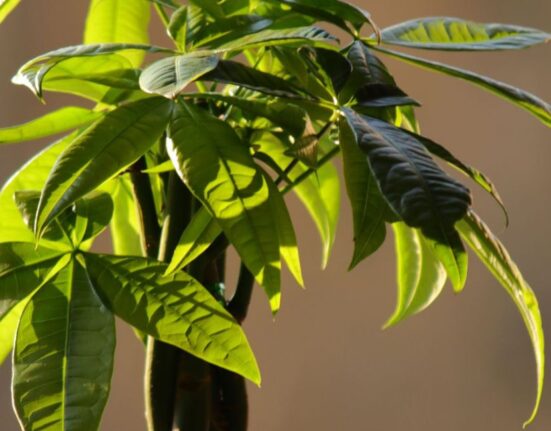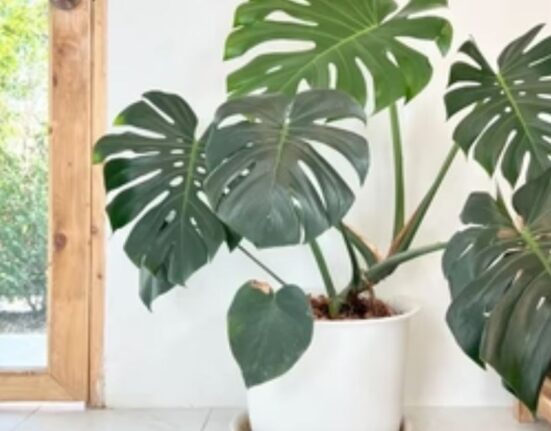
Three seasons, four repottings, and one near-death overwatering disaster later, I now have six different varieties of elephant ear plant spread across my home and garden, and I understand this plant on a level that only comes from watching it fail and recover and fail again until you finally figure out what it actually needs rather than what the tag says.
The elephant ear plant is not subtle. It does not sit quietly in the corner looking decorative. It demands space, commands attention, and when it is happy, it produces leaves so absurdly large that people stop to take photos of it through your window. There is nothing quite like it in the houseplant world — or in the garden, for that matter — and if you have been even slightly tempted by one, I promise the temptation is worth acting on.
This stunning elephant ear plant adds bold tropical beauty to any garden or home and is surprisingly easy to grow.
Why the Elephant Ear Plant Belongs in Every Serious Garden:
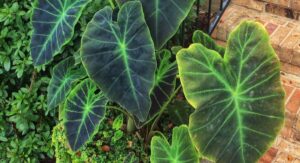
I have spent a fair amount of time around serious gardeners — the kind who plan their borders two years ahead and know the Latin name of everything — and almost every single one of them has an elephant ear plant somewhere on the property. Not because it is trendy. Because it does something that no amount of careful planting design fully replicates: it provides genuine drama. One large giant tropical leaf positioned at the back of a shaded border or in a container on a paved area immediately transforms the scale of everything around it.
The elephant ear plant also has a surprising versatility that most people do not discover until they have grown one or two. It works magnificently as a container plant on a sheltered patio, as a statement piece in a tropical-style border, as a dramatic poolside planting in warmer climates, and even as a year-round houseplant in rooms with decent natural light. Most tropical-looking plants with this kind of foliage impact require finicky care regimes, expensive specialist soil mixes, or particular humidity that is impossible to maintain in a normal house.
Elephant Ear Plant Care Essentials Every New Grower Needs:
Most of the drama comes from the looks, not caring for it. Focus on light, water, soil – do them okay, and the plant thrives. Bright but filtered light works best; harsh midday rays burn the foliage, while too little light leads to weak, stretched stems. A window facing east usually does fine inside. Outside, pick a place where sunshine shows up early, then fades into shadow later
Moisture matters most, yet tight-packed earth won’t. Loosen things up by blending standard potting mix with perlite – throw in shredded coconut fiber for good measure. Roots drown when trapped in dense clay, while sand pulls away water too quickly, leaving the plant limp and struggling. Garden plots? Dig deep compost into the bed long before setting the bulb down.
| Care Factor | What Works Well | Common Mistake | How to Correct It |
| Light | Bright indirect or dappled sun | Direct midday sun burns leaves | Move back from window or add sheer curtain |
| Watering | Consistently moist, never waterlogged | Letting soil fully dry out between drinks | Check top inch — water when just barely dry |
| Drainage | Pot with large drainage holes | Decorative pot with no holes | Always use a nursery liner with drainage |
| Humidity | 60–80% preferred | Dry heated air in winter indoors | Pebble tray or small room humidifier nearby |
| Temperature | 18–29°C / 65–85°F growing season | Leaving outdoors when frost threatens | Bring in or lift corms before first frost |
| Soil Mix | Loamy, moisture-holding, free-draining | Dense heavy compost straight from bag | Blend in 20–30% perlite and coco coir |
| Fertilising | Balanced liquid feed every 2 weeks | Feeding through winter dormancy | Pause November through February entirely |
| Pot Size | Large container — roots need room | Starting in a tiny nursery pot long-term | Move up 2 sizes in spring each year |
| Dormancy | Reduce water, stop feed, let rest | Treating it same as summer all year | Dial back watering significantly from October |
| Pests | Clean leaves, good airflow around plant | Missing early spider mite webbing | Neem oil spray every 5 days, three rounds |
Light Requirements That Make Elephant Ear Plant Leaves Massive:
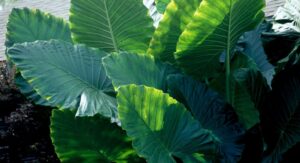
Light is the single biggest lever you have over how big and healthy your elephant ear plant actually grows — get this right and almost everything else falls into place surprisingly easily around it.
1. Indoor Placement Guide:
A big east or northeast window gives the right glow when the plant stays close, say under a meter away. One of my healthiest plants lives eighty centimeters from such a window, tall glass stretching from floor to ceiling. Fresh leaves appear every few weeks during warmer months, each one unfurling slowly. Light moves through sheer fabric in the later hours, softening glare but keeping things bright enough. Direct rays never touch the foliage thanks to that thin barrier.
2. Outdoor Sun Needs:
Outside, the giant tropical leaves grow most dramatically in a spot with morning sun and afternoon shade — particularly in warmer climates where afternoon temperatures regularly exceed 30°C. Under a tree canopy that provides dappled light works brilliantly, as does the shaded side of a fence or wall that blocks the harsh western sun. Full exposed sun all day in peak summer causes pale, crispy patches to develop across the leaf surface that will not repair themselves once formed.
3. Low Light Signs:
Stretched-out stalks appear when sunlight runs low. Reaching hard toward any nearby window, the greenery tilts sharply off balance. Tiny leaves unfold instead of full ones. Not sickness, not too much water – just missing brightness. Shifting position helps. Turning the container fortnightly brings steady improvement. Normal shape returns after several weeks pass.
Watering Your Elephant Ear Plant Without Causing Root Rot:
Watering gets more elephant ear plants killed than anything else, and the frustrating part is that both too much and too little cause almost identical-looking symptoms in the early stages before things get serious.
1. Moisture Check Method:
Here’s how to handle watering an elephant ear without guessing. Try checking the earth first, not the calendar. Stick a finger down deep, past two inches, or slide in a wooden stick instead. If gunk sticks to the tool, or skin senses chill and wetness, hold off. When the dirt feels airy, empty, like dust on stone, it wants to drink. Pour slowly, soak full through, let liquid escape the base holes. After that, step back, stay out of its way.
2. Seasonal Water Changes:
In the height of summer during active growth, watering every three to four days is often needed — especially for outdoor container plants in warm, dry weather. From October onward, as growth slows and eventually stops, the soil can be allowed to stay drier for longer without any harm. By midwinter I am watering mine roughly once every ten to fourteen days, sometimes less if the home is cool.
3. Drainage Is Everything:
Water pooling near the base of the corm leads to decay creeping up the stem without warning. Often, by the moment leaves begin to droop or fade, the harm runs deep. Each pot I choose includes no fewer than two wide openings underneath. Lifting the container a small amount helps confirm runoff flows out rather than collects below.
Growing Elephant Ear Plant From Corms and Division Easily:
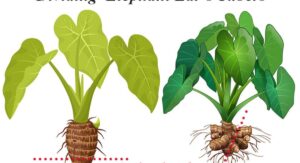
Propagating giant tropical leaves is one of the more satisfying gardening tasks available to you — once you understand what you are working with, producing new plants from an established one costs nothing at all.
1. Planting a Corm:
Down goes the flat part, up points the sharper tip. About five to eight centimetres into damp soil, that’s where it belongs, tucked in a spot that stays warm – think higher than 20°C if possible. Wait now, nothing else. Two weeks, maybe four, before any sign shows. Whatever you do, leave it be, no poking around; pulling at things too soon slows growth sharply, sometimes adding two extra weeks of waiting.
2. Division in Spring:
An established giant tropical leaves that has been growing for a few seasons produces offset corms — small baby corms attached to the side of the main one. Spring is the time to divide them, just as growth is resuming and the plant has maximum energy to recover. Carefully separate the offsets, making sure each one has at least a small root section attached, pot them individually into fresh mix, keep them moist and warm, and most will establish into growing plants within three to five weeks.
3. Dormancy Storage Tips:
Start by lifting them gently, then brush away loose dirt. After that, remove lifeless leaves so they won’t hold moisture. Leave the corms resting somewhere warm where air moves around – just a couple of days does it. Inside my home, I use a brown sack with a slightly moist growing mix made from coconut fibers or mossy peat. A place without freezing cold matters most; maybe behind garden tools on a concrete floor or tucked inside a kitchen cabinet above tile. Now and again between autumn and spring, take a moment to peek at each one.
Fixing Common Elephant Ear Plant Problems Before They Worsen:
The elephant ear plant communicates clearly when something is wrong — the leaves change colour, texture, or shape in ways that point to specific problems once you know the language the plant is speaking.
1. Yellow Leaf Causes:
Start by checking how the soil feels – when damp or often soggy, too much water likely caused the issue. Wait until it dries fully before adding more moisture, adjust flow underneath should it struggle. When dirt seems okay yet fresh top growth turns pale, applying a fluid formula high in nitrogen tends to restore green shades after around twenty-one days.
2. Drooping Leaves Fix:
A wilting or drooping giant tropical leaves is either thirsty or root-damaged — and telling the difference matters because the treatment is opposite for each. Thirsty plants recover within hours of a thorough watering. Plants with root rot actually droop more right after watering because the damaged roots cannot transport water upward. If watering does not improve the droop overnight, check the roots. Trim any soft, brown, mushy sections with clean scissors, dust the cuts with cinnamon as a natural antifungal, repot into fresh dry mix, and withhold water for four to five days.
3. Pest Control Approach:
Tiny pale speckles across the leaf surface, visible fine webbing on the undersides, and a general dusty appearance are the tell-tale signs. Do not ignore early signs hoping they resolve — spider mites breed explosively fast. Take the plant outdoors, blast every leaf surface with a strong hose spray, then apply a diluted neem oil spray every five days for three consecutive rounds. Misting the leaves regularly in dry conditions prevents reinfection going forward.
Elephant Ear Plant Varieties That Are Genuinely Worth Growing:
The elephant ear plant category covers several distinct genera — Colocasia, Alocasia, and Xanthosoma chief among them — and within those, there are dozens of cultivars with wildly different leaf colours, textures, and sizes. Here are five that are consistently worth the growing space:
- Colocasia esculenta (Taro)— The original elephant ear plant that most people picture first, with broad heart-shaped green leaves that can reach 90 cm across in ideal conditions. It is the most vigorous, the most forgiving, and the best starting point if you are new to this plant family entirely.
- Colocasia ‘Black Magic’— A dramatically dark giant tropical leaves variety with deep purple-black leaves that create extraordinary contrast in mixed borders or containers. It needs the same care as the standard species but delivers a far more striking visual impact, especially alongside bright green or lime-coloured companion plants.
- Alocasia macrorrhiza (Giant Taro)— An upright-growing giant tropical leaves type that holds its massive leaves pointing skyward rather than drooping outward, creating a more architectural silhouette in the garden. Can reach three metres tall in warm climates and is genuinely one of the most imposing plants available to temperate gardeners.
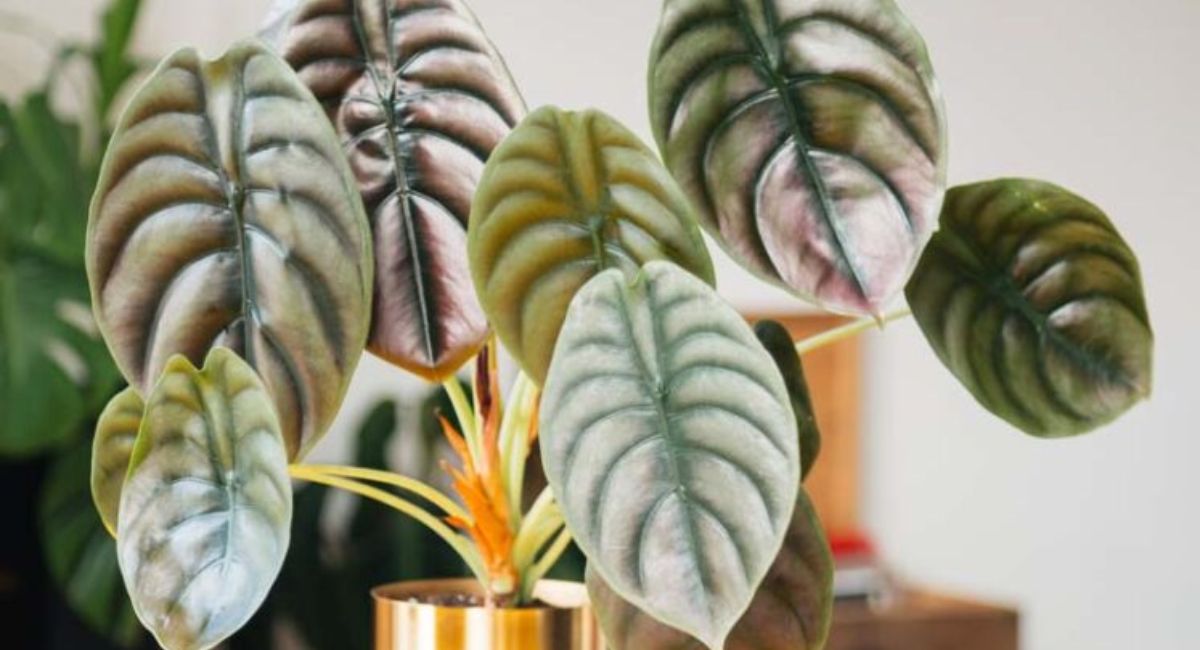
- Alocasia ‘Polly’— A compact indoor elephant ear plant cultivar with glossy dark leaves and dramatic white veining that looks almost painted on. Perfect for people who love the aesthetic but do not have space for the full-scale outdoor varieties, and considerably more tolerant of lower indoor humidity than most of its relatives.
- Xanthosoma sagittifolium— A less commonly grown but genuinely impressive giant tropical leaves to type with arrow-shaped leaves that stand more upright than Colocasia and handle drier soil conditions with considerably more grace. Worth seeking out if you tend to underwater your plants or live somewhere with a naturally dry indoor climate year-round.
Displaying Your Elephant Ear Plant for Maximum Visual Drama:
Half the payoff of growing an elephant ear plant well is putting it somewhere it genuinely transforms the space around it — and this plant responds to good positioning by growing toward it with real enthusiasm. Here are five placements that consistently deliver the most visual impact:
- Focal point container on a paved patio— A large elephant ear plant in a wide, shallow terracotta or concrete pot placed at the end of a sightline on a patio creates an instant destination point in the garden that draws the eye and gives the whole space a curated, intentional feeling that is hard to manufacture any other way.
- Poolside or water feature planting— The giant tropical leave genuinely thrives near water features because of the increased humidity, and the reflections of its enormous leaves in still water create a tropical atmosphere that elevates the entire outdoor space beyond what any other plant placement achieves as efficiently or dramatically.
- Large statement indoor corner plant— In a living room or dining space, a tall elephant ear plant positioned in a corner with a grow light overhead during darker months fills dead architectural space with genuinely impressive foliage that dominates without overwhelming the room when the pot and surroundings are chosen thoughtfully.
- Back of a tropical-style border— Planted at the rear of a mixed border beside bananas, cannas, and dahlias, the giant tropical leaves provides the large structural backdrop that makes everything in front of it look deliberately arranged rather than randomly placed, lifting the entire composition by anchoring the tallest visual layer.
- Flanking an entrance or doorway— Two matching elephant ear plant containers positioned either side of a front door or garden entrance gate create an immediately impressive welcome that signals genuine horticultural ambition to anyone arriving. Matching pot sizes and varieties matters here — asymmetry reads as oversight rather than design at an entrance.
Conclusion
Good drainage, consistent moisture, decent light, and a little patience through dormancy will get you a plant that genuinely stuns people every single growing season. Start with one, get it right, and I promise you will be growing five within a couple of years.
FAQ’s
Q1. Is the elephant ear plant safe for children and pets?
The elephant ear plant contains calcium oxalate crystals, which are toxic if chewed or ingested — causing mouth pain, drooling, and vomiting in cats, dogs, and children. Keep the elephant ear plant out of reach of curious pets and small children, and wash your hands after handling any part of it during repotting or pruning.
Q2. How big does an elephant ear plant actually get?
It depends on the variety and growing conditions, but the elephant ear plant is capable of reaching two to three metres in height outdoors in warm climates. Individual leaves on well-grown outdoor elephant ear plant specimens regularly exceed 90 cm in length. Container-grown indoor plants typically stay considerably smaller but still impressive.
Q3. Can I grow an elephant ear plant indoors all year?
Yes — the elephant ear plant grows as a year-round houseplant perfectly well in a bright spot with supplemental grow lighting in darker winter months. Alocasia varieties particularly suit indoor growing. Most elephant ear plant types appreciate being moved outdoors in summer to benefit from natural light and humidity before returning inside before autumn frosts.
Q4. Why are my elephant ear plant leaves dripping water?
That dripping is called guttation — the elephant ear plant releases excess moisture through leaf tips when it has absorbed more water than it can use through photosynthesis, often overnight. It is completely normal and actually a sign your elephant ear plant is healthy and well-watered. Simply reduce watering very slightly if it is happening very frequently.
Q5. When should I repot my elephant ear plant?
Repot your elephant ear plant in spring when roots start escaping through the drainage holes or when growth visibly slows despite good care. The elephant ear plant benefits from fresh nutrient-rich soil each spring even if the pot size does not change. Move up only one container size at a time to avoid excess moisture retention in oversized pots.
Q6. Does an elephant ear plant need high humidity?
The elephant ear plant originates from tropical and subtropical environments where humidity runs high, so it appreciates moisture in the air — particularly indoors in winter. Brown crispy leaf edges usually signal air that is too dry. A pebble tray with water beneath the pot raises local humidity around the elephant ear plant effectively without requiring a dedicated humidifier.
Q7. How do I get my elephant ear plant through winter?
Reduce watering significantly from October onward and stop fertilising entirely. If your elephant ear plant is outdoors in a frost-prone climate, lift the corms before the first frost, dry them briefly, and store in slightly damp peat in a cool frost-free location. Resume watering and feeding gradually when new growth appears in spring to restart the elephant ear plant’s growing cycle.
Q8. What fertiliser works best for an elephant ear plant?
A balanced NPK liquid fertiliser — something like 20-20-20 — applied every two weeks during spring and summer gives the elephant ear plant the steady nutrition it needs for large, healthy leaf production. Nitrogen specifically drives leaf size in the elephant ear plant. Organic alternatives like diluted fish emulsion work beautifully and reduce the risk of salt buildup in container soil over the season.
Summary
The elephant ear plant rewards growers who understand a handful of non-negotiable basics — brilliant drainage, consistent but not excessive moisture, bright indirect light during the growing season, and a proper rest period through winter. Get those four things right and the giant tropical leaf does the rest almost entirely on its own, producing wave after wave of those enormous, dramatic leaves that make people stop and genuinely stare.
Whether you grow it as a bold container plant on your patio, a statement piece in a tropical border, or a year-round indoor showstopper, the giant tropical leaves will consistently outperform almost any other foliage plant you have ever grown in terms of sheer visual impact per unit of care invested. Start one this spring — and honestly, once you see how well it responds to even basic attention, you will absolutely be starting five more by summer’s end, because that is simply what growing the giant tropical leaves does to people who try it even once.