Pothos plant care has this reputation that I think actually does growers a quiet disservice. “Practically unkillable,” people say. “Perfect for beginners.” And sure — compared to an orchid or a fiddle-leaf fig, pothos is genuinely forgiving. Proper pothos watering needs isn’t difficult once you understand it, but it does require understanding the plant’s actual biology rather than just following generic advice you’ve read in the same four articles everyone else has also already read.
What I want to give you here is the version of pothos plant care that actually helps — the one that covers why roots rot and what you can do before it’s too late, what yellow leaves are trying to tell you and how to tell them apart, which fungal and bacterial diseases are most likely to affect your plant and what early intervention looks like. Real information, explained clearly, from the perspective of someone who’s made the common mistakes and learned from them.
If your photos are struggling or you want to understand your plant better, this pothos plant care guide helps you.
Pothos Plant Care Fundamentals Most People Miss Completely:
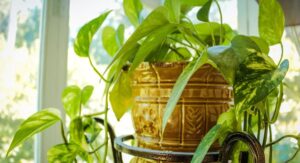
Real pothos plant care starts with a small but important piece of botanical context: this plant comes from the Solomon Islands in the tropical South Pacific, where it grows on the forest floor and up tree trunks in warm, dappled light, on soil that drains freely and dries between rain events. That context matters because it tells you what the plant was built for — and what it wasn’t. It wasn’t built for sitting in dense, moisture-retaining potting compost in a sealed plastic pot on a shelf that gets three hours of indirect light through net curtains.
The foundations of good pothos watering needs are genuinely simple but need to be applied consistently rather than occasionally. A pot with actual drainage holes — not a decorative pot without them, not a drainage hole blocked by a pebble. A lightweight, well-draining potting mix, ideally with some perlite added to improve aeration around the roots. A position that gets bright indirect light for four to six hours daily. And watering triggered by soil dryness rather than a calendar.
Pothos Plant Care Watering Guide for Every Season:
I’ve probably said this already but it genuinely bears repeating: the most common cause of death in pothos plant care is overwatering. Not underwatering. Not pests. Not insufficient light. Overwatering. And the reason it’s so consistently deadly isn’t just the excess moisture itself — it’s what that moisture enables. In that oxygen-depleted environment, anaerobic bacteria multiply rapidly, and water mold pathogens like Pythium and Phytophthora — which have been present in the soil all along — suddenly find the conditions they need to start colonising root tissue.
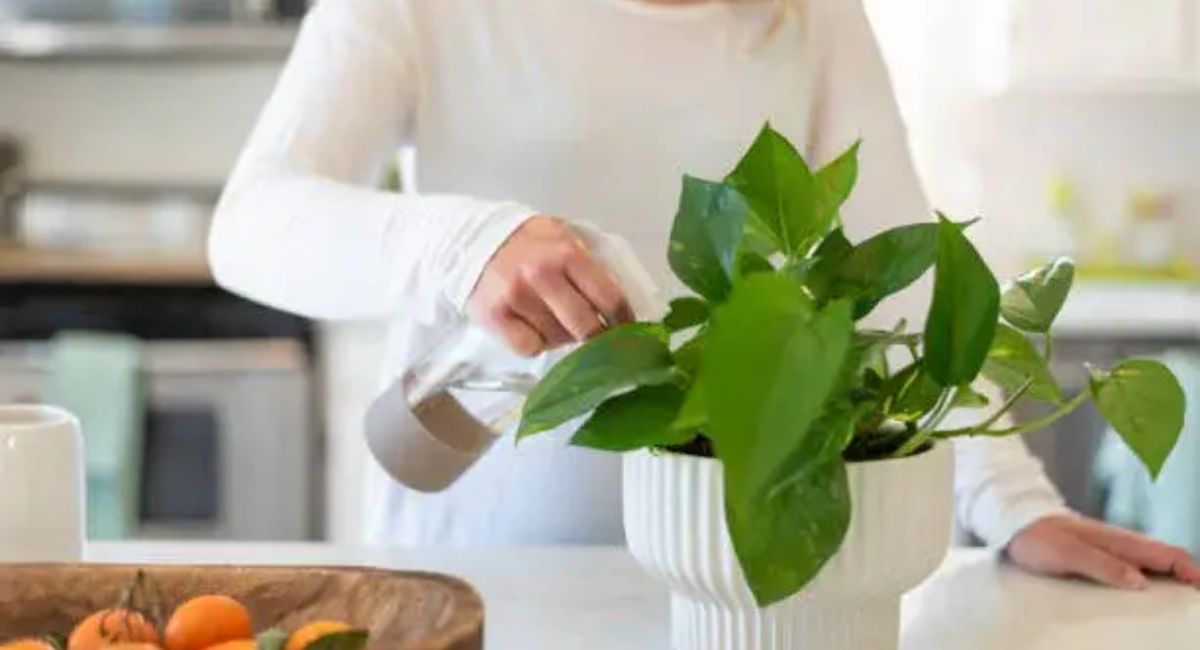
The fix for this aspect of pothos watering needs is simple to explain and requires only one change in habit: water when the soil tells you to, not when the calendar does. Push your finger two inches into the potting mix. Any moisture at all — wait. Come back in two or three days and check again. In summer during active growth, most pothos plants need watering roughly every eight to twelve days indoors. In winter when growth slows and light levels drop, that interval extends significantly — sometimes to three weeks or more.
One habit that makes a real difference: when you water, do it thoroughly — let water drain through the bottom of the pot completely — and then empty the saucer underneath. A pothos sitting in its own drainage water for hours is just as overwatered as one that was given too much from the top. This single change eliminates a major root rot risk in pothos watering needs
Pothos Plant Care Complete Reference Table for Growers:
| Care Factor | What Actually Works | Common Error | Result of Error |
| Light | Bright indirect, 4–6 hours daily | Dark corner with minimal light | Slow growth, pale faded leaves |
| Watering | When top 2 inches are bone dry | Fixed weekly calendar watering | Root rot, yellow leaves, death |
| Soil mix | Light mix with added perlite | Dense moisture-retaining compost | Waterlogged roots, fungal disease |
| Pot type | Any pot with working drainage holes | Sealed decorative pot, no drainage | Standing water, root suffocation |
| Temperature | 65–85°F (18–29°C) | Cold drafts, below 50°F | Leaf damage, stunted growth |
| Humidity | 50–70% — tropical level preferred | Very dry air from central heating | Brown crispy leaf edges and tips |
| Fertilizing | Half-strength balanced, monthly (spring/summer) | Heavy feeding through winter | Salt burn, brown leaf tip damage |
| Repotting | Every 1–2 years, spring timing | Jumping to a pot far too large | Excess wet soil, elevated rot risk |
| Propagation | Stem cutting with a node present | Cutting without any node included | Cutting fails to root and rots |
| Toxicity | Keep away from pets and children | Leaving accessible to cats or dogs | Oral irritation, vomiting in pets |
Pothos Plant Care Diseases Fungal Infections Explained Clearly:
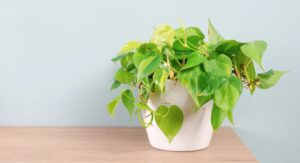
The fungal disease side of pothos plant care doesn’t get nearly enough attention in mainstream plant guides, largely because the plant’s forgiving nature gives the impression that disease isn’t really something to worry about. But pothos absolutely develop fungal infections — particularly in conditions where moisture stays too high, airflow is limited, or dead leaf material is left to decompose on the soil surface or between vining stems. Knowing the most likely fungal culprits and what their early symptoms look like gives you a real advantage in catching and treating problems while they’re still minor.
1. Pythium Root Rot:
Down below, where eyes don’t see, a sneaky problem takes hold – Pythium, a type of water mold, often behind root rot in pothos. When soil stays soggy and air can’t reach the roots, this organism moves in, changing healthy pale threads into mushy, dark strands that stink. Up top, clues come slowly: older leaves turn yellow at the edges, then fade toward the center, while stems droop even though the earth feels damp. Spotting these two signs at once? Time to slide the plant out and peek beneath.
2. Leaf Spot Fungus:
Brown spots on pothos leaves might mean fungus, triggered by microbes such as Colletotrichum or Phytophthora when humidity stays high. These marks usually form circles with dark edges, occasionally ringed in pale yellow. Entry happens where tissue is broken – maybe from bugs or tiny tears – and wet foliage gives invaders an open door. Instead of spraying water down from above, pour it into the soil to keep leaves dry. Clip off sick-looking leaves fast, using fresh scissors each time. A weak copper fungicide applied once per ten days can help; repeat this for about a month.
3. Southern Blight Disease:
Down south, a fungus called Sclerotium rolfsii targets pothos plants when it’s hot and stuffy – especially if stems stay damp in soggy dirt. Instead of green, you might spot a fluffy white layer creeping up from the soil, plus small beige specks resembling sand or salt. Underneath, the stalk turns blackish, then gives way fast. Move the sick plant far from healthy ones, cut out every bit of damaged part, douse roots with sulfur medicine, then boost air movement around it.
Pothos Plant Care Yellow Leaves Reading the Real Signals:
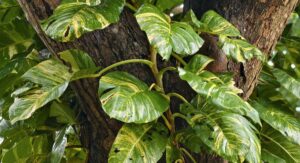
Yellow leaves are the symptom that drives the most anxiety in pothos plant care — and the most misdiagnosis. Almost every pothos problem eventually shows up as yellow leaves at some point, which means jumping straight to overwatering as the explanation without gathering more information leads a lot of growers to make changes that don’t help and sometimes actively make things worse.
1. Root Rot Signals:
Root rot-related yellowing in pothos watering needs has a distinctive pattern — it starts at the bottom of the plant with the older leaves and works upward over time. The yellow leaves are soft and may feel slightly limp even when held flat, and the soil will feel cool and damp several days after the last watering session. A sour, slightly fermented smell rising from the pot is the most reliable confirmation that something is wrong below the surface.
2. Viral Leaf Symptoms:
Viral infections in pothos watering needs are less common than fungal or bacterial issues but absolutely do occur, particularly when propagation tools are used across multiple plants without sterilisation between uses. Virus symptoms look distinctly different from nutrient or moisture-related yellowing — expect irregular mosaic patterning across the leaf surface, unusual distortion of new growth, or streaking that doesn’t match the plant’s normal variegation pattern.
3. Light Starvation:
Light-deficiency yellowing in pothos watering needs looks quite different from moisture-related yellowing — the leaves become pale, washed-out, and lose the glossy richness of healthy foliage rather than turning distinctly yellow. New leaves come in noticeably smaller than established ones. The overall appearance is of a plant that looks faded rather than sick. Moving the plant gradually toward a brighter window over one to two weeks — rather than suddenly exposing it to strong light after a period of low-light — allows the plant to adjust without adding sun-stress on top of the existing light-deficiency stress already affecting its foliage health.
Pothos Plant Care Root Rot Diagnose It Before It Worsens:
Root rot is the condition I see most discussed but least understood in pothos plant care conversations. People know it’s bad, know overwatering causes it, and know they should do something about it — but the something is usually vague, and the timing is usually late. The most important thing to understand about root rot is that it’s not a sudden event. It’s a process that unfolds over weeks, driven by the specific microorganisms that thrive in waterlogged, oxygen-depleted soil.
1. The Smell Test:
The most underused diagnostic tool in pothos watering needs is simply smelling the soil. Healthy, well-draining potting mix has a clean, neutral, earthy smell — like outdoor garden soil after rain. Soil developing active root rot has a sour, fermented quality to it — almost like old fruit or vinegar. That smell is produced by the metabolic activity of anaerobic bacteria and water mold organisms like Pythium as they break down root tissue.
2. Rescue Repotting Steps:
When root rot is confirmed during pothos watering needs inspections, act the same day — not later in the week. Remove the plant from its pot, shake off all old potting mix, and identify the affected roots: they’ll be dark brown, mushy, and foul-smelling rather than firm and pale. Cut away every single affected root using scissors wiped with rubbing alcohol, going back to firm healthy tissue. Dust cut surfaces with powdered cinnamon or garden sulfur — both have genuine antifungal properties — then leave the plant completely unpotted in open air for 24 hours.
3. Rebuilding Healthy Roots:
After a root rot rescue in pothos plant care, the recovery period requires a different approach than normal care. Withhold all watering for seven to ten days after repotting to allow the remaining root tissue to recover in dry conditions without further pathogen pressure. When you do resume watering, use significantly less than usual for the first few weeks — the plant has a reduced root system and genuinely cannot process normal water volumes without the risk of re-triggering exactly the same rot conditions you just worked to correct.
Pothos Plant Care Pest Problems and Bacterial Threats:
Pests and bacterial infections don’t get as much airtime as fungal issues in most pothos watering needs guides, but they’re genuinely common problems — particularly in indoor environments with limited airflow, or in collections where plants are grouped together in ways that allow pests and pathogens to move easily between specimens. Pothos is a reasonably tough plant, but a weakened, light-starved, or overwatered pothos has a compromised immune response and becomes significantly more vulnerable to both pest establishment and bacterial infection than a healthy, well-maintained plant would be.
1. Bacterial Soft Rot:
Once it gets going, bacterial soft rot spreads quicker and does more damage than many fungal problems in pothos. This type of decay comes from bacteria such as Erwinia carotovora or Pectobacterium. Instead of just showing spots or changing colour, the infected parts turn wet, mushy, and start to ooze with a bad odour because enzymes break down plant cells. As these microbes destroy tissue structure, everything sags and liquefies slowly. Fungus treatments do nothing here since the cause is not a fungus at all.
2. Spider Mite Damage:
Spider mites attack pothos watering needs most aggressively during dry winter months when central heating drops indoor humidity to very low levels. Early signs are easy to miss — tiny pale stippling marks scattered across the upper leaf surface, almost like the leaf is losing pigment in isolated pinpricks. Fine webbing tucked into sheltered spots between stems and leaves confirms an active infestation. Weekly diluted neem oil applications sprayed across the entire plant — including the leaf undersides where mites congregate and breed — repeated consistently for four consecutive weeks breaks the reproductive cycle.
3. Mealybug Colonies:
Mealybugs are persistent pothos watering needs pests that hide in leaf axils, along stem joints, and in the growing tips where new tissue is soft enough to feed on easily. Their white cottony appearance makes them look harmless, but established colonies weaken plants significantly by extracting sap and excreting honeydew that encourages sooty mold fungal growth as a secondary problem on top of the primary pest damage. Manual removal with an alcohol-soaked cotton swab is the most immediately effective intervention for small infestations, followed by weekly neem oil treatment for four to six weeks.
Pothos Plant Care Benefits Beyond the Obvious Aesthetics:
- NASA’s Clean Air Study identified pothos plant care subjects as effective at filtering formaldehyde, benzene, and xylene from indoor air — pollutants released by synthetic furniture, plastics, and cleaning products that accumulate in sealed, centrally heated home environments throughout the year.
- One of the most practical benefits of committed pothos watering needs is propagation value — a single mature plant with healthy vines can produce dozens of rooted cuttings in a single growing season, filling your home with new plants and giving you genuinely meaningful gifts for other plant-loving people in your life.
- Pothos performs Crassulacean Acid Metabolism under certain conditions, meaning it can absorb carbon dioxide during nighttime hours — a characteristic that makes successful pothos watering needs particularly worthwhile in bedrooms where air quality and CO₂ levels during sleep can noticeably affect sleep quality over time.
- Workplace studies consistently show that indoor environments with living plants — including spaces where pothos watering needs are maintained — produce measurable reductions in reported stress levels, improved concentration scores, and lower rates of sick-day absenteeism among employees compared to plant-free workspaces studied as controls.
- The pothos’s genuine tolerance for low-light conditions means that good pothos plant care unlocks planting possibilities in rooms and corners where almost no other trailing houseplant survives — making it one of the few plants capable of adding living greenery to genuinely challenging indoor spaces without continuous disappointment.
Pothos Plant Care Errors That Quietly Damage Healthy Plants:
- Choosing a pot dramatically larger than the current root ball is one of the most common structural errors in pothos plant care — all that extra soil holds moisture the small root system can’t absorb, staying wet far longer than needed and creating exactly the root rot conditions the larger pot was supposed to avoid.
- Fertilising through winter when growth has slowed and metabolic activity has dropped is actively harmful in pothos watering needs — unprocessed mineral salts accumulate in the substrate, and the resulting salt burn produces the brown, crispy leaf tips that many growers then misdiagnose as underwatering and “fix” by adding even more water.
- Misting pothos leaves to raise humidity around the plant sounds helpful but consistently creates the damp leaf surfaces that fungal leaf spot pathogens need to germinate — smart phones watering needs for humidity uses a pebble tray with water under the pot, which raises ambient moisture without wetting foliage directly at all.
- Taking stem cuttings without checking for a node — the small brown bump at the leaf-stem junction — is the most common propagation failure in pothos watering needs Without a node, cuttings have no meristematic tissue capable of producing roots and will simply soften and decompose regardless of how long you wait for results.
- Grouping pothos with plants that have significantly different watering needs creates a situation where pothos watering needs watering decisions are always a compromise — either the pothos gets too much water to suit its drought-tolerant needs, or the moisture-loving companions get too little, and at least one group suffers consistently throughout the growing season.
Conclusion
What genuinely good pothos plant care comes down to is this: water less than feels comfortable, give the plant real light rather than assumed light, use a pot that actually drains, and learn to read the signals your plant gives you — the smell of the soil, the texture of yellowing leaves, the pattern of wilting — before those signals become emergencies. The plant meets you halfway when you understand it. Good pothos watering needs stops being work and starts being one of the most satisfying parts of sharing a home with living things that genuinely respond to attention and understanding over time.
FAQ’s
Q1. How often does pothos plant care require watering?
Every eight to twelve days in summer, every two to three weeks in winter — but soil dryness should always drive the decision in pothos plant care, not the calendar. Check the top two inches of soil before every watering. If any moisture remains, the pothos plant care routine says wait and check again in a few days.
Q2. What causes yellow leaves in pothos plant care?
Yellow leaves in pothos plant care most often indicate overwatering, root rot, insufficient light, or nutrient depletion. Soft yellowing at the base usually points to moisture issues; pale uniform yellowing suggests light deficiency. Identifying the correct cause before making changes is essential — good pothos plant care diagnosis prevents treating the wrong problem entirely.
Q3. Can root rot be reversed in pothos plant care?
Yes, often — if you catch it early enough. Remove all mushy roots, dust with cinnamon, air-dry for 24 hours, and report in fresh dry mix. Successful pothos plant care recovery from root rot requires withholding water for seven to ten days afterward. Most plants with moderate root damage recover fully when treated promptly and correctly.
Q4. What light does pothos plant care actually need?
Bright indirect light for four to six hours daily produces the best results in pothos plant care. The plant tolerates lower light but grows slower and loses leaf vibrancy. An east or west-facing window position gives the active, healthy growth and rich colour that makes pothos plant care genuinely rewarding to maintain and observe daily.
Q5. What soil works best for pothos plant care?
A light, well-draining potting mix amended with 20 to 30 percent perlite works extremely well for pothos plant care. Standard dense potting compost holds too much moisture for too long, creating the waterlogged root conditions where Pythium and root rot pathogens establish themselves and cause the most common serious pothos plant care problems growers encounter.
Q6. Which fungal diseases affect pothos plant care most?
Pythium root rot, fungal leaf spot, and southern blight are the three most common fungal threats in pothos plant care. All three are primarily triggered by excess moisture and poor airflow. Correct drainage, dry leaf surfaces, and prompt removal of dead material prevent the vast majority of fungal disease issues that otherwise affect pothos plant care collections.
Q7. How do I propagate pothos successfully?
Cut a stem section with at least one node — that small brown bump is non-negotiable in pothos plant care propagation. Place it in clean water in bright indirect light, change the water weekly, and roots appear within two to four weeks. Once roots reach one to two inches, pot into light well-draining soil and continue normal pothos plant care practices.
Q8. Are pothos toxic to pets?
Yes — responsible pothos plant care includes keeping the plant out of reach of cats and dogs. The plant contains insoluble calcium oxalate crystals that cause immediate oral irritation, excessive drooling, and vomiting if chewed or swallowed. It’s rarely life-threatening in small amounts, but any pet exposure during pothos plant care warrants a prompt call to your veterinarian.
Summary
Every aspect of strong pothos plant care connects back to understanding the plant’s actual biology rather than following inherited advice that sounds right but doesn’t hold up in practice. Water by soil dryness, not schedule. Choose drainage over aesthetics every single time. Learn what healthy roots smell like versus compromised ones. Recognise the difference between fungal, bacterial, viral, and environmental yellow-leaf causes before reaching for a fix. The more genuinely you engage with your pothos watering needs practice — observing rather than assuming, adjusting rather than defaulting — the more this plant rewards you.