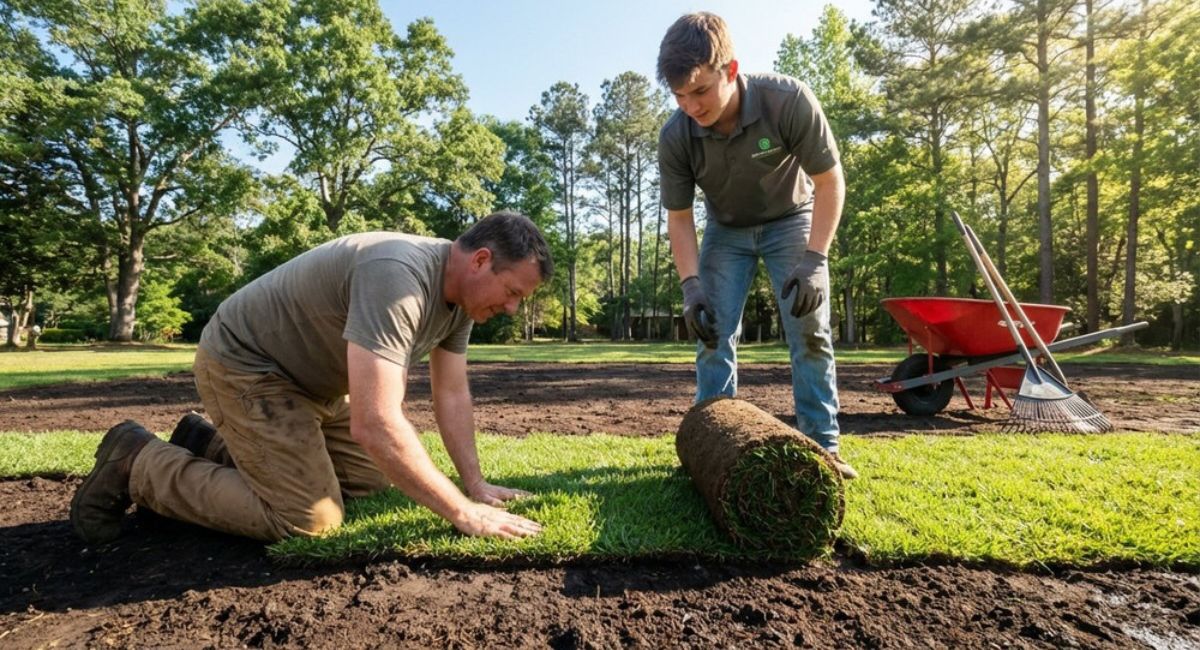
I still remember the first time I attempted zoysia grass planting in my backyard — the soil kept drying out faster than I expected, and half my plugs turned brown within two weeks. After three failed attempts, one devastating fungal disaster, and an entire season of hands-on research, I finally cracked the code on what this warm-season grass truly needs to thrive. Now my lawn is the talk of the entire neighborhood, thick, carpet-soft, deep green, and virtually weed-free for three seasons running.
Zoysia grass planting is one of the most rewarding landscaping decisions a homeowner can make when done correctly. This warm-season grass thrives in heat, tolerates drought, and forms a dense, attractive lawn. Success depends on proper soil preparation, planting methods, watering, fertilization, weed control, and disease prevention. Understanding these essentials before investing in sod or plugs can help transform bare ground into a healthy, lush lawn that remains beautiful for years.
Master zoysia grass planting from the start and enjoy a lush colorful lawn that stands out beautifully all summer long.
Zoysia Grass Planting Starts With Proper Soil Preparation:
Before you even think about placing plugs, rolling sod, or spreading seed, soil preparation is everything when it comes to successful zoysia grass planting. Zoysia demands well-drained, loamy soil with a pH consistently between 6.0 and 6.5 for healthy root development and efficient nutrient uptake.
Begin your preparation process by testing your soil at least two weeks before you plan to plant — affordable soil test kits are widely available at garden centers and online, and the data they provide will guide every amendment decision you make. If your soil reads too acidic, apply agricultural lime to raise the pH. If it runs too alkaline, powdered sulfur will bring it down into the ideal range for Zoysia Grass Lawn Care success.
Tilling the top four to six inches of your planting area is the next critical step. Compacted soil is the hidden enemy of new lawn establishment because it physically prevents roots from penetrating deeply, restricts water movement, and suffocates the beneficial soil microorganisms that zoysia depends on for nutrient cycling. Use a rototiller or garden fork to break up dense layers, remove large rocks and debris, and incorporate any amendments evenly throughout the tilled zone. After tilling, apply a starter fertilizer formulated for new turf — one with higher phosphorus content than a standard maintenance fertilizer — to provide the energy roots need during the earliest and most vulnerable stage of Zoysia Grass Lawn Care
| Step | Action | Timing | Tool Needed | Expected Outcome |
| 1 | Soil pH Testing | 2 weeks before planting | pH Meter / Test Kit | Identify amendment needs |
| 2 | Debris Removal | 10 days before planting | Rake / Shovel | Clean planting surface |
| 3 | Tilling | 1 week before planting | Rototiller | Loose, airy topsoil |
| 4 | Lime or Sulfur Amendment | 1 week before planting | Broadcast Spreader | Corrected pH level |
| 5 | Starter Fertilizer Application | 3–5 days before planting | Broadcast Spreader | Nutrient-rich base for roots |
| 6 | Irrigation System Check | 2 days before planting | Inspection Only | Uniform moisture coverage |
| 7 | Plugging, Sodding, or Seeding | Planting day | Plug Trowel or Sod Cutter | Even grass coverage |
| 8 | First Deep Watering | Day of planting | Sprinkler or Hose | Root zone hydration |
| 9 | Mulch or Straw Layer | Day after planting | Rake | Moisture retention and protection |
| 10 | Germination and Growth Check | Week 2–3 post-planting | Visual Inspection | Confirm new growth is emerging |
Once your tilling and amendments are complete, grade the soil surface so that water drains naturally away from your home’s foundation and does not pool in low spots. Standing water after rain is one of the fastest ways to invite root rot and water mold infections into a newly established Zoysia Grass Lawn Care area. A gentle slope of one to two percent grade is sufficient for most residential lawns. Rake the surface smooth, then allow the soil to settle for at least 48 hours before beginning the actual planting process. This waiting period lets you identify any spots where water pools and address them before they become disease hotbeds.
Choosing the Right Zoysia Grass Planting Method for Results:
Not all zoysia grass planting approaches are created equal — the method you select will dramatically affect how quickly your lawn fills in, how much money you invest upfront, and how the finished lawn performs over the long term. Homeowners typically choose between three primary installation methods: sod, plugs, and seed. Each comes with meaningful trade-offs in cost, labor intensity, and time to full establishment that you should weigh carefully against your specific situation, budget, and timeline expectations before committing.
Sod delivers a near-instant lawn and offers the lowest risk of weed invasion during establishment because the dense mat of existing grass leaves almost no bare soil exposed. However, sod is significantly more expensive per square foot than plugs or seed and requires careful installation to prevent seam gaps and edge drying. Plugs are small squares or rounds of live Zoysia Grass Lawn Care material that are spaced six to twelve inches apart across the lawn area.
They typically take one to two full growing seasons to spread laterally and close all the gaps, but the per-unit cost is far lower than sod and the results, once established, are indistinguishable from sodded areas. Seeding is the slowest and least predictable method of Zoysia Grass Lawn Care works only with specific varieties such as Zenith or Compadre that produce viable seed, and typically takes two or more seasons for good coverage — but it is the least expensive option by a wide margin and gives excellent results for large open areas.
Regardless of which method you choose, the foundational principles of Zoysia Grass Lawn Care remain entirely consistent. Proper soil pH, adequate drainage, full sun exposure for at least six hours per day, correct watering after installation, and protection from heavy foot traffic during the first growing season are non-negotiable for any installation approach. Skipping or shortcutting any of these fundamentals will undermine even the most expensive sod installation.
Watering Correctly After Zoysia Grass Planting Prevents Failure:
Watering is the stage of zoysia grass planting where the majority of homeowner projects succeed or fail completely. This grass is impressively drought-tolerant once it has developed a mature, deep root system — but newly planted zoysia, whether installed as sod, plugs, or germinating seed, needs consistent, well-managed moisture to build that root system in the first place. Get the watering wrong in either direction and your entire investment can be lost within a single week.
1. Frequent Early Watering:
In the first two weeks following zoysia grass planting, light watering twice daily — once in the early morning and once in the late afternoon — keeps the soil surface moist without allowing the root zone to dry out between sessions. During this critical window, the roots are shallow and cannot draw moisture from deep in the soil profile, so surface moisture must remain consistently available.
However, avoid leaving standing water or soaking the soil to the point of saturation, because overly wet conditions at the soil surface create the ideal environment for dangerous fungal infections including brown patch disease caused by the pathogen Rhizoctonia solani. This fungus can cause widespread damage to newly established Zoysia Grass Lawn Care areas within just 48 to 72 hours under warm, wet conditions.
2. Transitioning to Deep Watering:
After the initial two-week establishment phase, begin transitioning to a deep and infrequent watering schedule. The goal is to deliver approximately one inch of water per week, applied in one or two sessions rather than small daily applications. Deep watering encourages zoysia roots to chase moisture downward into the soil profile, building the deep, resilient root system that gives this grass its legendary drought tolerance. Shallow, frequent watering produces shallow roots that are vulnerable to heat stress, drought stress, fungal infections, and bacterial diseases. A rain gauge or simple tuna can placed on the lawn surface gives you an accurate way to track applied water and maintain consistency between irrigation sessions and natural rainfall events.
3. Managing Seasonal Irrigation Changes:
Seasonal irrigation adjustment is a skill that separates good zoysia lawn managers from great ones. As summer temperatures peak, zoysia may require slightly more water than the standard one inch per week to maintain ideal color and density — watch the grass blades for the earliest signs of drought stress, which include a slight blue-gray tint and blades folding lengthwise along the midrib before visible yellowing begins. In fall, reduce watering frequency gradually as temperatures drop and the grass enters its natural preparation for winter dormancy.
Overwatering in fall stimulates late-season growth that cold temperatures will kill, and the resulting dead tissue creates an ideal habitat for fungal pathogens to overwinter. In spring, resume irrigation once soil temperatures consistently exceed 65 degrees Fahrenheit — this is also the time when many soil-dwelling microorganisms, fungal spores, and bacterial populations become active again, so vigilant monitoring during the spring green-up window is essential.
Diseases and Fungal Infections That Threaten Zoysia Grass Planting Areas:
Disease management is an unavoidable and critically important part of zoysia grass planting, especially for homeowners in warm, humid climates where pathogens thrive for much of the growing season. Several fungal, bacterial, and viral pathogens specifically target zoysia turf, and early, accurate identification is often the difference between a minor, manageable setback and a lawn-wide catastrophe that requires complete renovation
Brown Patch (Rhizoctonia solani) is the most commonly encountered fungal disease in Zoysia Grass Lawn Care areas across the southern United States. It creates roughly circular brown patches ranging from six inches to several feet in diameter, typically surrounded by a darker, water-soaked ring at the active margin of the infection. Brown patch thrives when nighttime temperatures remain above 70 degrees Fahrenheit and humidity is high, which describes most southern summers perfectly. The fungus infects the sheath and blade tissue of individual grass plants, causing the characteristic tan to brown lesions and eventual collapse of affected areas.
Dollar Spot Sclerotinia homoeocarpa) produces small, silver-dollar-sized tan or straw-colored patches that merge over time into larger irregular areas of damage. It is most common when soil nitrogen levels are low and dew remains on the grass surface for extended periods each morning. Applying a properly timed nitrogen fertilization program at the start of each growing season dramatically reduces the incidence of dollar spot because well-nourished Zoysia Grass Lawn Care areas outcompete and recover from infections far more rapidly than nutrient-deficient lawns.
Rust Disease (Puccinia species) produces bright orange-yellow pustules on individual grass blades that rub off easily on shoes, clothing, and equipment. Rust typically appears in late summer and early fall, particularly on lawns that are under stress from drought, low fertility, or excessive shade. Improving air circulation through regular mowing, reducing thatch accumulation, and applying appropriate nitrogen fertilization reduces rust pressure significantly and helps Zoysia Grass Lawn Care areas recover quickly from minor infections.
Pythium Blight (Pythium species) is caused by water molds rather than true fungi, but its impact on zoysia grass planting areas can be even more devastating than conventional fungal diseases. Pythium blight spreads with alarming speed in hot, wet conditions — infected areas can expand by several feet in a single day. White cotton-like mycelium is often visible in early morning light on infected patches, and the affected grass collapses and turns dark brown within hours. Treatment requires both improved drainage, immediate reduction of irrigation, and a fungicide specifically labeled for Pythium control such as mefenoxam.
Bacterial Wilt and various bacterial leaf spot diseases, while less common than fungal issues in Zoysia Grass Lawn Care areas, cause wilting and water-soaked tissue symptoms even when soil moisture is adequate. These infections are frequently introduced through contaminated tools, infected sod, or overhead irrigation that splashes soil particles carrying pathogenic bacteria onto leaf tissue. Sanitizing mowing equipment between lawn areas and avoiding overhead irrigation during humid evenings reduces bacterial disease risk meaningfully.
Fertilization Timing Maximizes Every Zoysia Grass Planting Investment:
Fertilization timing is one of the most widely misunderstood elements of long-term zoysia grass planting care and management. Apply fertilizer too early in spring before the grass has broken full dormancy and you push vulnerable new growth that late frost events can kill. Apply heavy nitrogen too late in fall and you force growth heading directly into cold temperatures, weakening the plant’s cold tolerance and creating succulent tissue that fungal pathogens will readily colonize and infect. Getting fertilization timing right, however, transforms a merely adequate zoysia lawn into a genuinely stunning one.
1. Spring Feeding Strategy:
The first fertilization application of the year for established Zoysia Grass Lawn Care areas should occur when the lawn has greened up completely — not when just a few blades are showing color, but when the entire stand is actively and uniformly growing. In most warm climates this means late spring, typically four to six weeks after the grass first breaks dormancy. Use a slow-release nitrogen fertilizer with an N-P-K ratio of approximately 3-1-2 to supply steady nutrition without triggering dramatic growth surges that produce weak, disease-prone tissue. Slow-release formulations also reduce the risk of nitrogen runoff into waterways and provide more consistent feeding over a six to eight week period compared to quick-release alternatives.
2. Midsummer Maintenance Applications:
A second fertilization application in early to midsummer supports sustained color, density, and lateral spread through the peak of the growing period. At this time of year, minor nutrient deficiencies in iron or manganese often become visible as interveinal chlorosis — a yellowing of the leaf tissue between the veins while the veins themselves remain green — which is distinct from the uniform yellowing that indicates nitrogen deficiency or the patchy yellowing that signals fungal disease activity. A targeted foliar application of chelated iron or a complete micronutrient supplement corrects these deficiencies visibly within just a few days, restoring the deep green color that makes Zoysia Grass Lawn Care results so visually impressive.
3. Pre-Dormancy Root Strengthening:
Avoid all nitrogen fertilizer applications within six weeks of your expected first frost date. Late-season nitrogen pushes leafy growth that cold weather will kill, wasting your investment and weakening the plant. Instead, a potassium-heavy, low-nitrogen fertilizer applied in early fall strengthens individual cell walls throughout the plant, improves overall cold hardiness, and supports root development and carbohydrate storage heading into winter dormancy. A well-fed root system entering dormancy in good nutritional condition will produce a faster, more uniform green-up the following spring and deliver measurably better results throughout the entire next growing season.
Yellow Leaves and Root Rot Signals in Zoysia Grass Planting Areas:
Yellow leaves and root rot are two of the most visually alarming and emotionally distressing symptoms a homeowner can encounter in any zoysia grass planting project, and understanding the precise difference between them — and between their many individual causes — is critical for selecting the correct and most effective intervention before the problem escalates beyond recovery.
Yellow leaves in Zoysia Grass Lawn Care areas have numerous possible causes that span the full spectrum from completely benign to urgently serious. Overwatering saturates the root zone and drives out the oxygen that roots require, leading first to yellowing and then to root death. Underwatering dehydrates the grass and triggers a gradual shutdown of chlorophyll production that manifests as uniform yellowing across the entire lawn surface. Nitrogen or iron deficiency produces yellowing as well, but these nutrient-related cases typically display distinct patterns — nitrogen deficiency causes pale, even yellowing of older growth first, while iron deficiency causes interveinal yellowing on the youngest, newest growth.
Fungal leaf diseases create patchy, ring-shaped, or circular yellow and brown areas that do not follow the uniform pattern of nutrient issues. Viral infections, though less commonly diagnosed in home lawn settings, can cause mosaic-pattern yellowing or unusual color streaking across individual blades. Soil compaction, nematode damage, and even soil pH extremes can all produce yellowing symptoms as well, which is why soil testing and careful symptom observation are both essential tools for any homeowner managing a Zoysia Grass Lawn Care project.
Root rot in Zoysia Grass Lawn Care areas is typically caused by water mold organisms in the Pythium or Phytophthora families, or by true fungal pathogens such as Fusarium species. Infected roots transition from healthy white or tan tissue to dark brown or black, feel soft, mushy, and waterlogged to the touch, and emit a distinctly unpleasant odor that signals the decomposition of organic tissue. The most reliable field test for root rot is simply grabbing a handful of affected turf and pulling upward — when root rot is actively destroying the root system, affected grass lifts from the soil with almost no resistance whatsoever, because the anchor roots have been effectively dissolved by pathogenic activity.
Treating an active root rot situation requires a three-pronged approach: improve drainage immediately through aeration or profile modification, reduce all irrigation until the surface dries adequately between waterings, and apply a fungicide or biological control agent with specific activity against water molds or Fusarium, such as mefenoxam, azoxystrobin, or a Bacillus subtilis-based biological product.
Microorganisms play a genuinely dual role in the health of every zoysia grass planting area. Beneficial soil bacteria such as nitrogen-fixing Rhizobium species and phosphorus-solubilizing Pseudomonas strains actively support plant nutrition and help suppress pathogen populations. Mycorrhizal fungi form symbiotic relationships with zoysia roots that dramatically extend the effective root surface area and improve drought and stress tolerance.
Meanwhile, pathogenic bacteria, viruses, and aggressive fungal species are responsible for every major disease category described throughout this article. Maintaining a rich, diverse, and thriving population of beneficial soil microorganisms through regular compost amendments, reduced synthetic chemical inputs, and careful moisture management keeps the biological balance strongly in favor of plant health and against pathogen establishment.
Weed Control Before and After Zoysia Grass Planting Is Complete:
Weeds are simultaneously a symptom and a cause of struggling zoysia grass planting projects, and managing them effectively requires attention both before installation and during the critical establishment period when bare soil invites opportunistic plant species to colonize. A fully dense, mature zoysia lawn is one of the most effective natural weed suppressors in the entire turfgrass world — its aggressive lateral spread through stolons and rhizomes creates a tight, interlocking canopy that physically prevents most broadleaf and grassy weed seeds from reaching the soil surface and germinating successfully. However, before that dense canopy has been established, young zoysia grass planting areas are extremely vulnerable to weed competition for water, light, and nutrients.
- Pre-emergent herbicide application two to four weeks before zoysia grass planting installation blocks crabgrass and other aggressive annual grasses before they can germinate and steal resources from your establishing turf during its most vulnerable early weeks.
- Post-emergent broadleaf herbicide products containing active ingredients such as 2,4-D, MCPP, or dicamba effectively and safely eliminate dandelions, clover, henbit, and other common broadleaf weeds from established Zoysia Grass Lawn Care areas without causing injury to the turf when applied according to label directions.
- Thorough manual or chemical removal of perennial weeds including nutsedge, bindweed, and bermudagrass from the planting area before installation prevents years of ongoing, frustrating competition against your new lawn establishment project.
- Never apply pre-emergent herbicides within twelve weeks of zoysia grass planting by seed, as these products will block zoysia seed germination just as effectively as they block weed seed germination, producing a completely failed stand.
- Maintaining the recommended mowing height between one and two inches throughout the growing season encourages aggressive lateral spread and helps newly established Zoysia Grass Lawn Care areas develop the thick, light-blocking canopy that provides the most effective long-term weed suppression available without chemical inputs.
Mowing Height and Schedule Determines Zoysia Grass Planting Quality:
Mowing is both an essential maintenance activity and a powerful growth management tool in any long-term zoysia grass planting program, and getting it right makes a far greater difference to lawn quality than most homeowners initially appreciate. Zoysia grows relatively slowly compared to cool-season grasses and many other warm-season competitors — which is genuinely an advantage in terms of total mowing hours per season — but this slow growth rate also means that damage from incorrect mowing practices takes longer to recover from and can set back a stand that required seasons to establish.
- Scalping zoysia below its recommended mowing height of one to two inches stresses the plant immediately, exposes bare soil to direct sun and weed seed colonization, and opens the door for serious fungal infections by creating the warm, humid, low-airflow conditions at the soil surface that Rhizoctonia, Pythium, and Fusarium species found ideal for growth and sporulation.
- Violating the universal one-third rule — never removing more than one-third of the total blade height in a single mowing session — triggers measurable stress responses in zoysia grass planting areas, including accelerated thatch accumulation, reduced root development investment, and increased susceptibility to both bacterial wilt and viral pathogens that infect stressed tissue far more readily than healthy tissue.
- A reel mower is widely considered the gold standard cutting tool for zoysia grass planting areas because it delivers a precise, scissor-clean cut across individual grass blades without tearing, fraying, or crushing the tissue — and torn grass blade tissue is one of the most common entry points for bacterial diseases and secondary fungal infections.
- Always mow when grass blades are completely dry to avoid clumping of wet clippings and to prevent the mechanical spread of fungal spores, bacterial inoculum, and other pathogens across your entire lawn surface on wet, freshly cut material.
- During the peak of summer when zoysia growth is most active, plan to mow every seven to ten days for established lawns; during the spring green-up flush when growth accelerates rapidly from dormancy, you may need to mow every five to seven days until growth rate stabilizes to its normal summer pace.
Conclusion
Zoysia grass planting rewards every homeowner who approaches it with patience, proper preparation, and consistent follow-through with a lawn that is genuinely difficult to match. From selecting the right planting method and preparing your soil correctly to managing fungal infections, diagnosing yellow leaves, treating root rot, and maintaining proper mowing and fertilization schedules, every single decision along the way shapes the long-term health, density, and visual quality of your turf.
Disease awareness, microorganism management, and weed control are not optional extras — they are core components of sustainable zoysia grass planting success. Follow these proven, experience-backed principles faithfully, stay alert to early disease symptoms before they escalate, and the zoysia lawn you establish will reward you with exceptional beauty, durability, and resilience for decades to come.
FAQ’s
1. When is the ideal season for starting zoysia grass planting in your yard?
Late spring to early summer is ideal for zoysia grass planting, once soil temperatures consistently exceed 65 degrees Fahrenheit.
2. How many growing seasons does zoysia grass planting via plugs require for full coverage?
Zoysia grass planting using plugs typically requires one to two complete growing seasons to achieve full, dense lawn coverage.
3. Why do yellow leaves appear so quickly after new zoysia grass planting?
Yellow leaves after zoysia grass planting typically indicate overwatering, underwatering, nutrient deficiency, or an emerging fungal infection in the turf.
4. Does zoysia grass planting work successfully in partially shaded lawn areas?
Zoysia grass planting performs best in full sun and will thin noticeably in heavily shaded spots, though light shade is manageable.
5. What fertilizer formula delivers the best results for zoysia grass planting areas?
A slow-release fertilizer with a 3-1-2 nitrogen-phosphorus-potassium ratio supports healthy zoysia grass planting without triggering disease-prone growth surges.
6. How can homeowners prevent fungal infections from damaging their zoysia grass planting areas?
Avoid overwatering, maintain correct mowing height, improve air circulation, and apply preventive fungicide during warm, humid conditions to protect zoysia grass planting.
7. Is root rot a frequent problem encountered during and after zoysia grass planting establishment?
Root rot in zoysia grass planting areas results from poor drainage or overwatering and requires improved drainage combined with targeted fungicide treatment.
8. Which insects and pests most commonly damage established zoysia grass planting areas?
Grubs, fall armyworms, and root-feeding nematodes are the most destructive pests targeting zoysia grass planting areas, especially during early establishment.
9. What is the most effective way to repair patchy results from initial zoysia grass planting?
Patchy outcomes after zoysia grass planting usually reflect soil compaction, uneven watering, or disease activity — diagnose the cause before replanting bare areas.
Summary
Achieving outstanding results from zoysia grass planting requires attention to every phase of the process, from soil preparation and method selection through ongoing watering, fertilization, mowing, and disease management. Whether you are addressing fungal infections, diagnosing yellow leaves, treating root rot, or managing weeds, early action and accurate diagnosis protect your investment fully. The natural resilience, heat tolerance, and carpet-like beauty of a well-executed Zoysia Grass Lawn Care project make every step of this detailed process genuinely worth the effort and time you invest in it.