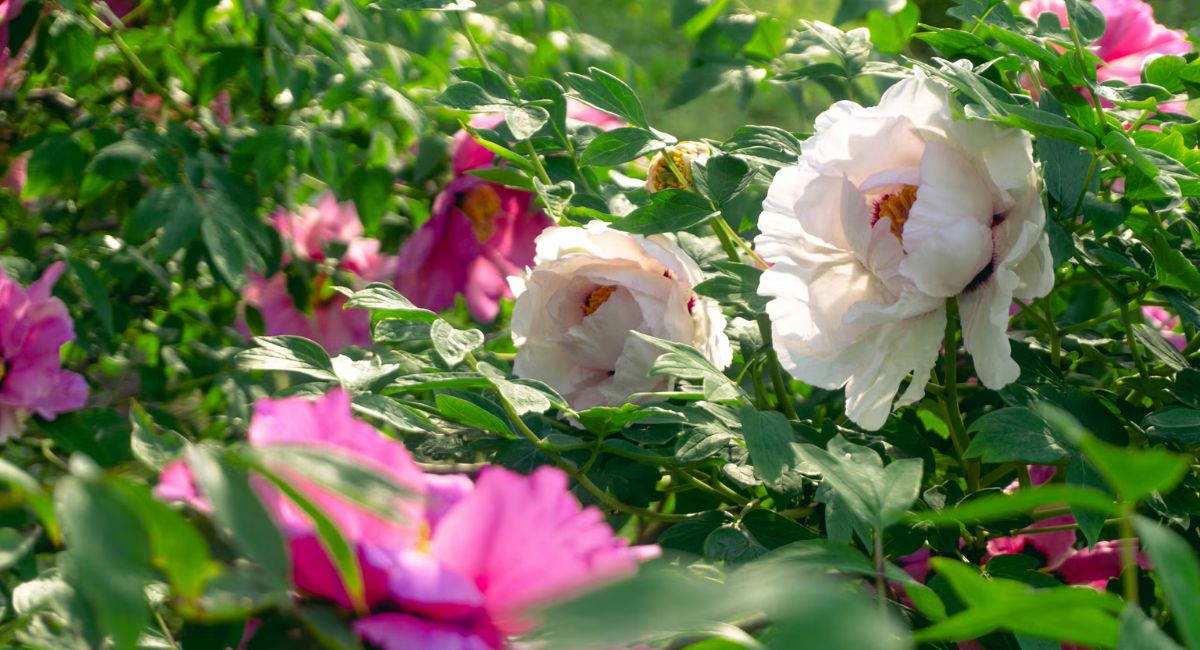
Honestly, I killed my first two peonies. Planted them way too deep, watered like crazy, and wondered every spring why nothing came up. Then a neighbor—a retired teacher with the most ridiculous garden on the street—walked over and told me the truth without sugarcoating it. “You’re burying them alive,” she said, and laughed. That stung a little. But after I moved those flowering peony plants shallower that fall, they bloomed the very next May like nothing had ever gone wrong.
That moment is why I started paying closer attention. Not to gardening blogs or YouTube thumbnails, but to the actual plant in front of me. What I figured out since then about flowering peony plants—through honest trial and error—is stuff I wish someone had told me from day one. So here it all is. Real tips, no fluff, no pretending every plant decision is easy.
These 7 tested, real-world secrets will help your flowering peony plants bloom bigger, last longer, and fill your garden beautifully.
Flowering Peony Plants Soil Prep Mistakes That Kill New Growth:

Here is something nobody tells you upfront: the dirt you plant into matters more than the plant itself. At least at the start. I have watched people spend good money on fancy flowering peony plants, drop them into soggy clay, and then wonder why the crown turned to mush by autumn. It always comes back to drainage. These plants store energy in thick, fleshy roots, and those roots simply cannot survive sitting in wet soil through a cold winter. Work your bed twelve inches deep minimum. Mix in coarse grit, some aged compost, whatever it takes to make water drain away fast.
Soil pH is the other thing people skip. Flowering peony plants do best between 6.5 and 7.0—slightly neutral to mildly alkaline. Below that, nutrient uptake suffers and the plants stay stubbornly small no matter how much you fertilize. A cheap soil test kit from any hardware store tells you exactly where you stand. If your soil tests acidic, sprinkle in some garden lime about three or four weeks before you plant. Give it time to actually work into the soil rather than just sitting on top of it.
Flowering Peony Plants Variety Breakdown Pick the Right One:
I have grown maybe fifteen different varieties over the years. Some were incredible. A couple were honestly disappointing — weak stems, barely any scent, blooms that opened and shattered within four days. Before you buy, it really helps to know what you are getting into. This table covers the ten flowering peony plants I recommend most often, and why each one earns its spot in the ground.
| Variety Name | Bloom Form | Fragrance Level | Best Use |
| Sarah Bernhardt | Double | Very Strong | Cut flowers, borders |
| Bowl of Beauty | Anemone | Moderate | Feature plant, mixed beds |
| Festiva Maxima | Double | Strong | Classic cottage gardens |
| Karl Rosenfield | Double | Light | Bold crimson statements |
| Coral Charm | Semi-double | Moderate | Cutting gardens |
| Bartzella | Itoh/Double | Strong | Small gardens, containers |
| Duchesse de Nemours | Double | Very Strong | White garden schemes |
| Raspberry Sundae | Bomb | Moderate | Pastel-themed borders |
| Alexander Fleming | Double | Strong | Pink-themed planting |
| Red Charm | Bomb | Light | Deep crimson accent |
Flowering Peony Plants Depth Rule That Changes Everything:

My neighbor’s advice — the one that finally fixed my failure — came down to this single thing. Flowering peony plants will not bloom if you bury the eyes too deep. It is not complicated, but it is unforgiving. I see this mistake constantly, even from people who have been gardening for years. They assume deeper means safer. It does not. Shallow is safe. Here is what to actually focus on.
1. Eyes Count Always:
Those little red or pink bumps on the bare-root tuber are the eyes — the actual growing points. With peony flower care the eyes need to sit no deeper than one inch below the soil surface in northern gardens, and barely covered at all in warmer southern climates. Too deep and the plant just grows foliage, year after patient year, with no buds ever forming. One inch. That is the rule. Memorize it, ignore it at your peril.
2. Sun Comes First:
Before you worry about depth or soil or fertilizer, pick the right spot. Peony flower care wants at least six hours of direct sun every single day. Not filtered sun through leaves. Actual, unobstructed sunlight. Morning sun with some afternoon shade suits them fine in hot climates — it protects the blooms from scorching. But never plant near a large tree or shrub. The root competition alone will slowly starve your peony over several seasons.
3. Space Prevents Disease:
Giving each plant room to breathe is not optional for peony flower care — it is basic disease prevention. Three feet minimum between plants, every direction. That open space allows air to move through the stems and foliage, which is the most effective natural control for botrytis blight. Cramped plantings always, always develop fungal issues sooner or later, especially during cool and damp spring weather when the buds are most vulnerable.
Flowering Peony Plants Watering Habits Most Gardeners Get Wrong:
The instinct is to water constantly because peonies look so lush. Resist that instinct. Flowering peony plants have deep fleshy roots that hold moisture the way a camel holds water — they genuinely do not need daily drinks. I drowned my first plants this way too. Once established, they handle dry spells far better than most gardeners expect. The real water problems are always about too much, not too little.
1. Deep Beats Frequent:
When peony flower care do need water, give them one long, deep soak rather than three shallow sprinkles across the week. One inch of water per week during active growth, delivered slowly right at the base of the plant. This pushes roots deeper into cooler soil, which builds the kind of natural drought resilience that keeps peonies thriving even through dry July and August stretches without complaint.
2. Wet Leaves Cause Problems:
Getting into the habit of watering at ground level only for your peony flower care Wet foliage left sitting overnight is basically an open invitation to botrytis blight and mildew. A soaker hose laid around the base is the cleanest solution — water goes exactly where the roots are, the foliage stays completely dry, and you stop worrying about disease every time it rains two days in a row.
3. Mulch Saves Moisture:
Two inches of organic mulch around the base of your peony flower care does a tremendous amount of work. It slows moisture loss on hot days, buffers soil temperature shifts between day and night, and gradually breaks down to feed the soil. Just keep that mulch pulled back a couple of inches from the crown itself — a pile of damp material sitting directly on the crown is asking for rot.
Flowering Peony Plants Fertilizer Timing for Bigger Blooms Always:

Feeding peonies successfully has much more to do with timing and balance than buying expensive fertilizers or using large amounts of plant food. Many gardeners assume more fertilizer automatically means bigger flowers, but peonies respond differently. In fact, using the wrong type of fertilizer can actually reduce blooming instead of improving it.
One of the most common mistakes is applying fertilizers that contain too much nitrogen. High-nitrogen products encourage fast leafy growth, producing large green stems and thick foliage while reducing flower production. The plant looks healthy from the outside, but the energy shifts away from bud development. Instead of getting full colorful blooms, gardeners end up with beautiful leaves and very few flowers.
Peonies usually perform better with fertilizers containing lower nitrogen levels and higher amounts of phosphorus and potassium. Phosphorus supports strong root development and flower formation, while potassium helps improve overall plant strength and bloom quality. This balance encourages the plant to focus energy on producing healthy flowers rather than excessive foliage.
Timing matters just as much as fertilizer choice. Early spring feeding as shoots first emerge gives peonies support during active growth. A lighter feeding after blooming can also help plants store energy for the following season. Overfeeding late in the year often creates weak growth that struggles during winter. Healthy peony care depends less on constantly adding fertilizer and more on understanding when the plant actually benefits from extra nutrients throughout its natural growing cycle.
1. Spring Timing Matters:
The moment those red shoots push up out of the soil in early spring, that is your cue. Apply a balanced granular fertilizer — something like a 5-10-10 — around the base of your peony flower care at that exact moment. Phosphorus and potassium support root strength and flower development. Nitrogen supports leaves. You want strong flowers, so balance matters enormously here and most gardeners get the ratio wrong.
2. After Bloom Feeding:
After the flowers fade on your peony flower care give a second light feeding with a low-nitrogen, potassium-rich formula at half the recommended strength. This replenishes the energy the plant spent producing all those blooms and helps load the roots up with reserves for next season. Most gardeners stop feeding after bloom and wonder why performance slowly declines over several years — this second feed is the difference.
3. Stop in Late Summer:
Never feed peony flower care after late July or early August. Feeding late in the season triggers a flush of soft new growth right before cold weather arrives. That tender growth has no chance to harden off before frost and the damage it causes sets the plant back considerably. Let the plant wind down naturally through autumn — it knows what to do without your help.
Flowering Peony Plants Pest Problems and Solutions Worth Knowing:
Most years, flowering peony plants are remarkably trouble-free. But a few issues show up regularly enough that every grower should recognize them on sight. Early identification is what separates a minor inconvenience from a plant-killing disaster. Here are the five problems I see most often and what actually fixes them.
- Botrytis blight turns buds brown before they open on peony flower care — cut away every affected stem immediately, dispose of it off-site, and improve air circulation around the crown through wider spacing.
- Ants on the buds look alarming but are completely harmless topeony flower care — they are after the sweet surface nectar and actually have zero negative effect on bloom development whatsoever.
- Powdery mildew coats the leaves of peony flower care with white dust during humid summers — the fix is almost always better airflow and switching to base-only watering rather than any chemical treatment.
- Thrips and scale insects occasionally attack peony flower care in late spring — one morning application of insecticidal soap spray handles both pests effectively without harming the bees working your garden.
- Crown rot from Phytophthora is the most serious disease peony flower care face — almost entirely preventable with proper drainage, correct planting depth, and strict avoidance of overhead irrigation all season long.
Flowering Peony Plants Division Guide Multiply Your Garden Easily:
Here is a fact that makes peonies even more worth growing: one mature clump of flowering peony plants can turn into twenty new plants over time. Division is straightforward, mildly satisfying work, and it refreshes plants that have grown crowded. Autumn is the only right time — once the foliage has died back and the plant is fully dormant.
- Dig the entire root clump of your flowering peony plants in early autumn, working your spade outward in a wide circle to avoid slicing through the thick storage roots any more than necessary.
- Rinse the roots with a garden hose until you can clearly see the crown and count the eyes — each new division of peony flower care needs at least three to five eyes to bloom reliably in its first or second season.
- Use a sharp knife that has been wiped with rubbing alcohol to make clean cuts through the crown — ragged cuts made with dull tools invite fungal infection and slow the healing process down considerably.
- Dust every fresh cut surface on your new flowering peony plants with powdered sulfur or activated charcoal before replanting — this simple step dramatically reduces the risk of rot taking hold at the wound.
- Replant all divisions at the critical one-inch eye depth, water in thoroughly, and expect the first season to be about root establishment rather than flowers — good things genuinely take a little time with flowering peony plants.
Conclusion
I spent years making avoidable mistakes with flowering peony plants before I finally stopped overthinking and started paying closer attention. The truth is, they are not difficult. They are just specific. Get the planting depth right, give them full sun and sharp drainage, feed at the correct times, and stay out of their way the rest of the season. Do those things consistently and a peony will reward you with blooms for longer than most people live in one home. That is not a small thing. That is worth getting right.
FAQ’s
Q1: Why won’t my flowering peony plants bloom at all?
Nine times out of ten, flowering peony plants that refuse to bloom were planted too deep. If the eyes sit more than two inches underground, blooms rarely develop. Dig them up this autumn and replant at one inch depth — you will likely see flowers next May.
Q2: How many years will flowering peony plants actually survive?
Properly sited flowering peony plants can survive and bloom for fifty to one hundred years in the same spot. They genuinely outlast most other garden perennials by decades. A plant started today could still be blooming for your grandchildren.
Q3: Do flowering peony plants always need support staking?
Heavy-headed double varieties of flowering peony plants almost always need support when rain hits. Set grow-through rings in place while stems are still under six inches tall — by the time blooms open, everything is already supported invisibly.
Q4: When exactly should I cut back flowering peony plants each year?
Wait until the foliage on your flowering peony plants has turned fully yellow and died back naturally in late autumn. Cutting green leaves early robs the roots of energy they need to store through winter for next year’s bloom.
Q5: Can flowering peony plants actually grow in pots?
Itoh hybrid flowering peony plants handle container growing surprisingly well given a pot of at least fifteen gallons and free-draining mix. They still need genuine winter cold to trigger dormancy, so do not bring them into heated spaces.
Q6: How many hours of sun do flowering peony plants really need?
Six full hours of direct sun daily is the minimum for healthy flowering peony plants. Fewer hours mean weaker stems and fewer blooms every season. In hot climates, morning sun with some afternoon shade gives blooms the best protection.
Q7: Will deer damage flowering peony plants in my garden?
Deer almost universally leave flowering peony plants alone. The strong fragrance of the foliage and blooms appears to deter them reliably, making peonies one of the smarter choices for gardens in high deer-pressure areas.
Q8: What month is best for planting flowering peony plants?
September through October is the ideal window for bare-root flowering peony plants. Autumn planting gives roots six to eight weeks to establish before hard frost arrives, setting up the kind of strong spring growth that leads directly to great first blooms.
Summary
Everything about growing flowering peony plants successfully comes back to a handful of non-negotiable basics. Plant the eyes one inch deep, not more. Choose a spot with six-plus hours of real sun and soil that drains freely. Feed in early spring with a balanced low-nitrogen formula and again lightly after bloom. Water deeply at the base, never overhead. Cut back only once the foliage has died naturally in autumn. Do those things consistently, year after year, and your peony flower care will keep rewarding you with some of the most extraordinary blooms in any garden — season after season, decade after decade.