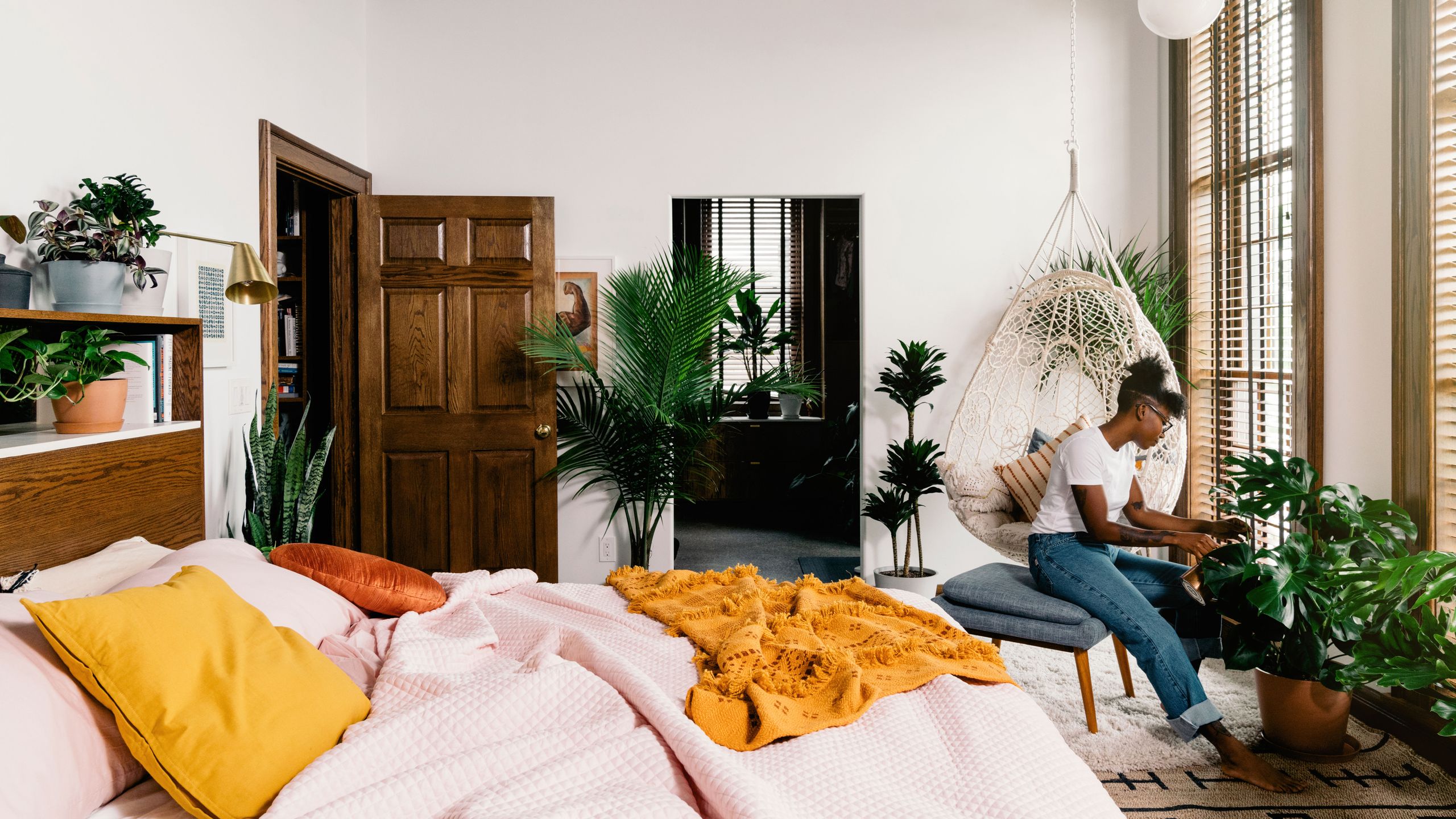
Winter 2023 in my Denver apartment was brutal. The heating ran constantly, turning my bedroom into a desert. My throat felt like sandpaper each morning. A friend suggested adding plants for humidity. I bought a snake plant from Home Depot for $25 and a pothos from Trader Joe’s for $8.
Three weeks later, my bedroom felt noticeably calmer. The air wasn’t as dry, and honestly, I slept better. That snake plant still thrives on my dresser three years later. I’ve since tested dozens of bedroom plants across different climates—from humid Atlanta apartments to dry Phoenix homes.
Quick Answer
Top 5 bedroom plants: Snake plant, pothos, spider plant, ZZ plant, and Chinese money plant. These bedroom plants tolerate low to medium indirect light, need watering every 2-3 weeks, and handle 60-85°F temperatures perfectly. Place bedroom plants on nightstands or dressers away from AC vents for best results.
Why Add Plants to Your Bedroom?
The Truth About Air Purification
You’ve probably heard houseplants purify air from NASA’s famous 1989 study. Researchers found certain plants removed toxins in sealed chambers.
Here’s the reality: To match those air purification results in your actual bedroom, you’d need somewhere between 10-1,000 plants per square meter . For a typical 12×12 bedroom, that’s literally hundreds of plants.
The EPA is clear: houseplants don’t meaningfully improve air quality in real homes through pollutant removal alone .
What Bedroom Plants Actually Do
- Add Humidity Naturally
Plants release water vapor through transpiration. During winter when heating systems drop humidity to 20-30% (ideal is 40-60%), bedroom plants help add moisture back naturally . - Create Visual Calm
Multiple studies show viewing greenery reduces cortisol levels and promotes relaxation. Your bedroom should be a sanctuary, and bedroom plants create that calming biophilic connection. - Improve Sleep Environment
A 2021 study published in the Journal of Physiological Anthropology found that interacting with indoor plants reduced stress—both important for sleep preparation . - Look Great
Let’s be honest: bedroom plants make bedrooms look better. They add life, color, and texture to otherwise static spaces.
12 Best Bedroom Plants
Low-Light Champions
- Snake Plant (Sansevieria)
- Light: Low to bright indirect
- Water: Every 2-3 weeks
- Size: 1-4 feet tall
- Why it works: Nearly indestructible, releases oxygen at night through CAM photosynthesis
- Price: 15-45 at Home Depot, Lowe’s
- Pets: Toxic to cats and dogs
- ZZ Plant (Zamioculcas)
- Light: Low to medium indirect
- Water: Every 3-4 weeks
- Size: 2-3 feet tall
- Why it works: Stores water in rhizomes, tolerates dry air from heating systems
- Price: 20-50
- Pets: Toxic
- Pothos (Epipremnum)
- Light: Low to bright indirect
- Water: Weekly when top inch is dry
- Size: Trailing vines 6-10 feet
- Why it works: Fast-growing, shows thirst clearly, works in hanging baskets
- Price: 8-25
- Pets: Toxic
- Cast Iron Plant
- Light: Low to medium indirect
- Water: Every 2 weeks
- Size: 2-3 feet tall
- Why it works: Extremely tough, tolerates temperature swings and neglect
- Price: 25-40
- Pets: Non-toxic
Medium-Light Options
- Spider Plant
- Light: Bright indirect
- Water: Weekly, keep slightly moist
- Size: 1-2 feet, trailing
- Why it works: Produces “pups” you can propagate, tolerates irregular care beautifully
- Price: 10-20
- Pets: Non-toxic
- Peace Lily
- Light: Medium indirect
- Water: When soil surface is dry
- Size: 1-4 feet tall
- Why it works: Flowers indoors, droops dramatically when thirsty (clear signal)
- Price: 20-40
- Pets: Toxic
- Chinese Money Plant (Pilea)
- Light: Bright indirect
- Water: Weekly
- Size: 1-2 feet tall
- Why it works: Cheerful appearance, incredibly easy to propagate, trendy
- Price: 15-30 (Target, Trader Joe’s)
- Pets: Non-toxic
- Boston Fern
- Light: Medium to bright indirect
- Water: 2-3 times weekly
- Size: 2-4 feet tall and wide
- Why it works: Excellent humidity booster, lush classic appearance
- Price: 20-40
- Pets: Non-toxic
- Prayer Plant (Maranta)
- Light: Medium indirect
- Water: Weekly, keep moist
- Size: 1-2 feet tall
- Why it works: Leaves fold up at night, stunning variegated patterns
- Price: 15-30
- Pets: Non-toxic
Bright-Light Options
- Aloe Vera
- Light: Bright direct to indirect
- Water: Every 2-3 weeks
- Size: 1-2 feet tall
- Why it works: Useful gel for minor burns, architectural sculptural shape
- Price: 15-30
- Pets: Toxic
- Jade Plant
-
- Here is an expanded version of your plant description, written in a detailed, natural style:
- Long-Lived Succulent Plant Description
-
A Beautiful, Low-Maintenance Succulent for Your Home
- If you are looking for a houseplant that is attractive, easy to care for, and capable of living for many years, this long-lived succulent is an excellent choice. With its tree-like appearance, thick stems, and striking green foliage, it can add a natural and elegant touch to almost any indoor space. It is especially suitable for people who want a beautiful plant without having to spend a lot of time maintaining it.
- One of the most important features of this plant is its ability to tolerate bright, direct light. It thrives when placed in a location where it can receive plenty of sunlight throughout the day. A sunny windowsill, bright living room, balcony, or other well-lit area can provide ideal conditions. Strong natural light helps the plant maintain healthy growth and encourages it to develop a sturdy, attractive shape. If you are growing it indoors, placing it near a bright south- or west-facing window can often provide the amount of light it needs.
- This plant generally grows to around 1–3 feet tall, making it a convenient size for indoor decoration. It is large enough to make a noticeable statement but compact enough to fit comfortably on a plant stand, tabletop, shelf, or in a corner of a room. As it matures, its tree-like form gives it an interesting architectural appearance. The thick stem and succulent characteristics make it look more substantial than many smaller houseplants.
- Another major advantage is its low water requirement. Unlike many tropical houseplants that need frequent watering, this succulent prefers to dry out between waterings. In many indoor environments, watering approximately every two to three weeks can be sufficient. However, the exact schedule depends on factors such as temperature, humidity, pot size, soil type, and the amount of sunlight the plant receives. Rather than watering according to a strict calendar, it is better to check the soil first. If the soil is still moist several inches below the surface, it is usually better to wait before watering again.
- When watering, give the plant enough water to thoroughly moisten the soil, but make sure excess water can drain away. A container with drainage holes is particularly important because succulents are susceptible to problems caused by consistently wet soil. Overwatering is one of the most common mistakes people make when caring for succulent plants. Allowing the soil to dry between waterings helps create the drier conditions the plant naturally prefers.
- One of the biggest reasons this plant works so well as a houseplant is its remarkable longevity. With appropriate care, it can live for decades, making it much more than a temporary decoration. Many fast-growing houseplants need to be replaced after a few years, but a healthy long-lived succulent can become a permanent part of your indoor plant collection. Watching it grow and develop over the years can also make it a meaningful plant for your home.
- Its long lifespan makes it particularly appealing to plant enthusiasts and people who enjoy caring for plants over an extended period. A young plant may start relatively small, but with proper light, appropriate watering, good drainage, and occasional maintenance, it can gradually develop into a mature specimen with a distinctive tree-like appearance.
- The plant’s succulent nature is another reason it is so easy to maintain. Succulent plants are adapted to environments where water may not always be readily available. They store water in their tissues, allowing them to survive periods of dryness. This adaptation means they generally do not require the frequent watering that many other indoor plants need.
- The plant is also relatively affordable. A typical price can range from approximately $15 to $40, depending on its size, maturity, variety, container, and where it is purchased. Smaller specimens are generally more affordable, while larger or more mature plants may cost more. Considering its potential lifespan of several decades, it can offer excellent long-term value compared with plants that require frequent replacement.
- In addition to its practical benefits, this plant can contribute significantly to the appearance of a room. Its upright, tree-like structure can provide height and visual interest, especially when placed alongside shorter plants. It can work well with modern, minimalist, traditional, or natural interior styles. A simple decorative pot can further enhance its appearance and help it become a focal point in a living room, office, bedroom, or bright hallway.
- Although the plant is easy to care for, there is one important consideration for households with pets. It is toxic to pets, so owners of cats and dogs should take extra care when deciding where to place it. The plant should be kept somewhere pets cannot chew or eat its leaves, stems, or other parts. If you have curious pets that frequently investigate houseplants, placing it on a secure high shelf or in an inaccessible room may be a safer option. If a pet is suspected of consuming part of the plant, contacting a veterinarian promptly is recommended.
- Overall, this plant is an excellent choice for anyone who wants an attractive, durable, and relatively low-maintenance houseplant. Its preference for bright direct light, modest watering needs, compact 1–3 foot height, and succulent characteristics make it particularly convenient for busy plant owners. Most importantly, its ability to live for decades means that it can become a long-term feature of your home rather than simply a short-lived decoration.
- With the right location, well-draining soil, careful watering, and protection from pets, this plant can remain healthy and attractive for many years. Its combination of beauty, resilience, and longevity makes it a particularly appealing option for both beginners and experienced plant lovers. If you want a plant that provides a strong visual presence without demanding constant attention, this long-lived succulent is certainly worth considering.
- If you tell me the plant’s name (for example, Ponytail Palm or Jade Plant), I can also make this into a more accurate 1,000-word SEO-friendly product description.
- Parlor Palm
- Light: Low to medium indirect
- Water: Weekly
- Size: 2-4 feet tall
- Why it works: Palm tree aesthetic indoors, completely pet-safe
- Price: 20-40
- Pets: Non-toxic
Simple Care Guide for Bedroom Plants
Watering Schedule by Season
Spring/Summer (March-September):
- Most bedroom plants need weekly watering
- Check soil with finger test—water when top inch is dry
- Increase frequency during heat waves and heavy AC usage
Fall/Winter (October-February):
- Reduce watering to every 2-3 weeks for most bedroom plants
- Heating systems dry air but plants grow slower in lower light
- Snake plants and ZZ plants may only need monthly watering
Golden rule: When unsure, wait another day. Overwatering kills far more bedroom plants than underwatering ever will.
Temperature & Humidity Guidelines
Most bedroom plants thrive in typical American home conditions:
- Ideal temperature: 60-85°F (most homes maintain 68-72°F)
- Ideal humidity: 40-60%
- Minimum tolerance: 30% humidity for most plants
- Avoid: Direct blasts from AC vents, radiators, or heating units
Regional Tips:
Southwest: Add humidity with pebble trays or room humidifiers ($30-80)
Northeast/Midwest: Reduce watering significantly October-March
Southeast: Ensure good air circulation to prevent fungal issues
Pacific Northwest: Consider supplementing with grow lights ($20-40)
Fertilizing Basics
Growing Season (April-September): Monthly liquid fertilizer at half-strength
Dormant Season (October-March): Skip fertilizing or do every 2-3 months
Recommended products: Miracle-Gro Liquid (8),Jack’sClassic(15)
Nightstands: Small pothos, succulents, Chinese money plants work perfectly
Dressers or Floating Shelves: Spider plants, trailing pothos, philodendron look great
Floor Corners: Large snake plants, peace lilies, parlor palms fill empty space
Hanging Baskets: Spider plants, string of pearls maximize vertical space
Windowsills: Match plant to your window’s direction carefully
Placement Mistakes to Avoid
- Don’t place bedroom plants directly under ceiling fans or AC vents
- Avoid positioning near heating radiators or baseboard heaters
- Keep bedroom plants away from frequently-used doors (vibration stress)
- Don’t crowd plants together—air circulation prevents problems
- Avoid dark corners with absolutely zero natural light
Common Mistakes with Bedroom Plants
#1: Overwatering
The problem: Most bedroom plants die from too much love, not neglect.
The fix: Use the finger test—one inch into soil. Dry means water. Moist means wait.
#2: Ignoring Pet Safety
Approximately 67% of US households own pets. Many popular plants are toxic .
Pet-safe bedroom plants: Spider plant, Boston fern, parlor palm, prayer plant, Chinese money plant
Toxic plants to avoid: Peace lily, pothos, snake plant, aloe vera
Resource: ASPCA Toxic Plants Database (free online)
#3: Expecting Miracle Air Purification
You’d need hundreds of bedroom plants to match NASA’s sealed chamber results. Focus on aesthetics and humidity instead.
#4: Wrong Light Match
“Low-light” means low indirect light, not complete darkness. All plants need some light.
#5: Same Schedule Year-Round
Adjust watering by season. Plants use less water in winter.
Expert Tips for Success
- Start with 2-3 easy bedroom plants before expanding your collection
- Always use pots with drainage holes to prevent root rot
- Dust leaves monthly with a damp cloth for maximum light absorption
- Rotate bedroom plants quarterly toward light sources
- Check for pests regularly under leaves and at stem joints
- Repot every 1-2 years when roots grow from drainage holes
- Quarantine new plants for 2 weeks before placing near others
- Use room temperature water to avoid shocking roots
FAQ’s
Q: Can I sleep with plants in my bedroom?
A: Yes, absolutely. The myth that plants “steal oxygen” at night is completely false .
Q: How many bedroom plants should I have?
A: For aesthetics, 3-5 medium bedroom plants work well in a 12×12 bedroom. Don’t overcrowd.
Q: What are the best low-maintenance bedroom plants?
A: Snake plant, ZZ plant, and pothos require the least care overall.
Q: Are bedroom plants safe for pets?A: Some are, some aren’t. Choose spider plants, Boston ferns, or parlor palms for pet safety
Q: Why are leaves turning yellow?
A: Usually overwatering. Check soil moisture before watering every time.
Q: Can bedroom plants help me sleep better?
A: Indirectly, yes—calmer environment. No direct evidence shows sleep improvement through air purification.
Q: What works in apartments with no windows?
A: Very few plants thrive in zero light. Try ZZ plants with a small grow light ($20-40).
Q: How often should I water bedroom plants?
A: Weekly in spring-summer, every 2-3 weeks in fall-winter. Always check soil first.
Conclusion
Bedroom plants offer genuine aesthetic, psychological, and humidity benefits—even if air purification claims are overstated. Start with forgiving varieties like snake plants, pothos, or spider plants that match your bedroom’s light conditions. Focus on proper placement away from heating and cooling vents, adjust watering by season, and choose pet-safe options if you have animals.
Summary
Indoor bedroom plants add beauty, freshness, and a calming natural touch to your space. Choose low-maintenance varieties that thrive in available light and require minimal watering. Plants such as snake plants, pothos, and peace lilies can make bedrooms feel more comfortable, attractive, and relaxing.