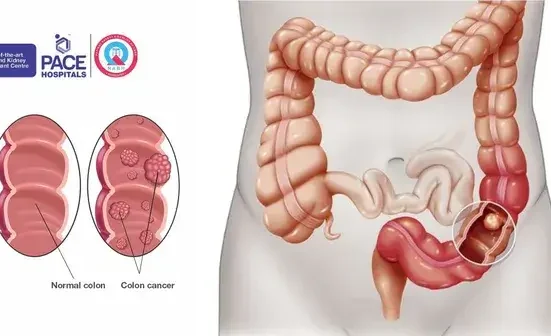

When my father’s pathology results arrived after his colon cancer surgery, staging suddenly became the most important word in our family’s vocabulary, yet none of us fully understood its meaning. We only knew lower numbers were better without grasping the clinical reality behind them. His surgeon patiently explained how staging influenced treatment decisions and future monitoring. I remember wishing we had learned this information earlier. Understanding colon cancer stages before facing a diagnosis provides clarity, confidence, and emotional preparedness when medical conversations suddenly become deeply personal and urgent.
Colon cancer stages determine what happens after diagnosis, including recommended treatments, how aggressive therapy should be, expected outcomes, and how closely patients must be monitored over time. Many people focus only on survival statistics without understanding that these numbers represent general averages rather than individual circumstances. Each patient’s outlook depends on tumor characteristics, overall health, and quality of medical care. This guide explains colon cancer stages in clear, simple language, helping patients and families better understand medical decisions while navigating diagnosis, treatment, and long-term recovery with confidence.
Understanding colon cancer stages helps you make smarter treatment decisions and gives you the best possible chance at full recovery.
Colon Cancer Stages and How Staging Works:
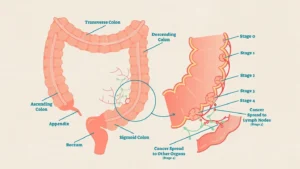
Staging describes how far colon cancer has traveled from its original starting point in the bowel wall and whether it has reached nearby lymph nodes or distant organs in other parts of the body away from the colon itself in ways that fundamentally change what treatment is needed and what outcomes are realistically possible.
The TNM staging system used by oncologists worldwide evaluates three specific factors which are tumor depth through the bowel wall layers, lymph node involvement in the surrounding tissue, and metastasis meaning spread to distant organs like the liver or lungs. Colon cancer stages zero through four represent the combined result of this three factor evaluation rather than a single simple measurement and understanding each component of the staging assessment helps patients make sense of the pathology language that appears in their medical reports after surgical treatment has been completed and analyzed.
Colon Cancer Stages and What Each One Means:
Each stage of colon cancer represents a meaningfully different clinical situation with different treatment implications, different monitoring requirements, and different realistic outcome expectations that patients and families deserve to understand clearly rather than in the vague generalities that rushed clinical appointments sometimes produce under the time pressure of busy oncology practices managing large patient volumes simultaneously.
Understanding what separates one colon cancer stage from the next helps patients ask more informed and specific questions during oncology appointments rather than leaving those conversations with general impressions that do not adequately serve the important decisions that follow staging confirmation through pathology analysis after surgical removal of the tumor and surrounding tissue that definitively establishes the stage that pre-operative imaging only estimated approximately.
Stage Zero:
Stage zero colon cancer is also called carcinoma in situ and represents cancer cells confined entirely to the innermost lining of the colon wall without any penetration into deeper tissue layers beneath that surface lining where lymphatic vessels and blood vessels capable of carrying cells to other locations begin to appear. This earliest possible finding is almost exclusively discovered through routine colonoscopy screening rather than through symptoms because stage zero colon cancer produces no noticeable physical symptoms in the vast majority of people who have it at this genuinely early point in cancer development before the abnormal cells have acquired the biological capacity to invade surrounding tissue.
Treatment at this stage typically involves local removal during colonoscopy itself or minimally invasive surgery without the need for chemotherapy or radiation making this the most favorable possible finding in the complete colon cancer staging spectrum and the finding that makes a compelling case for consistent adherence to recommended screening schedules beginning at age 45 for average risk individuals.
Stage One:
Stage one colon cancer has grown through the innermost lining into the deeper muscle layers of the colon wall but has not yet reached the outer surface of the colon or spread to any nearby lymph nodes that the surgical team removes and sends to pathology during the resection procedure that treats the primary tumor and provides definitive staging information simultaneously.
Colon cancer stages one findings carry genuinely favorable treatment outcomes with surgery typically representing the primary and often only treatment required without additional chemotherapy for most patients whose pathology confirms clean surgical margins and not concerning high risk features that might indicate elevated recurrence risk in the years following surgical treatment completion and recovery. The key distinction separating stage one from stage two is how deeply the cancer has grown through the colon wall layers rather than whether lymph nodes are involved which remains the most significant prognostic factor separating stage two from stage three in the complete staging framework.
Stage Two:
Stage two colon cancer has spread through the whole thickness of the colonic wall and might have grown into adjacent tissue but has not yet reached any adjacent lymph nodes that would show cancer cells have used the lymphatic system as a pathway for wider spread throughout the body outside the original tumor site. Because some stage two patients receive chemotherapy following surgery while others do not depending on particular pathology characteristics including tumor grade, bowel perforation before or during treatment, microsatellite instability status, and other high risk features that oncologists individually assess, colon cancer stages two situations entail more nuanced treatment choices than earlier ones.
Based on these other pathological characteristics, the survival results for stage two colon cancer differ considerably within the stage itself; as such, the stage number by itself provides an incomplete picture of prognosis that calls for the whole pathological report to properly interpret for any given patient.
Colon Cancer Stages Survival Overview Table:
| Stage | Cancer Location | Lymph Nodes | Distant Spread | Five Year Survival | Primary Treatment |
| Stage zero | Inner lining only | None involved | None present | Over 99 percent | Local removal |
| Stage one | Muscle layers | None involved | None present | 90 to 95 percent | Surgery alone |
| Stage two | Full wall thickness | None involved | None present | 72 to 85 percent | Surgery possible chemo |
| Stage three | Any depth | Nodes involved | None present | 53 to 89 percent | Surgery plus chemo |
| Stage four A | Any depth | Any status | One distant site | 20 to 35 percent | Multimodal treatment |
| Stage four B | Any depth | Any status | Multiple sites | 5 to 15 percent | Systemic treatment |
Colon Cancer Stages Warning Signs by Stage:
Recognizing which symptoms correspond to different stages of colon cancer development helps people understand why earlier stage cancers are so often discovered through screening rather than symptoms and why waiting for symptoms before seeking evaluation consistently results in later stage diagnosis that carries more intensive treatment requirements and less favorable outcome statistics across population studies
- Stage zero and stage one colon cancer produces virtually no noticeable symptoms in most people which is precisely why routine colonoscopy screening beginning at age 45 exists as the primary detection method for early colon cancer stages before symptoms ever develop to prompt medical evaluation and why completing recommended screening without waiting for symptoms is the single most important preventive action available
- Stage two colon cancer can start producing mild and easily disregarded symptoms including occasional changes in bowel habits, brief abdominal discomfort that comes and goes, or unexplained fatigue that most people ascribe to nutritional causes, stress, or the general demands of busy daily life rather than investigating medically through appropriate clinical evaluation with a primary care physician
- More often than not, stage three colon cancer causes visible and persistent symptoms including major bowel habit changes lasting more than a few weeks, rectal bleeding may or may not be painless, stomach pain different from previous digestive discomfort, and unintentional weight loss calling for quick medical examination rather than ongoing self-management at home.
- Stage four colon cancer often causes more overt systemic symptoms that show distribution to distant organs including considerable and unexplained weight reduction over weeks, ongoing and increasing exhaustion interfering with everyday functioning, jaundice manifesting as yellowing of the skin and eyes if liver involvement has occurred, or respiratory symptoms if lung metastases have developed alongside the primary colorectal disease
- Regardless of age, any symptom mix including continuous digestive changes lasting beyond a few weeks, inexplicable weight loss, rectal bleeding of any type, and extreme tiredness presenting together calls for quick medical assessment. Rising patterns now under study and documentation are seeing more and more diagnoses of colon cancer stages over the entire spectrum in those under fifty.
Colon Cancer Stages and Treatment Approaches:

Treatment for colon cancer is directly influenced by staging results and awareness of the overall treatment environment for each stage helps patients more actively engage with their oncology team rather than merely accepting advice without grasping the clinical reasoning linking particular pathologic results to the treatment strategy advocated for their own case by the multidisciplinary team.
The basis of curative care for colon cancer stages one through three is surgery; the degree and specific approach of surgery is influenced by tumor site inside the colon, patient overall health status and suitability for surgery, and the surgical expertise present at the treating facility, which vary considerably between community hospitals and specialized cancer centers with large volume colorectal surgery programs. Following surgery, chemotherapy is common for stage three and strongly thought about for high risk.
While stage four therapy aims on systematic disease control via chemotherapy, targeted treatment, and immunotherapy alongside surgical removal of metastases in suitably chosen patients where complete removal is still technologically feasible and medically fitting given general disease burden, stage two depends on particular pathological results.
Colon Cancer Stages and Recurrence Monitoring:
Surviving initial colon cancer treatment does not mean the monitoring work is finished because recurrence risk persists meaningfully across the years following treatment completion with the highest concentration of recurrence risk typically falling within the first three years after finishing active treatment regardless of which colon cancer stage was treated initially.
Regular surveillance through colonoscopy performed at defined intervals, CT scanning of the chest, abdomen, and pelvis, and blood tests measuring CEA tumor marker levels forms the monitoring framework that catches recurrence at the earliest possible point when treatment options remain most effective and least burdensome for the patient experiencing disease return after initial successful treatment. The specific frequency and total duration of surveillance monitoring following treatment for different colon cancer stages varies by initial stage severity with higher stage cancers requiring more intensive and prolonged monitoring schedules that patients must understand clearly and commit to completing consistently even when they feel entirely well during the surveillance years following active treatment completion.
Colon Cancer Stages and the Importance of Early Detection:

The survival rate difference between early and late colon cancer stages represents one of the most dramatic outcome gaps in all of oncology and makes the case for completing recommended colorectal cancer screening before symptoms develop more compellingly than almost any other preventive health argument that public health advocates can make to populations who consistently underestimate their personal cancer risk.
Stage zero and stage one colon cancer found through routine colonoscopy screening produces excellent long term outcomes with treatment that is considerably less extensive, less physically demanding, less toxic to the body, and far less disruptive to daily life and work than the aggressive multimodal treatment approaches that advanced colon cancer stages require over months of active treatment followed by years of intensive surveillance monitoring.
Every single person who completes their recommended screening and receives an early stage finding rather than a late stage symptomatic diagnosis has their commitment to screening to thank for the dramatically different treatment journey and quality of life experience that early detection makes genuinely possible compared to the alternative trajectory of late stage diagnosis driven by symptoms appearing after the cancer has already spread.
Colon Cancer Stages and Personalized Treatment Decisions:
Modern oncology increasingly moves beyond staging alone toward molecular and genetic tumor profiling that provides crucial additional information guiding treatment decisions well beyond what stage number alone reveals about the individual biological characteristics of each patient’s specific cancer at the molecular level that determines treatment sensitivity and resistance patterns.
Microsatellite instability status, KRAS and BRAF mutation testing, HER2 amplification assessment, and other molecular markers now routinely inform decisions about which chemotherapy regimens are most likely to benefit specific patients, which immunotherapy options represent genuine treatment opportunities based on tumor immune characteristics, and which targeted therapies address specific molecular vulnerabilities present in individual tumors rather than applying identical treatment protocols to everyone sharing the same colon cancer stage number designation.
Patients across all colon cancer stages benefit from understanding that their stage number is an important but genuinely incomplete description of their cancer and that molecular profiling increasingly shapes the truly personalized treatment approach that modern colorectal oncology delivers to patients at experienced specialized cancer centers with comprehensive tumor profiling capabilities available as standard practice.
Conclusion
Colon cancer stages provide the clinical framework that guides treatment decisions after diagnosis. Understanding each stage, the treatments involved, and long-term monitoring helps patients actively participate in their care. Early stages found through routine screening usually lead to better outcomes and less intensive treatment, making colonoscopy screening extremely important for prevention and early detection. Working closely with your oncology team, asking clear questions, and following recommended surveillance plans support recovery while helping patients manage both the medical and emotional challenges of treatment.
FAQ’s
1. What is the most important factor that determines colon cancer stages?
Lymph node involvement represents the single most significant factor separating favorable from less favorable colon cancer stages because the presence of cancer cells in nearby lymph nodes indicates the cancer has successfully accessed the lymphatic system as a pathway for potential wider spread beyond the original tumor location in the colon wall tissue.
2. Can colon cancer stages change or be revised after surgery is completed?
Yes staging is frequently refined and sometimes changed after surgical pathology results return from the laboratory because pre-operative imaging provides estimated clinical staging while surgical pathology examining the actual removed tissue specimen and all associated lymph nodes provides definitive pathological staging. Some patients are upstaged after surgery when pathology reveals lymph node involvement that was not visible or suspected on pre-operative imaging examinations performed before the surgical procedure.
3. Are colon cancer stages survival statistics accurate predictions for individuals?
Population survival statistics describe average outcomes across very large patient groups studied over time rather than predicting individual outcomes for specific patients with unique circumstances. Many factors beyond stage number including overall health status, tumor molecular characteristics, treatment response patterns, access to specialized care, and individual biology influence outcomes in ways that population statistics simply cannot capture for any specific person navigating this diagnosis in their own unique clinical and personal context.
4. Does stage four colon cancer always mean no cure is possible for patients?
Not always and this is an important nuance that many patients and families are not aware of when they receive a stage four diagnosis. Some stage four colon cancer patients with limited metastatic disease confined specifically to the liver or lungs achieve genuine long term disease free survival through aggressive surgical removal of metastases combined with systemic chemotherapy at specialized centers with experienced multidisciplinary teams. Colon cancer stages four outcomes vary considerably based on the extent, number, and location of metastatic deposits alongside individual tumor biology characteristics.
5. How are colon cancer stages detected and confirmed before and after surgery?
CT scanning of the chest, abdomen, and pelvis provides the primary pre-operative staging information giving oncologists an estimated clinical stage before treatment begins while colonoscopy confirms the primary tumor location and characteristics. Definitive colon cancer stages are confirmed only through careful pathological examination of the surgically removed tissue specimen and all associated lymph nodes rather than through imaging studies alone which cannot assess lymph node involvement at the cellular level required for accurate staging.
Summary
Colon cancer stages zero through four describe how far cancer has spread from the bowel lining into nearby tissues, lymph nodes, or distant organs. These stages guide treatment decisions and help doctors estimate outcomes for each patient. Early detection through routine colonoscopy screening often leads to better results with less aggressive treatment, while advanced stages may require surgery, chemotherapy, or combined therapies. Understanding your stage, asking questions, and following recommended monitoring and screening plans are essential steps for protecting long-term health and improving survival outcomes.